🏃🏻♀️
The Emoji
Woman Running: Light Skin Tone
U+1F3C3 U+1F3FB U+200D U+2640 U+FE0F · :woman_running_light_skin_tone:
Trend 68
Meaning layers
- interpretation
- Used to signal escaping from awkward situations, avoiding responsibility, or hyping up cardio/fitness culture. Often ironic — 'me running from my problems.'
- tiktok usage
- Appears in 'running from adulting' content, fitness transformation videos, and as a comedic escape symbol in POV skits.
- irony level
- 7 / 10
Platform meanings
- meaning
- Represents fleeing situations, fitness motivation, or comedic urgency in video captions and comments.
- trend usage
- Used in 'running from my past self' transformation trends, workout check-in videos, and POV escape skits.
- hashtags
- #morningrun#runningfrommyproblems#fitcheck#girlswhorum#runmotivation
- virality score
- 72 / 100
Cultural meanings
🇺🇸
Western / Gen-Z
The definitive 'running from my problems' emoji — used with heavy irony to signal avoidance, escape from adulting, or fleeing awkward situations. Also genuinely used in fitness and 'that girl' wellness content.
🇵🇰
Pakistan & India
Primarily literal — signals being busy, on the go, or engaged in morning exercise. Increasingly used by urban fitness communities and gym culture influencers on Instagram and WhatsApp.
🌍
Middle East
Used conservatively in fitness contexts, especially among women in urban Gulf cities embracing public exercise culture. Also used straightforwardly to indicate being in a rush.
🌐
Global Neutral
Universally understood as representing a woman running — used for fitness, urgency, and being on-the-go across all global contexts with minimal cultural distortion.
🇧🇩
Bangladesh
Primarily literal usage — represents physical activity or being in a hurry. Fitness culture is growing, so the emoji appears more frequently in health and wellness community chats.
🇱🇰
Sri Lanka
Used to indicate being busy or rushing, particularly in WhatsApp chats. Fitness-focused usage is emerging among younger urban demographics influenced by social media.
🇨🇳
China
Common in fitness app contexts and WeChat groups around running clubs. The 'running from problems' irony is understood by younger generations familiar with Western internet culture via VPN.
🇯🇵
Japan
Associated with the popular jogging and running culture in Japanese cities. Also used in the context of work-life busyness — 'I'm always running' — reflecting overwork culture awareness.
🇰🇷
South Korea
Frequently used in fitness and diet culture content, tied to the broader wellness and body-care trends on KakaoTalk and Instagram. Also used humorously to signal escaping an awkward situation.
🇹🇼
Taiwan
Used in fitness and outdoor running contexts popular among young Taiwanese women. Social media usage mirrors Western irony trends among tech-savvy younger users.
🇭🇰
Hong Kong
Common in busy, commuter-culture contexts — 'always on the run.' Also used in fitness communities and among young users for ironic escape humor.
🇵🇭
Philippines
Widely used in casual chats to mean being in a rush or busy. Fitness culture content uses it earnestly, while Gen Z Filipinos adopt the ironic 'running from problems' meaning from TikTok.
🇮🇩
Indonesia
Used in fitness and health content popular on Instagram and TikTok among Indonesian youth. Also appears in casual WhatsApp conversations to signal being on the go or escaping a boring topic.
🇹🇭
Thailand
Associated with urban running events and health-conscious social media content. Thai Gen Z users also use it ironically in line chats and TikTok comments.
🇻🇳
Vietnam
Growing usage tied to Vietnam's expanding fitness culture and morning exercise traditions. Ironic usages are spreading through TikTok among Vietnamese youth.
🇲🇾
Malaysia
Used in both literal fitness contexts and as a casual 'I'm busy / gtg' signal in WhatsApp. The ironic usage is understood and adopted by younger, English-fluent Malaysian users.
🇸🇦
Saudi Arabia
Increasingly relevant as women's participation in public sports and running events has grown since 2018 reforms. Used sincerely in fitness communities and women's empowerment contexts.
🇦🇪
UAE
Common in the fitness-obsessed Dubai/Abu Dhabi social scene — used in marathon announcements, run club posts, and as a wellness lifestyle signal by expats and nationals alike.
🇪🇬
Egypt
Used primarily to indicate being in a hurry or busy in everyday WhatsApp conversations. Fitness-related usage is growing among urban Egyptian youth on Instagram.
🇹🇷
Turkey
Used in fitness and active lifestyle contexts on Instagram and Twitter. Also adopted ironically by Turkish Gen Z to mean fleeing drama or obligations.
🇮🇷
Iran
Used among younger Iranians on Instagram (via VPN) to signal fitness activity or being busy. Women's fitness content uses it as a positive symbol of health and independence.
🇳🇬
Nigeria
Used in WhatsApp chats to indicate being in a rush or busy. Lagos fitness culture uses it earnestly; Nigerian Twitter/X users adopt the ironic escape meaning with characteristic humor.
🇿🇦
South Africa
Used in fitness and parkrun communities which are hugely popular in South Africa. Also used casually across WhatsApp chats to indicate busyness or urgency.
🇬🇧
UK & Ireland
Strong ironic usage — British and Irish humor leans into the 'running from my problems' meme hard. Also used genuinely in the thriving UK running club and parkrun culture.
🇫🇷
France
Used in fitness and jogging contexts — running is culturally popular in French cities. The ironic avoidance meaning is understood and used by younger French social media users.
🇩🇪
Germany
Primarily associated with fitness, marathons, and outdoor activities. Germans appreciate the practical usage; the ironic layer is recognized but used less frequently than in English-speaking cultures.
🇪🇸
Spain & Italy
Used in fitness content but also in expressive, dramatic ways to signal urgency or escape — fits well with demonstrative southern European communication styles on Instagram.
🇧🇷
Brazil
Embraced enthusiastically in fitness culture content and running event promotions. Brazilian TikTok and Instagram users also use it with high irony and humor — 'correndo dos problemas.'
🇲🇽
Mexico
Used in fitness contexts and casually to mean being in a hurry. Mexican social media users adopt the ironic escape meaning readily, often paired with self-deprecating humor.
🌎
Latin America
Broadly understood as fitness/activity across Latin America. The ironic 'running from problems' interpretation is gaining traction through TikTok's Spanish-language communities.
🇦🇺
Australia & NZ
Heavily used in the robust Australian running culture — parkrun, marathons, triathlons. Ironic usage is very common given Australian humor culture's affinity for self-deprecating escape jokes.
How its meaning shifted
- 2010
Emoji did not exist in this form yet — basic running figures existed but skin tone and gender modifiers had not been introduced to Unicode.
- 2015
Introduced with Unicode 8.0 skin tone modifiers and emoji gender updates — used almost exclusively in a literal fitness and physical activity context.
- 2020
Expanded into ironic and meme usage — 'running from my problems,' COVID-era escape humor, and 'that girl' morning routine aesthetic on TikTok and Instagram.
- 2026
Fully dual-natured: a sincere fitness emoji in wellness communities and an entrenched irony symbol in Gen Z meme culture, used fluidly across both registers depending on context.
See it on every platform
Compare with
Adjacent emojis
Share & embed
Frequently asked
01What does the 🏃🏻♀️ Woman Running: Light Skin Tone emoji mean?
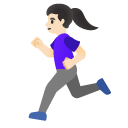
A woman with light skin tone depicted in a running pose, shown in profile facing left with arms bent and one leg raised.
02What does 🏃🏻♀️ mean on TikTok?
Represents fleeing situations, fitness motivation, or comedic urgency in video captions and comments.
03What does 🏃🏻♀️ mean on WhatsApp?
Signals going for a run, being in a hurry, or leaving a conversation metaphorically.
04What does 🏃🏻♀️ mean in Gen-Z slang?
Used to signal escaping from awkward situations, avoiding responsibility, or hyping up cardio/fitness culture. Often ironic — 'me running from my problems.'
05Is the 🏃🏻♀️ emoji safe to use?
Represents physical fitness, running, urgency, empowerment, and active lifestyle — entirely positive and safe in mainstream usage.
06What does 🏃🏻♀️ mean in texting?
Psychologically signals either forward momentum and ambition or flight response — the dual meaning of literally running toward goals or metaphorically fleeing discomfort makes it emotionally versatile.
07What is the shortcode for 🏃🏻♀️?
The shortcode for Woman Running: Light Skin Tone is :woman_running_light_skin_tone:
08What does 🏃🏻♀️ mean in dating?
Rarely flirty; may be sent by someone showing off their active lifestyle or indirectly hinting they are out of someone's league by staying busy and fit.
Safety & usage
- Safe meaning
- Represents physical fitness, running, urgency, empowerment, and active lifestyle — entirely positive and safe in mainstream usage.
- Caution
- In rare toxic contexts, could be used to mock someone for 'running away' from accountability or used to taunt a person being chased or fleeing danger.
No significant safety concerns. The skin tone modifier (light) is neutral but may occasionally be scrutinized in identity-politics discussions about emoji representation.
How it looks across platforms
Appearance varies by platform and device. Google Noto, Twemoji, and OpenMoji are open-source.