👩🏻🦯
The Emoji
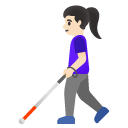
Woman With White Cane: Light Skin Tone
U+1F469 U+1F3FB U+200D U+1F9AF · :woman_with_white_cane_light_skin_tone:
Trend 42
Meaning layers
- interpretation
- Used genuinely to represent blindness or visual impairment, but also metaphorically to say someone is 'blind' to obvious facts, situations, or red flags. Sometimes used humorously to describe being oblivious.
- tiktok usage
- Appears in POV content about disability representation, accessibility advocacy, or sarcastically when roasting someone for missing something painfully obvious.
- irony level
- 5 / 10
Platform meanings
- meaning
- Used in disability representation content, accessibility advocacy, and humorously in memes about being oblivious to obvious truths.
- trend usage
- Featured in 'blind to the red flags' trend, disability storytelling POVs, and comments roasting characters in shows for missing obvious plot points.
- hashtags
- #DisabilityRepresentation#BlindTikTok#AccessibilityMatters#RedFlagSeason#DisabilityAwareness
- virality score
- 45 / 100
Cultural meanings
🇺🇸
Western / Gen-Z
Primarily recognized as a disability representation emoji but widely used in meme culture to represent being 'blind to the obvious,' especially in relationship red flag humor. Frequently appears in ironic or sarcastic social media commentary.
🇵🇰
Pakistan & India
Used sincerely to represent visually impaired individuals or in disability awareness contexts; metaphorical use of 'blindness' to describe ignorance is understood but less meme-ified than in Western contexts.
🌍
Middle East
Interpreted primarily as a representation of disability and can carry religious connotations related to patience and resilience in the face of hardship; rarely used ironically.
🌐
Global Neutral
Universally understood as a symbol for a visually impaired woman using a white cane; widely recognized in disability inclusion conversations across all global contexts.
🇧🇩
Bangladesh
Used in disability awareness campaigns and NGO communications; metaphorical use is emerging among younger urban social media users influenced by global meme culture.
🇱🇰
Sri Lanka
Primarily associated with disability representation and used in health awareness contexts; younger users may use it in humor about obliviousness influenced by Indian social media trends.
🇨🇳
China
On platforms like Weibo and WeChat, used in disability discussion contexts; meme usage around 'not seeing the obvious' is emerging among younger users familiar with global internet culture.
🇯🇵
Japan
Used respectfully to represent visual impairment; Japanese emoji culture tends toward literal interpretation, so sarcastic use is less common, though it appears in accessibility and social welfare discussions.
🇰🇷
South Korea
Recognized as a disability representation emoji; used in social media posts about inclusivity and accessibility, with growing ironic use among K-pop fan communities in meme formats.
🇹🇼
Taiwan
Used in disability awareness and social welfare content; younger Taiwanese users familiar with global meme formats may use it humorously for obliviousness jokes.
🇭🇰
Hong Kong
Understood as a disability emoji; used in accessibility advocacy and occasionally in humor contexts influenced by both Western and Chinese internet culture.
🇵🇭
Philippines
Used in disability awareness posts and inclusive content; the meme usage around walking past red flags is gaining traction through exposure to Western social media formats.
🇮🇩
Indonesia
Primarily used in disability representation and awareness contexts; some younger users employ it sarcastically in relationship humor content on TikTok and Instagram.
🇹🇭
Thailand
Associated with visual impairment and disability rights; used in social media campaigns about accessibility and occasionally in humor about missing obvious signs.
🇻🇳
Vietnam
Used in disability awareness content and health education posts; younger Vietnamese users on TikTok may use it in meme formats borrowed from global internet culture.
🇲🇾
Malaysia
Recognized in disability representation discussions; used across communities in accessibility content and occasionally in humor about being oblivious, especially among English-speaking youth.
🇸🇦
Saudi Arabia
Used primarily in disability awareness and charitable giving contexts, sometimes connected to Zakat and social responsibility posts; metaphorical irony use is uncommon.
🇦🇪
UAE
Used in inclusive and diverse workplace representation content; Dubai's multicultural environment means it appears in both Arabic and English language disability advocacy posts.
🇪🇬
Egypt
Associated with disability representation and charitable support contexts; occasionally used in humor among younger users to describe someone ignoring obvious truths.
🇹🇷
Turkey
Used in disability rights advocacy and awareness campaigns; metaphorical usage for obliviousness is growing among younger users influenced by global social media.
🇮🇷
Iran
Primarily used in disability representation contexts; given cultural sensitivities, ironic or meme usage is less prevalent compared to Western internet culture.
🇳🇬
Nigeria
Used in disability awareness posts and inclusive content; among younger users on Twitter/X, the meme usage about 'walking past red flags' resonates strongly.
🇿🇦
South Africa
Recognized in disability rights discussions; used in inclusive content and, among younger users, in the popular global meme format about ignoring warning signs in relationships.
🇬🇧
UK & Ireland
Well recognized in disability representation contexts and widely used in the humorous 'walking past red flags' meme format; British dry humor often pairs it with deadpan commentary.
🇫🇷
France
Used in disability awareness and accessibility rights content; ironic usage is growing among younger French social media users familiar with Anglo-American meme formats.
🇩🇪
Germany
Primarily used seriously in disability representation and accessibility advocacy; Germany's strong disability rights culture means it appears frequently in professional and advocacy contexts.
🇪🇸
Spain & Italy
Used in disability awareness campaigns and inclusive representation posts; meme usage for obliviousness is gaining popularity among younger Mediterranean social media users.
🇧🇷
Brazil
Widely used in both disability representation contexts and in humor about being oblivious; Brazil's vibrant meme culture has adopted the 'blind to red flags' format enthusiastically.
🇲🇽
Mexico
Used in disability awareness and inclusive content; the ironic red-flag meme usage is popular among younger Mexican users on TikTok and Twitter.
🌎
Latin America
Across Latin America, used in disability advocacy and increasingly in meme culture around relationships and obliviousness, heavily influenced by Brazilian and North American internet culture.
🇦🇺
Australia & NZ
Used in disability representation and accessibility advocacy; the 'blind to red flags' meme usage is common among Australian Gen Z users, often paired with dry humor.
How its meaning shifted
- 2010
This emoji did not exist in 2010; white cane representation was absent from the emoji standard, and disability emojis were virtually nonexistent.
- 2015
Still not part of the emoji standard; disability representation in emoji was a growing advocacy topic but had not yet been formalized in Unicode.
- 2020
Newly introduced in Unicode 12.0 (2019) and adopted in 2020; primarily used for disability representation and advocacy, with early meme usage beginning to emerge in the red flag context.
- 2026
Firmly established in both genuine disability representation and popular meme culture; the 'walking past red flags' usage is mainstream, while disability advocates continue championing its authentic meaning in accessibility discourse.
See it on every platform
Adjacent emojis
- Often confused with
- woman walkingperson with probing canewoman in manual wheelchair
- Can replace
- red flageyeswoman walking
Share & embed
Frequently asked
01What does the 👩🏻🦯 Woman With White Cane: Light Skin Tone emoji mean?
A woman with light skin tone using a white cane, representing a blind or visually impaired person navigating independently. The white cane is a universal symbol of visual impairment and blind mobility.
02What does 👩🏻🦯 mean on TikTok?
Used in disability representation content, accessibility advocacy, and humorously in memes about being oblivious to obvious truths.
03What does 👩🏻🦯 mean on WhatsApp?
Sent to represent blindness or visual impairment, or used humorously to say someone is oblivious to something obvious in a conversation.
04What does 👩🏻🦯 mean in Gen-Z slang?
Used genuinely to represent blindness or visual impairment, but also metaphorically to say someone is 'blind' to obvious facts, situations, or red flags. Sometimes used humorously to describe being oblivious.
05Is the 👩🏻🦯 emoji safe to use?
Represents a visually impaired woman using a white cane; used in disability advocacy, accessibility awareness, and inclusive representation content.
06What does 👩🏻🦯 mean in texting?
Evokes feelings of admiration for independence and resilience in the face of disability. For visually impaired users, it offers recognition and representation, fulfilling a psychological need for visibility and inclusion.
07What is the shortcode for 👩🏻🦯?
The shortcode for Woman With White Cane: Light Skin Tone is :woman_with_white_cane_light_skin_tone:
08What does 👩🏻🦯 mean in dating?
Rarely used in flirting; if used, it humorously implies 'I must be blind to fall for you this hard' or self-deprecatingly 'I'm blind to your flaws.'
Safety & usage
- Safe meaning
- Represents a visually impaired woman using a white cane; used in disability advocacy, accessibility awareness, and inclusive representation content.
- Caution
- Can be used mockingly to imply someone is 'blind' or stupid, which may be considered ableist or offensive to visually impaired individuals when used disparagingly.
Using this emoji sarcastically to mock intelligence or awareness can be considered ableist, as it appropriates a disability symbol for humor. Care should be taken in professional and sensitive contexts.
How it looks across platforms


Appearance varies by platform and device. Google Noto, Twemoji, and OpenMoji are open-source.