👩🏾🦯
The Emoji
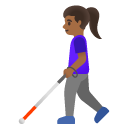
Woman With White Cane: Medium-dark Skin Tone
U+1F469 U+1F3FE U+200D U+1F9AF · :woman_with_white_cane_mediumdark_skin_tone:
Trend 45
Meaning layers
- interpretation
- Used to represent blindness — literal or metaphorical — such as when someone is 'blind' to obvious truths, red flags, or social situations. Also used in self-deprecating humor about not seeing something obvious.
- tiktok usage
- Appears in 'I was so blind to the signs' storytimes, toxic relationship recaps, and 'main character who doesn't notice anything' humor.
- irony level
- 5 / 10
Platform meanings
- meaning
- Represents willful ignorance or blissful unawareness, used heavily in self-deprecating relationship and life advice content.
- trend usage
- Used in 'POV: me ignoring every red flag' videos and storytime thumbnails about obliviousness.
- hashtags
- #blindtothesigns#redflags#notseeing#walkingblind#ignorance
- virality score
- 52 / 100
Cultural meanings
🇺🇸
Western / Gen-Z
Heavily used in ironic, self-deprecating meme formats about ignoring red flags or being oblivious; also embraced in genuine disability representation content.
🇵🇰
Pakistan & India
Primarily interpreted as a symbol for visually impaired individuals; used in accessibility awareness campaigns and NGO communications, less used ironically.
🌍
Middle East
Understood as a symbol of disability and independence; used in social welfare and charity contexts, though metaphorical use is less common.
🌐
Global Neutral
Universally recognized as representing a visually impaired woman navigating independently, used across disability advocacy and representation content worldwide.
🇧🇩
Bangladesh
Used mainly in disability awareness and humanitarian contexts; less prevalent in casual digital communication.
🇱🇰
Sri Lanka
Seen in disability rights and social welfare discussions; interpreted straightforwardly as a symbol of visual impairment.
🇨🇳
China
Used in accessibility and disability representation posts; metaphorical ironic usage is emerging among younger internet users familiar with global meme culture.
🇯🇵
Japan
Appreciated for its inclusive representation; may appear in accessibility policy discussions and kawaii-inclusive character content, rarely used ironically.
🇰🇷
South Korea
Used in disability empowerment and social inclusion conversations; younger Koreans may use it in self-deprecating humor borrowed from global meme trends.
🇹🇼
Taiwan
Used in disability awareness content and progressive inclusion discussions; ironic usage is rare but growing in internet culture.
🇭🇰
Hong Kong
Appears in disability rights and accessibility discussions; younger users may use it metaphorically in social commentary.
🇵🇭
Philippines
Used in disability awareness and social media advocacy; also appears in relatable humor posts about missing obvious signs.
🇮🇩
Indonesia
Primarily used in disability and social welfare contexts; increasingly used by younger users in meme formats about obliviousness.
🇹🇭
Thailand
Used in accessibility awareness campaigns; rarely used ironically, though global meme influence is introducing metaphorical usage.
🇻🇳
Vietnam
Appears in disability support and social welfare content; metaphorical use is uncommon but emerging in younger digital communities.
🇲🇾
Malaysia
Used in disability awareness and inclusive representation posts; bilingual meme culture occasionally incorporates it in obliviousness humor.
🇸🇦
Saudi Arabia
Primarily used in charity and disability welfare contexts; representation of an independent woman navigating publicly is viewed positively in modern accessibility discourse.
🇦🇪
UAE
Used in progressive disability inclusion campaigns; the UAE's modern digital culture embraces both literal and metaphorical usage in accessible content.
🇪🇬
Egypt
Appears in disability awareness and humanitarian posts; literal interpretation dominates, with minimal ironic usage.
🇹🇷
Turkey
Used in social welfare and disability rights content; younger Turkish internet users are beginning to adopt the metaphorical 'blind to signs' usage.
🇮🇷
Iran
Primarily seen in disability support and welfare contexts; literal interpretation is dominant, metaphorical usage is uncommon.
🇳🇬
Nigeria
Used in disability representation and social media advocacy; younger Nigerians use it in humor about missing obvious life signs, blending it with local internet culture.
🇿🇦
South Africa
Appears in disability awareness and inclusive representation campaigns; ironic usage is present in younger, English-speaking digital spaces.
🇬🇧
UK & Ireland
Used both literally in disability representation and ironically in dry British humor about being oblivious or ignoring obvious signs.
🇫🇷
France
Used in disability inclusion and accessibility discussions; ironic usage is moderate, appearing in social commentary and humor posts.
🇩🇪
Germany
Appears in disability rights and accessibility advocacy; used precisely and literally more often than ironically, reflecting cultural communication norms.
🇪🇸
Spain & Italy
Used in disability awareness and inclusion posts; expressive Mediterranean internet culture has adopted it in humorous obliviousness and life navigation contexts.
🇧🇷
Brazil
Widely used in meme culture for 'walking past red flags' humor; also present in disability advocacy and inclusion campaigns.
🇲🇽
Mexico
Used in relatable meme content about ignoring signs in relationships and life; also present in disability rights discussions.
🌎
Latin America
Across Latin America, used both in disability representation and in vibrant meme culture about willful or accidental obliviousness.
🇦🇺
Australia & NZ
Used in disability advocacy and casual ironic humor; Australian internet culture embraces it in self-deprecating 'missed the signs' content.
How its meaning shifted
- 2010
This emoji did not exist in 2010; disability-related emoji representation was largely absent from early Unicode sets.
- 2015
Early disability emojis were being discussed in Unicode proposals; the concept of a cane-user emoji was not yet standardized.
- 2020
Following its introduction, the emoji was used primarily in disability advocacy, accessibility awareness, and representation conversations online.
- 2026
Now widely used both literally in disability representation content and metaphorically in meme culture, particularly in 'walking past red flags' and obliviousness humor formats.
See it on every platform
Adjacent emojis
- Often confused with
- person walkingwoman hikingman with cane
- Can replace
- eyesperson shruggingface with rolling eyes
Share & embed
Frequently asked
01What does the 👩🏾🦯 Woman With White Cane: Medium-dark Skin Tone emoji mean?
A woman with medium-dark skin tone using a white cane, which is an internationally recognized symbol of visual impairment or blindness. The white cane is used for navigation and to signal blindness to others.
02What does 👩🏾🦯 mean on TikTok?
Represents willful ignorance or blissful unawareness, used heavily in self-deprecating relationship and life advice content.
03What does 👩🏾🦯 mean on WhatsApp?
Used to say 'I didn't see that coming' or to represent a friend who missed obvious clues in a situation.
04What does 👩🏾🦯 mean in Gen-Z slang?
Used to represent blindness — literal or metaphorical — such as when someone is 'blind' to obvious truths, red flags, or social situations. Also used in self-deprecating humor about not seeing something obvious.
05Is the 👩🏾🦯 emoji safe to use?
Represents a visually impaired or blind woman navigating with a white cane; used in disability advocacy, accessibility awareness, and inclusive representation.
06What does 👩🏾🦯 mean in texting?
Evokes themes of independence despite limitation, the courage to move forward without full visibility, and metaphorical commentary on lack of insight or awareness in daily life.
07What is the shortcode for 👩🏾🦯?
The shortcode for Woman With White Cane: Medium-dark Skin Tone is :woman_with_white_cane_mediumdark_skin_tone:
08What does 👩🏾🦯 mean in dating?
Rarely used in flirting; may be used humorously to say 'I'm blind to everyone else but you' or ironically in 'I was blind to how bad my ex was.'
Safety & usage
- Safe meaning
- Represents a visually impaired or blind woman navigating with a white cane; used in disability advocacy, accessibility awareness, and inclusive representation.
- Caution
- Can be used mockingly to imply someone is 'blind' or stupid in toxic online arguments, though this usage is not widespread.
Care should be taken not to use this emoji in contexts that mock or demean visually impaired individuals; ironic or metaphorical use should be clearly contextual to avoid ableist interpretations.
How it looks across platforms


Appearance varies by platform and device. Google Noto, Twemoji, and OpenMoji are open-source.