🧟♀️
The Emoji
Woman Zombie
U+1F9DF U+200D U+2640 U+FE0F · :woman_zombie:
Trend 74
Meaning layers
- interpretation
- Used to express extreme exhaustion, burnout, or operating on autopilot — 'I'm literally a zombie right now.' Also used humorously for Monday mornings, post-party states, or academic overload.
- tiktok usage
- Frequently appears in 'day in my life' videos to describe waking up early, pulling all-nighters, or surviving a brutal week. Often paired with relatable burnout content.
- irony level
- 7 / 10
Platform meanings
- meaning
- Symbol of relatable exhaustion, burnout culture, and surviving life on minimal sleep or energy.
- trend usage
- Appears in trending sounds and POV videos about being a working student, overworked employee, or anyone navigating a chaotic life. Used in 'zombie mode' challenge content and spooky season trends.
- hashtags
- #ZombieMode#Exhausted#SpookySeason#BurnedOut#MondayVibes
- virality score
- 72 / 100
Cultural meanings
🇺🇸
Western / Gen-Z
Universally understood as the definitive burnout emoji — Gen Z uses it constantly to signal emotional and physical depletion with dark humor, especially in academic and work contexts.
🇵🇰
Pakistan & India
Used among urban youth and students primarily to express extreme tiredness during exam seasons, Ramadan night study sessions, or demanding work periods. Halloween associations are minimal but growing via social media influence.
🌍
Middle East
Predominantly used as a tiredness/exhaustion symbol among younger, social-media-savvy users. Horror connotations are less culturally central given different folklore traditions, but global media exposure normalizes the zombie reference.
🌐
Global Neutral
Broadly recognized as a symbol of exhaustion and the undead; interpreted as either humorous fatigue expression or literal horror reference depending on context.
🇧🇩
Bangladesh
Used by students and young professionals to convey extreme tiredness, especially during academic pressure periods. Halloween is not a local tradition, so horror context is primarily derived from global media.
🇱🇰
Sri Lanka
Employed humorously among youth to express burnout or sleeplessness. Social media use mirrors South Asian trends, with the fatigue metaphor dominating over horror symbolism.
🇨🇳
China
Used on platforms like WeChat and Weibo primarily for exhaustion humor, especially around 996 work culture (9am-9pm, 6 days a week) discourse. The zombie metaphor for overworked citizens resonates strongly.
🇯🇵
Japan
Heavily associated with karoshi (death by overwork) culture humor and late-night salary worker exhaustion. Used in social media to commiserate about demanding work schedules and sleepless nights.
🇰🇷
South Korea
Connected to intense academic and professional pressure culture (exam hell, corporate overwork). Used in online communities to express collective burnout and relate to the 'zombie student/worker' experience.
🇹🇼
Taiwan
Used similarly to broader East Asian contexts — tiredness and overwork expression. Also appears in pop culture fan communities discussing zombie media and horror games.
🇭🇰
Hong Kong
Resonates with burnout from demanding finance and business culture. Used in digital communities to humorously process overwork stress. Also appears in Halloween-related content given local celebration of the holiday.
🇵🇭
Philippines
Very common in expressing exhaustion from multiple jobs, long commutes, and family responsibilities. Zombie metaphor is well understood through American pop culture influence. Also used for Halloween, which is widely celebrated.
🇮🇩
Indonesia
Used among youth to express tiredness and stress. Horror imagery is culturally complex given local supernatural folklore, but the emoji's zombie meaning is filtered through global social media norms.
🇹🇭
Thailand
Deployed humorously for exhaustion among students and young workers. Thailand's rich horror folklore tradition gives the undead some cultural resonance, though the emoji is mostly used for burnout humor.
🇻🇳
Vietnam
Among younger, digitally connected users, primarily signals extreme tiredness or academic overload. Zombie media has a growing fanbase, giving the horror dimension some traction.
🇲🇾
Malaysia
Common exhaustion emoji among students and professionals. Halloween is not officially celebrated but zombie media is popular, giving dual context — burnout humor and horror fandom.
🇸🇦
Saudi Arabia
Used by younger social media users primarily for fatigue expression. Horror/undead themes are culturally less prominent due to religious context, so the emoji is mostly stripped of supernatural meaning and read as 'tired/exhausted.'
🇦🇪
UAE
In the cosmopolitan, multi-cultural UAE social media landscape, used both for burnout humor and Halloween content among expat communities. The exhaustion metaphor dominates in professional contexts.
🇪🇬
Egypt
Used among youth to express exhaustion from studies or work. The zombie reference is understood through global media but local supernatural folklore differs; the emoji is primarily a tiredness signal.
🇹🇷
Turkey
Popular among younger users for burnout expression, especially regarding demanding university entrance exams (YKS) and work culture. Halloween is becoming more popular in urban areas, adding some seasonal usage.
🇮🇷
Iran
Used primarily among youth on Instagram and Telegram to signal exhaustion or stress from academic and social pressures. The zombie cultural reference is understood via global media access.
🇳🇬
Nigeria
Used expressively for exhaustion humor, particularly relatable in a context of long work hours, traffic (like Lagos gridlock), and hustle culture. Horror associations are present but secondary to the tiredness metaphor.
🇿🇦
South Africa
Common in expressing burnout and survival humor. Halloween is not a major traditional celebration, but the emoji is well understood through global media and used widely by younger demographics.
🇬🇧
UK & Ireland
Widely used for self-deprecating exhaustion humor. Halloween is celebrated, giving seasonal usage spikes. The emoji fits perfectly into British dry humor about surviving grueling work weeks and miserable weather.
🇫🇷
France
Used among younger generations for burnout expression. The French 'métro-boulot-dodo' (commute-work-sleep) cultural concept of exhausting routine gives this emoji particular resonance.
🇩🇪
Germany
Employed for work-related exhaustion humor, particularly in contrast with Germany's strong labor protection culture when those norms are violated. Also appears in horror media fan communities.
🇪🇸
Spain & Italy
Used for tired/sleepy expression, often with humor. Late-night social cultures in these countries give the 'running on no sleep' zombie metaphor cultural traction. Halloween is celebrated, adding seasonal context.
🇧🇷
Brazil
Very commonly used for exhaustion humor among students and workers. Brazil's vibrant internet culture makes it particularly popular in memes about overwork, studying, and Monday morning dread.
🇲🇽
Mexico
Used for burnout and tiredness, but also gains special nuance around Día de los Muertos — while conceptually distinct from zombie mythology, the undead theme creates some cultural adjacency that is usually navigated with self-awareness.
🌎
Latin America
Broadly used across Latin America as a tiredness and burnout symbol. The zombie metaphor is well understood through Hollywood and gaming culture. Also used for horror fandom content.
🇦🇺
Australia & NZ
Widely used for exhaustion humor, particularly around demanding work periods, long commutes in major cities, and back-to-school seasons. Halloween is growing in popularity, adding seasonal usage peaks.
How its meaning shifted
- 2010
The emoji did not exist yet; zombie representation in digital communication was limited to text emoticons or horror game references.
- 2015
The base zombie emoji existed in early forms; used primarily in Halloween contexts and by horror media fans. Limited mainstream awareness.
- 2020
Dramatically expanded in meaning during the COVID-19 pandemic — used extensively to describe lockdown exhaustion, working from home fatigue, and the collective 'zombie-like' state of surviving a global crisis.
- 2026
Firmly established as a dual-purpose emoji: the dominant usage is exhaustion/burnout metaphor deeply embedded in Gen Z communication, while Halloween and horror fandom usage remains strong. Increasingly used in mental health burnout discourse.
See it on every platform
Compare with
Adjacent emojis
- Often confused with
- woman vampirewoman mageghost
- Can replace
- skullsleepy faceperson facepalming
Share & embed
Frequently asked
01What does the 🧟♀️ Woman Zombie emoji mean?
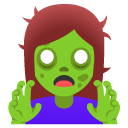
A female-presenting zombie character with undead features including pale or green skin, blank or bloodshot eyes, and outstretched arms, representing the classic zombie archetype.
02What does 🧟♀️ mean on TikTok?
Symbol of relatable exhaustion, burnout culture, and surviving life on minimal sleep or energy.
03What does 🧟♀️ mean on WhatsApp?
Sent to express extreme tiredness or the feeling of being undead after a rough day, night shift, or long travel.
04What does 🧟♀️ mean in Gen-Z slang?
Used to express extreme exhaustion, burnout, or operating on autopilot — 'I'm literally a zombie right now.' Also used humorously for Monday mornings, post-party states, or academic overload.
05Is the 🧟♀️ emoji safe to use?
Expressing tiredness, burnout, Halloween spirit, horror fandom, or survival humor in everyday digital communication.
06What does 🧟♀️ mean in texting?
The zombie metaphor resonates psychologically as a symbol of losing one's sense of self or agency — often used when someone feels they are going through the motions without purpose, mirroring clinical descriptions of depersonalization or burnout.
07What is the shortcode for 🧟♀️?
The shortcode for Woman Zombie is :woman_zombie:
08What does 🧟♀️ mean in dating?
Rarely used for flirting directly; may be sent humorously after a late-night date conversation, e.g., 'I'm 🧟♀️ but still texting you.' Signals endearing vulnerability.
Safety & usage
- Safe meaning
- Expressing tiredness, burnout, Halloween spirit, horror fandom, or survival humor in everyday digital communication.
- Caution
- Could theoretically be used in contexts involving threats or dehumanization if combined with targeting language, though this is rare given the emoji's overwhelmingly comedic connotations.
Generally safe and benign. In rare cases, when used repeatedly in discussions about self-neglect or extreme mental health deterioration, it may signal genuine distress masked as humor — context sensitivity is advisable.
How it looks across platforms
Appearance varies by platform and device. Google Noto, Twemoji, and OpenMoji are open-source.