👩🏿🤝👩🏻
The Emoji
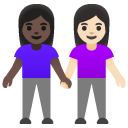
Women Holding Hands: Dark Skin Tone, Light Skin Tone
U+1F469 U+1F3FF U+200D U+1F91D U+200D U+1F469 U+1F3FB · :women_holding_hands_dark_skin_tone_light_skin_tone:
Trend 62
Meaning layers
- interpretation
- Used to celebrate female friendships, LGBTQ+ relationships, and interracial solidarity. Often signals 'bestie energy,' queer pride, or allyship. Also used to represent the 'we're different but we vibe' dynamic.
- tiktok usage
- Appears in friendship montages, LGBTQ+ coming-out videos, interracial friendship content, and 'this is us' captions. Frequently paired with Taylor Swift or Olivia Rodrigo audio.
- irony level
- 2 / 10
Platform meanings
- meaning
- Represents female friendship, queer relationships, and interracial bonding. Used in feel-good content, coming-out videos, and diversity-positive storytelling.
- trend usage
- Appears in 'POV: you found your person' trends, friendship appreciation videos, Pride Month content, and 'different worlds but same wavelength' narratives.
- hashtags
- #girlswhoholdhands#wlw#interracialfriendship#pridevibes#bestiesforever
- virality score
- 68 / 100
Cultural meanings
🇺🇸
Western / Gen-Z
Strongly associated with WLW identity, interracial solidarity, and Pride culture. Widely recognized and positively received among Gen Z in North America and Western Europe.
🇵🇰
Pakistan & India
Primarily interpreted as platonic female friendship or sisterhood. LGBTQ+ connotations are generally not acknowledged publicly due to cultural and legal contexts, though urban queer communities use it with full awareness.
🌍
Middle East
Understood almost exclusively as female friendship or sisterhood. Open LGBTQ+ usage is extremely rare and risky given legal and social frameworks in many countries.
🌐
Global Neutral
Universally readable as two women of different skin tones sharing a bond — whether friendly, sisterly, or romantic depending on cultural lens.
🇧🇩
Bangladesh
Seen as a symbol of female friendship or cross-cultural sisterhood. LGBTQ+ interpretation is largely absent in mainstream usage due to conservative social norms.
🇱🇰
Sri Lanka
Interpreted as close female companionship. Interracial messaging resonates in multicultural contexts; queer reading is niche and mostly urban.
🇨🇳
China
Used to represent female friendship (闺蜜 energy). LGBTQ+ reading exists in progressive online communities but is subdued due to platform censorship and social conservatism.
🇯🇵
Japan
Associated with 'yuri' (female same-sex romance) culture in fan communities, and with sisterhood/friendship (女子力) in mainstream contexts. Both readings coexist openly.
🇰🇷
South Korea
Interpreted as close female friendship (여사친) in mainstream use. WLW communities on platforms like Twitter use it with queer meaning. Skin tone diversity aspect is noted positively.
🇹🇼
Taiwan
One of the most LGBTQ+-affirming contexts in Asia — used openly to represent lesbian relationships or female solidarity, with interracial diversity also celebrated.
🇭🇰
Hong Kong
Used for close female friendship and, in progressive circles, queer relationships. The interracial element resonates in the multicultural urban context.
🇵🇭
Philippines
Interpreted as female best friendship or 'BFF' energy. LGBTQ+ reading is growing in acceptance, especially among younger urban users.
🇮🇩
Indonesia
Primarily read as platonic female friendship. LGBTQ+ interpretation is largely underground due to social and religious conservatism.
🇹🇭
Thailand
In a culture familiar with diverse gender identities, used for close female friendship or lesbian relationships. The skin tone contrast may also reference Thai-international friendships.
🇻🇳
Vietnam
Used for female friendship. Queer interpretation exists in younger, urban, globally-connected communities but is not mainstream.
🇲🇾
Malaysia
Understood as female friendship or sisterhood. LGBTQ+ usage is very discreet due to legal restrictions and social norms.
🇸🇦
Saudi Arabia
Interpreted strictly as female friendship or sisterhood. Any romantic or queer connotation would be considered inappropriate and is avoided.
🇦🇪
UAE
Similar to Saudi Arabia — female friendship reading dominates. In expat and cosmopolitan circles, LGBTQ+ connotation may be understood but is not displayed publicly.
🇪🇬
Egypt
Seen as female camaraderie. Queer interpretation is not publicly acknowledged; conservative social norms shape usage.
🇹🇷
Turkey
Used for female friendship and solidarity. In urban, progressive communities, LGBTQ+ reading is known and used discreetly.
🇮🇷
Iran
Understood as female friendship. LGBTQ+ connotation is highly sensitive and avoided in any public or semi-public digital context.
🇳🇬
Nigeria
Generally read as female friendship or sisterhood. Queer interpretation is extremely rare and avoided in public contexts due to legal and social restrictions.
🇿🇦
South Africa
One of the most LGBTQ+-affirming contexts in Africa — used openly for both queer female relationships and interracial female friendships, both of which carry historical significance.
🇬🇧
UK & Ireland
Well understood in both its friendship and WLW romantic meanings. Used actively in Pride content, diversity campaigns, and everyday queer expression.
🇫🇷
France
Used for female friendship and LGBTQ+ expression. The interracial aspect also resonates strongly in conversations about French multicultural society.
🇩🇪
Germany
Recognized for both female friendship and lesbian relationship representation. Used in LGBTQ+ advocacy and diversity contexts, reflecting Germany's progressive social policies.
🇪🇸
Spain & Italy
In Spain, broadly used for female solidarity and queer relationships especially in Pride contexts. In Italy, more commonly interpreted as close female friendship, with LGBTQ+ usage growing in urban areas.
🇧🇷
Brazil
Deeply resonant in both LGBTQ+ communities (Brazil has one of the world's largest Pride events) and interracial friendship contexts given Brazil's diverse population.
🇲🇽
Mexico
Used for female friendship and increasingly for WLW expression as LGBTQ+ visibility grows, especially in urban centers like Mexico City.
🌎
Latin America
Broadly understood as female friendship across the region. WLW usage is growing in major cities while remaining more discreet in conservative rural areas.
🇦🇺
Australia & NZ
Strongly positive connotations for both queer female relationships and interracial friendships. Widely used in Pride, diversity, and women's empowerment content.
How its meaning shifted
- 2010
This specific emoji did not exist. Handholding couple emojis were limited and lacked skin tone customization entirely.
- 2015
Basic couple emojis existed but skin tone modifiers and gender-specific combinations were just beginning to be introduced. This combination was not yet available.
- 2020
Became available as part of Unicode's expanded skin tone combination system. Used primarily in LGBTQ+ and diversity spaces, with growing adoption in Pride Month content and interracial friendship posts.
- 2026
Mainstream usage has normalized significantly. Widely used across demographics to represent female friendship, WLW relationships, and interracial bonds. Appears regularly in brand communications, cultural media, and everyday personal expression.
See it on every platform
Compare with
Adjacent emojis
Share & embed
Frequently asked
01What does the 👩🏿🤝👩🏻 Women Holding Hands: Dark Skin Tone, Light Skin Tone emoji mean?
Two women holding hands, with the left woman having dark skin tone and the right woman having light skin tone, representing female friendship, partnership, solidarity, or romantic relationship between women of different skin tones.
02What does 👩🏿🤝👩🏻 mean on TikTok?
Represents female friendship, queer relationships, and interracial bonding. Used in feel-good content, coming-out videos, and diversity-positive storytelling.
03What does 👩🏿🤝👩🏻 mean on WhatsApp?
Used to express deep friendship or romantic affection between two women, especially when they're of different backgrounds. Sent as a 'we're a team' signal.
04What does 👩🏿🤝👩🏻 mean in Gen-Z slang?
Used to celebrate female friendships, LGBTQ+ relationships, and interracial solidarity. Often signals 'bestie energy,' queer pride, or allyship. Also used to represent the 'we're different but we vibe' dynamic.
05Is the 👩🏿🤝👩🏻 emoji safe to use?
Represents female friendship, sisterhood, interracial solidarity, or a loving WLW relationship. Positive and affirming in most contexts.
06What does 👩🏿🤝👩🏻 mean in texting?
The combination of two women plus contrasting skin tones activates feelings of inclusive belonging and cross-cultural unity. Psychologically signals safety, trust, and the breaking of social barriers through personal connection.
07What is the shortcode for 👩🏿🤝👩🏻?
The shortcode for Women Holding Hands: Dark Skin Tone, Light Skin Tone is :women_holding_hands_dark_skin_tone_light_skin_tone:
08What does 👩🏿🤝👩🏻 mean in dating?
Used by WLW (women who love women) individuals to signal interest or communicate a relationship status. Sending this to someone can subtly imply romantic interest or confirm a queer relationship.
Safety & usage
- Safe meaning
- Represents female friendship, sisterhood, interracial solidarity, or a loving WLW relationship. Positive and affirming in most contexts.
- Caution
- Could be used sarcastically to mock performative allyship or tokenistic diversity efforts. Rarely weaponized but possible in hostile contexts.
In culturally conservative regions, any LGBTQ+ reading may be considered offensive or illegal. Users in such regions should be aware of local context. Otherwise, this emoji carries very low risk and high positive sentiment.
How it looks across platforms


Appearance varies by platform and device. Google Noto, Twemoji, and OpenMoji are open-source.