🧏🏿♂️
The Emoji
Deaf Man: Dark Skin Tone
U+1F9CF U+1F3FF U+200D U+2642 U+FE0F · :deaf_man_dark_skin_tone:
Trend 38
Meaning layers
- interpretation
- Used to signal 'not listening,' selective hearing, or intentional ignorance of someone's opinion or drama. Also used in solidarity with Deaf communities.
- tiktok usage
- Appears in comment sections when someone wants to express they're tuning out negativity or toxic opinions, often paired with 'can't hear the hate'.
- irony level
- 5 / 10
Platform meanings
- meaning
- Symbol of tuning out negativity, unbothered attitude, or genuine Deaf representation in inclusive content.
- trend usage
- Used in comment sections under videos about ignoring drama, toxic people, or for Deaf awareness TikToks.
- hashtags
- #DeafTikTok#CannotHearTheHaters#DeafAwareness#Unbothered#DeafCommunity
- virality score
- 42 / 100
Cultural meanings
🇺🇸
Western / Gen-Z
Primarily used as a 'can't hear the hate' unbothered symbol or as genuine Deaf representation in inclusive Gen Z spaces.
🇵🇰
Pakistan & India
Occasionally used to express ignoring family pressure or drama; rarely used in Deaf advocacy contexts due to limited mainstream deaf culture visibility.
🌍
Middle East
Used mostly at face value for Deaf representation; some younger users adopt the 'not listening' ironic interpretation from global internet culture.
🌐
Global Neutral
Universally recognized as representing a Deaf man with dark skin tone; used for accessibility awareness and representation globally.
🇧🇩
Bangladesh
Primarily understood as a disability representation emoji; used in accessibility awareness posts and occasionally to express ignoring criticism.
🇱🇰
Sri Lanka
Used in health and disability awareness contexts; not commonly seen in ironic or meme usage.
🇨🇳
China
Appears in discussions about disability inclusion and representation; the dark skin tone modifier may reduce usage frequency due to low dark-skinned demographic identification.
🇯🇵
Japan
Used carefully in disability representation contexts; Japanese internet culture may use it in 'not listening' meme formats inspired by global trends.
🇰🇷
South Korea
Adopted in progressive online spaces for disability representation; younger Koreans may use it as a 'blocking out negativity' symbol.
🇹🇼
Taiwan
Seen in disability rights discussions and inclusivity content; some use in ironic digital communication.
🇭🇰
Hong Kong
Used in accessibility and representation discussions; occasionally appears in Cantonese-language meme culture as an unbothered symbol.
🇵🇭
Philippines
Common in OFW and youth spaces as a 'not listening to drama' emoji; also used in genuine disability awareness campaigns.
🇮🇩
Indonesia
Used in disability awareness and inclusive design discussions; younger users adopt it for the unbothered meme meaning.
🇹🇭
Thailand
Appears in social media content about Deaf Thai communities and broader disability inclusion; some ironic use among youth.
🇻🇳
Vietnam
Used primarily for disability representation and awareness; ironic 'not listening' usage is emerging among Vietnamese youth online.
🇲🇾
Malaysia
Adopted in multicultural online spaces for both genuine Deaf representation and the 'ignoring drama' interpretation.
🇸🇦
Saudi Arabia
Used in disability advocacy and awareness contexts; darker skin tone representation resonates with diverse Saudi demographics.
🇦🇪
UAE
Seen in inclusive workplace and multicultural representation posts; the UAE's diverse population means the dark skin tone is widely relatable.
🇪🇬
Egypt
Primarily used in disability awareness contexts; some youth adopt the 'not hearing criticism' interpretation in online spaces.
🇹🇷
Turkey
Used in disability rights discussions and occasionally in youth culture for the unbothered, ignoring-drama meaning.
🇮🇷
Iran
Appears in disability awareness and health discussions; limited ironic use due to stricter internet culture norms.
🇳🇬
Nigeria
Widely relatable due to dark skin tone representation; used in Deaf awareness, Afrocentric pride, and 'ignoring toxicity' contexts.
🇿🇦
South Africa
Strongly resonates due to skin tone representation; used in disability rights discussions, youth empowerment, and Deaf community advocacy.
🇬🇧
UK & Ireland
Used in Deaf awareness campaigns and as an unbothered symbol in British youth internet culture; associated with BSL (British Sign Language) communities.
🇫🇷
France
Appears in disability inclusion and diversity discussions; some ironic use in French meme culture.
🇩🇪
Germany
Used in formal accessibility and workplace inclusion contexts; also appears in German online humor as a 'not listening' reaction.
🇪🇸
Spain & Italy
Adopted in disability advocacy posts and among younger users as a carefree, unbothered attitude symbol.
🇧🇷
Brazil
Highly used in Black Brazilian communities for representation and empowerment; also popular as an unbothered or 'can't hear the haters' meme.
🇲🇽
Mexico
Used in disability awareness and occasionally as a humorous 'not listening to critics' emoji in Mexican internet culture.
🌎
Latin America
Broadly used for dark skin tone representation and disability inclusion across Latin America; unbothered meme usage is growing.
🇦🇺
Australia & NZ
Used in Deaf community advocacy, indigenous representation contexts, and by youth for the 'ignoring drama' internet meaning.
How its meaning shifted
- 2010
This specific emoji did not exist in 2010; sign language and deaf representation emojis were not yet part of the Unicode standard.
- 2015
Still non-existent in standard emoji sets; disability and skin tone modifier emojis were just beginning to be introduced.
- 2020
Introduced as part of expanded diversity emoji sets; used primarily in Deaf awareness contexts and accessibility advocacy following Unicode 12.0+ rollouts.
- 2026
Dual usage firmly established: genuine Deaf representation and advocacy alongside mainstream ironic 'can't hear the haters' meme culture, especially prominent during Disability Pride Month.
See it on every platform
Compare with
Adjacent emojis
Share & embed
Frequently asked
01What does the 🧏🏿♂️ Deaf Man: Dark Skin Tone emoji mean?
A male figure with dark skin tone placing one or both hands near the ear to indicate deafness or hearing impairment.
02What does 🧏🏿♂️ mean on TikTok?
Symbol of tuning out negativity, unbothered attitude, or genuine Deaf representation in inclusive content.
03What does 🧏🏿♂️ mean on WhatsApp?
Playfully used to say 'I'm not listening to this' or to show support for a Deaf friend or family member.
04What does 🧏🏿♂️ mean in Gen-Z slang?
Used to signal 'not listening,' selective hearing, or intentional ignorance of someone's opinion or drama. Also used in solidarity with Deaf communities.
05Is the 🧏🏿♂️ emoji safe to use?
Represents a Deaf man with dark skin tone; used for disability awareness, inclusivity, Deaf community representation, and empowerment.
06What does 🧏🏿♂️ mean in texting?
Carries dual emotional weight — genuine representation and advocacy for deaf communities, but also co-opted as a symbol of emotional detachment and self-protection from criticism.
07What is the shortcode for 🧏🏿♂️?
The shortcode for Deaf Man: Dark Skin Tone is :deaf_man_dark_skin_tone:
08What does 🧏🏿♂️ mean in dating?
Rarely used for flirting; may be used humorously to say 'I can't hear my ex calling' when moving on.
Safety & usage
- Safe meaning
- Represents a Deaf man with dark skin tone; used for disability awareness, inclusivity, Deaf community representation, and empowerment.
- Caution
- Occasionally misused to mockingly imply someone is ignoring important information or being willfully ignorant in harmful contexts.
Care should be taken not to use this emoji mockingly in contexts that could trivialize deafness or disability; ironic usage should remain respectful.
How it looks across platforms
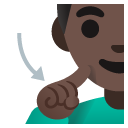
Appearance varies by platform and device. Google Noto, Twemoji, and OpenMoji are open-source.