🌗
The Emoji
Last Quarter Moon
U+1F317 · :last_quarter_moon:
Trend 52
Meaning layers
- interpretation
- Used to signal a moody, liminal, or transitional vibe — often paired with aesthetic night content, introspective captions, or dark academia energy. Also used to indicate being in a 'half-here, half-gone' emotional state.
- tiktok usage
- Appears in moody night-time video captions, lo-fi study content, and 'dark side of me' storytelling. Often used to set a mysterious or reflective tone.
- irony level
- 3 / 10
Platform meanings
- meaning
- Sets a moody, atmospheric, or transitional tone in video captions and comments. Signals late-night creative or emotional content.
- trend usage
- Used in dark academia, night drives, journaling, lo-fi aesthetic, and 'things I do at 3am' trends.
- hashtags
- #moonmood#lastquartermoon#nightvibes#darkaesthetics#moonphase
- virality score
- 58 / 100
Cultural meanings
🇺🇸
Western / Gen-Z
Strongly associated with the dark academia and celestial aesthetic movements; used to signal mystery, introspection, and the transitional 'main character at midnight' energy.
🇵🇰
Pakistan & India
Used in Urdu and Hindi poetic contexts evoking the half-moon (adha chand) symbolism of longing and incompleteness, often in romantic or literary social media captions.
🌍
Middle East
Carries strong cultural resonance due to the Islamic significance of the moon; used in contexts of prayer times, Ramadan countdowns, and spiritual reflection.
🌐
Global Neutral
Universally understood as a moon phase emoji representing night, transition, or the celestial; broadly used in astronomical and calendar contexts.
🇧🇩
Bangladesh
Used similarly to the broader South Asian context — moon imagery is poetic and romantic; this specific phase signals melancholy or a waning feeling in captions.
🇱🇰
Sri Lanka
Associated with Poya (full moon) calendar culture; the last quarter moon may signal the approach of important lunar holidays or the end of a festive period.
🇨🇳
China
Moon symbolism is deeply embedded in Chinese culture (Mid-Autumn Festival); this half-moon may signal an incomplete reunion or anticipation of the full moon celebration.
🇯🇵
Japan
In Japan's rich tradition of tsukimi (moon viewing), this emoji is used to reflect on the transient beauty of the moon phase and seasonal change, especially in haiku-style posts.
🇰🇷
South Korea
Used in K-culture social media for moody night aesthetic content and by K-pop fan accounts to set a dramatic or emotional atmosphere in threads.
🇹🇼
Taiwan
Associated with lunar calendar events and used decoratively in seasonal greetings related to moon-observing traditions.
🇭🇰
Hong Kong
Used in a cosmopolitan blend of Western aesthetic meaning and traditional Chinese lunar symbolism, often in creative and artistic social media content.
🇵🇭
Philippines
Used in nighttime social posts, spiritual content, and as a general night aesthetic marker; also appears in folklore-adjacent content about the moon.
🇮🇩
Indonesia
Appears in Islamic-context posts about lunar calendar and in aesthetic Javanese cultural content; also used in general moody night captions.
🇹🇭
Thailand
Associated with Loy Krathong and lunar festival seasons; used to signal the waning phase preceding important moon-centered festivals.
🇻🇳
Vietnam
Connected to Tết Trung Thu (Mid-Autumn Festival) cultural context; this phase signals the lead-up or conclusion of festival-related moon content.
🇲🇾
Malaysia
Used in both Islamic lunar calendar contexts and in general aesthetic social media content; dual cultural resonance in a multicultural setting.
🇸🇦
Saudi Arabia
Predominantly used in Islamic moon-sighting and religious calendar contexts; signals the lunar cycle relevant to Ramadan and Eid calculations.
🇦🇪
UAE
Used in a cosmopolitan blend of Islamic lunar significance and modern aesthetic social media content, particularly in multilingual posts.
🇪🇬
Egypt
Carries strong associations with Islamic lunar calendar use; also used in ancient-Egypt-inspired aesthetic content due to the moon's mythological importance.
🇹🇷
Turkey
Used in contexts of Islamic lunar observance and also in broader romantic or poetic social media posts, referencing Ottoman literary moon symbolism.
🇮🇷
Iran
Associated with Persian poetry traditions where the moon is a central romantic and spiritual symbol; this phase may evoke themes of longing and transition.
🇳🇬
Nigeria
Used in nighttime social posts and in spiritual or prayer-related content; also appears in Afrobeats aesthetic posts for moody late-night vibes.
🇿🇦
South Africa
Used broadly as a night and mood emoji; also appears in content about Southern Hemisphere stargazing and astronomy communities.
🇬🇧
UK & Ireland
Used within dark academia and Gothic aesthetic communities; also appears in pagan and Wiccan-adjacent social media tied to lunar cycles.
🇫🇷
France
Associated with romantic nighttime imagery and philosophical moodiness; used in aesthetic French-language posts about solitude and transition.
🇩🇪
Germany
Used in scientific and astronomical contexts as well as in introspective social media posts; German audiences tend to use it more literally than ironically.
🇪🇸
Spain & Italy
Associated with romantic night imagery and Mediterranean night-life aesthetics; used in moody captions and late-night social posts.
🇧🇷
Brazil
Used in spiritual and Afro-Brazilian religious contexts (Candomblé lunar symbolism) and broadly in moody nighttime aesthetic social media content.
🇲🇽
Mexico
Appears in Day of the Dead and indigenous lunar calendar aesthetic content, as well as general nighttime and moody social media posts.
🌎
Latin America
Broadly used across Latin America in romantic, spiritual, and night aesthetic contexts; moon imagery is culturally resonant across the region.
🇦🇺
Australia & NZ
Used in stargazing, astronomy enthusiast content, and moody Southern Hemisphere night posts; also popular in indigenous lunar calendar discussions.
How its meaning shifted
- 2010
Used almost exclusively in its literal sense — to indicate the moon phase in weather apps, astronomy discussions, and basic nighttime references.
- 2015
Began appearing in aesthetic Tumblr and early Instagram posts as part of celestial and mystical visual trends, alongside zodiac and space content.
- 2020
Became deeply embedded in dark academia, witchcore, and lo-fi aesthetic movements on TikTok and Instagram, shifting from literal to mood-signaling usage.
- 2026
Widely used as a shorthand for transitional life moments, late-night moods, and half-committed emotional states; established in Gen Z visual vocabulary alongside astrology content.
See it on every platform
Compare with
Adjacent emojis
- Opposite
- sunsunrisebright button
- Often confused with
- first quarter moonwaning crescent moonwaxing crescent moon
- Can replace
- crescent moonfull moonnight with stars
Share & embed
Frequently asked
01What does the 🌗 Last Quarter Moon emoji mean?
The Last Quarter Moon emoji depicts the moon in its last quarter phase, showing the left half illuminated and the right half in shadow, representing the waning crescent stage before a new moon.
02What does 🌗 mean on TikTok?
Sets a moody, atmospheric, or transitional tone in video captions and comments. Signals late-night creative or emotional content.
03What does 🌗 mean on WhatsApp?
Indicates it is nighttime, the sender is in a reflective or quiet mood, or that a conversation is winding down.
04What does 🌗 mean in Gen-Z slang?
Used to signal a moody, liminal, or transitional vibe — often paired with aesthetic night content, introspective captions, or dark academia energy. Also used to indicate being in a 'half-here, half-gone' emotional state.
05Is the 🌗 emoji safe to use?
Moon phase symbol used for astronomy, aesthetics, nighttime references, and emotional mood signaling.
06What does 🌗 mean in texting?
The half-dark moon psychologically evokes feelings of incompleteness, endings, and quiet reflection. It resonates with people processing change or feeling emotionally split between two states.
07What is the shortcode for 🌗?
The shortcode for Last Quarter Moon is :last_quarter_moon:
08What does 🌗 mean in dating?
Used to signal a mysterious or 'dark and moody' personality in a flirtatious way, often paired with late-night texts to suggest availability and a secretive charm.
Safety & usage
- Safe meaning
- Moon phase symbol used for astronomy, aesthetics, nighttime references, and emotional mood signaling.
- Caution
- Occasionally used in occult or dark spiritual communities to signal involvement in shadow magic or esoteric rituals, though this is rare and contextual.
Generally very safe emoji with no significant harmful usage patterns. Context in occult or esoteric communities should be noted but is not broadly concerning.
How it looks across platforms
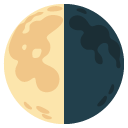


Appearance varies by platform and device. Google Noto, Twemoji, and OpenMoji are open-source.