👨🏻🦽
The Emoji
Man In Manual Wheelchair: Light Skin Tone
U+1F468 U+1F3FB U+200D U+1F9BD · :man_in_manual_wheelchair_light_skin_tone:
Trend 32
Meaning layers
- interpretation
- Used authentically by wheelchair users to represent themselves, or by allies for disability advocacy. Also used ironically to say 'I'm not moving from this spot' or 'rolling into the situation.'
- tiktok usage
- Disability creators use it in their bios and captions. Also used humorously like 'rolling into Monday 👨🏻🦽' or in accessibility awareness content.
- irony level
- 3 / 10
Platform meanings
- meaning
- Represents wheelchair users, disability identity, and accessibility advocacy. Also used humorously in 'rolling into' trend captions.
- trend usage
- Disability TikTok (#DisabledTikTok) creators use it heavily. Appears in adaptive sports content, accessibility challenge videos, and chronic illness storytelling.
- hashtags
- #DisabledTikTok#WheelchairLife#AccessibilityMatters#CrippledHumor#AdaptiveSports
- virality score
- 38 / 100
Cultural meanings
🇺🇸
Western / Gen-Z
Widely used as authentic disability representation; Gen Z disability creators have reclaimed it with pride and humor, rejecting pity-based interpretations.
🇵🇰
Pakistan & India
Primarily used literally to reference disability or mobility impairment. Growing use among urban disability advocates for representation and awareness campaigns.
🌍
Middle East
Used respectfully to reference individuals with mobility disabilities. Disability advocacy is growing but the emoji remains mostly literal in usage.
🌐
Global Neutral
Universally understood as representing a person using a manual wheelchair; used for accessibility discussions and disability representation across all platforms.
🇧🇩
Bangladesh
Used in disability rights NGO contexts and accessibility awareness posts. Literal interpretation dominates; cultural stigma around disability limits casual use.
🇱🇰
Sri Lanka
Appears in disability welfare content and charity-related posts. Used straightforwardly to denote wheelchair users or accessibility topics.
🇨🇳
China
Used primarily in disability welfare and Paralympic coverage contexts. WeChat and Weibo users deploy it during national disability awareness campaigns.
🇯🇵
Japan
Associated with accessibility signage culture (Japan has strong universal design tradition). Used respectfully in accessibility and barrier-free living discussions.
🇰🇷
South Korea
Used in disability awareness campaigns and K-wellness content. Growing representation movement means younger Koreans use it more confidently as identity.
🇹🇼
Taiwan
Used in accessibility advocacy and disability rights content. Taiwan's progressive disability policy culture means it appears in civic tech and policy discussions too.
🇭🇰
Hong Kong
Used in accessibility and social welfare discussions. Appears in content about Hong Kong's public transport accessibility features and challenges.
🇵🇭
Philippines
Used in disability awareness posts, PWD (Persons with Disability) advocacy content, and during events around the International Day of Persons with Disabilities.
🇮🇩
Indonesia
Used by disability NGOs and in social awareness campaigns. Emoji use is growing with urban disability rights movements in Jakarta and other cities.
🇹🇭
Thailand
Associated with disability welfare and royal patronage charity initiatives. Used in accessibility posts and during Thai Disability Day observances.
🇻🇳
Vietnam
Used in disability support and veterans' welfare contexts given historical context of war-related disabilities. Slowly entering mainstream awareness content.
🇲🇾
Malaysia
Used in OKU (Orang Kurang Upaya / Persons with Disabilities) rights and accessibility discussions. Common in Malaysian disability advocacy social media.
🇸🇦
Saudi Arabia
Used in disability inclusion and accessibility content. Saudi Vision 2030 disability inclusion initiatives have increased positive visibility of such symbols.
🇦🇪
UAE
Used in Dubai and Abu Dhabi accessibility and smart city content. UAE's push for world-class accessibility infrastructure gives this emoji positive, forward-looking context.
🇪🇬
Egypt
Used in disability awareness and social welfare content. Egyptian disability advocacy groups use it in campaigns for public space accessibility improvements.
🇹🇷
Turkey
Used in disability rights and accessibility content. Turkish disability organizations use it in social media campaigns for inclusive urban design.
🇮🇷
Iran
Used carefully in disability welfare and veterans' support contexts. Appears in content related to war veterans with disabilities and state disability services.
🇳🇬
Nigeria
Used in disability rights advocacy content. Growing Nigerian disability activist community uses it on Twitter and Instagram to demand inclusion and accessibility.
🇿🇦
South Africa
Used in disability rights and Section 9 (equality clause) advocacy content. Common in disability sport (Paralympic legacy from Johannesburg) and inclusion campaigns.
🇬🇧
UK & Ireland
Used by disability rights advocates, Disability UK communities, and in discussions about DLA/PIP benefits, accessible transport, and Blue Badge schemes.
🇫🇷
France
Used in handicap/accessibilité discussions. The French disability rights movement uses it alongside hashtags like #HandicapFier (Disability Pride) on social platforms.
🇩🇪
Germany
Used in Barrierefreiheit (accessibility) and inclusion (Inklusion) discussions. Appears in content about German disability law (SGB IX) and inclusive education.
🇪🇸
Spain & Italy
Used in disability awareness and accessibility content. Spanish and Italian disability pride movements are growing, increasing positive, empowered usage of this emoji.
🇧🇷
Brazil
Used in acessibilidade and inclusão discussions. Brazilian disability activists use it widely on Twitter and Instagram to highlight barriers in urban infrastructure.
🇲🇽
Mexico
Used in discapacidad and accesibilidad advocacy content. Appears during events like Día Internacional de las Personas con Discapacidad with growing frequency.
🌎
Latin America
Used across Latin America in disability rights and accessibility advocacy. Growing regional disability pride movements are shifting usage from pity-based to empowerment-based.
🇦🇺
Australia & NZ
Used in NDIS (National Disability Insurance Scheme) discussions, disability sport content, and accessibility advocacy by both disabled people and allies.
How its meaning shifted
- 2010
Emoji did not yet exist; wheelchair representation was limited to the generic blue wheelchair symbol (♿) with no human figure or skin tone.
- 2015
Still pre-release; disability representation in emoji was a growing advocacy topic. The generic wheelchair symbol was the only option available.
- 2020
Newly released (Unicode 12.0, 2019); early adopters in disability communities began using it for self-representation. Initial usage was mostly literal and awareness-focused.
- 2026
Established as a key disability identity emoji. Used confidently by wheelchair users, disability creators, and allies. Ironic and humorous usage has grown alongside serious advocacy use.
See it on every platform
Compare with
Adjacent emojis
Share & embed
Frequently asked
01What does the 👨🏻🦽 Man In Manual Wheelchair: Light Skin Tone emoji mean?
A man with light skin tone using a manual wheelchair, depicted facing forward or slightly angled. Represents disability, mobility aid users, and accessibility.
02What does 👨🏻🦽 mean on TikTok?
Represents wheelchair users, disability identity, and accessibility advocacy. Also used humorously in 'rolling into' trend captions.
03What does 👨🏻🦽 mean on WhatsApp?
Used to represent a wheelchair-using friend or family member, or to flag an accessibility need when planning outings.
04What does 👨🏻🦽 mean in Gen-Z slang?
Used authentically by wheelchair users to represent themselves, or by allies for disability advocacy. Also used ironically to say 'I'm not moving from this spot' or 'rolling into the situation.'
05Is the 👨🏻🦽 emoji safe to use?
Representation of a man with light skin tone using a manual wheelchair; used for disability identity, accessibility advocacy, and inclusive representation.
06What does 👨🏻🦽 mean in texting?
For wheelchair users, this emoji can be deeply affirming as representation. For non-disabled users, it may signal empathy or allyship. Misuse can feel othering or infantilizing to the disabled community.
07What is the shortcode for 👨🏻🦽?
The shortcode for Man In Manual Wheelchair: Light Skin Tone is :man_in_manual_wheelchair_light_skin_tone:
08What does 👨🏻🦽 mean in dating?
Rarely used in flirtatious contexts. Wheelchair users may include it in dating profiles as honest self-representation and identity signaling.
Safety & usage
- Safe meaning
- Representation of a man with light skin tone using a manual wheelchair; used for disability identity, accessibility advocacy, and inclusive representation.
- Caution
- Rarely used toxically, but can be weaponized as a mock or insult implying someone is weak, helpless, or needs to be 'taken out' in gaming contexts.
Avoid using this emoji to mock disability or imply someone is pathetically helpless. Do not use it as a metaphor for laziness. Using it to represent disabled people without context in dehumanizing jokes is harmful.
How it looks across platforms
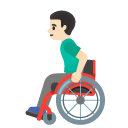


Appearance varies by platform and device. Google Noto, Twemoji, and OpenMoji are open-source.