👨🏼🦯➡️
The Emoji
Man With White Cane Facing Right: Medium-light Skin Tone
U+1F468 U+1F3FC U+200D U+1F9AF U+200D U+27A1 U+FE0F · :man_with_white_cane_facing_right_mediumlight_skin_tone:
Trend 22
Meaning layers
- interpretation
- Used humorously to suggest someone is 'walking blind' into a situation, going somewhere without a clue, or navigating life chaotically. Also used sincerely in disability advocacy and representation contexts.
- tiktok usage
- Appears in videos about navigating awkward situations, going into something unprepared, or as part of disability awareness content. Sometimes paired with 'me walking into [bad situation]' meme formats.
- irony level
- 4 / 10
Platform meanings
- meaning
- Represents going into something unprepared, navigating life blind, or disability representation content.
- trend usage
- Used in 'POV: me walking into [situation] 👨🏼🦯➡️' caption formats, disability advocacy duets, and accessibility awareness challenges.
- hashtags
- #DisabilityAwareness#BlindTikTok#WalkingBlind#Accessibility#DisabilityRepresentation
- virality score
- 28 / 100
Cultural meanings
🇺🇸
Western / Gen-Z
Used in two distinct ways: sincerely for disability representation and Gen Z visibility advocacy, and humorously in meme culture to describe blundering forward without a plan.
🇵🇰
Pakistan & India
Primarily understood in its literal sense as representation of visually impaired individuals; disability-related emojis are more commonly used in awareness campaigns than casual conversation.
🌍
Middle East
Interpreted literally as a symbol of visual impairment; used in disability awareness posts particularly around Islamic guidance on caring for people with disabilities.
🌐
Global Neutral
Universally recognizable as a symbol of blindness and visual impairment; the directional facing adds a sense of movement and purposeful navigation.
🇧🇩
Bangladesh
Used mainly in disability awareness and social welfare contexts; white cane symbolism is well understood in urban communities through NGO and advocacy work.
🇱🇰
Sri Lanka
Appears in disability rights discussions and inclusive education advocacy; generally interpreted literally without widespread ironic usage.
🇨🇳
China
Used in accessibility and social welfare content online; in younger communities may carry the humorous 'navigating life blindly' interpretation borrowed from global meme culture.
🇯🇵
Japan
Strongly associated with disability representation and social welfare; Japan has high white cane recognition due to tactile paving infrastructure, giving this emoji a grounded literal meaning.
🇰🇷
South Korea
Recognized in disability advocacy content; younger Korean internet users may adopt the global meme usage of 'walking blindly into situations' in casual digital spaces.
🇹🇼
Taiwan
Used in accessibility awareness and disability representation posts; the directional element may be interpreted as purposeful forward movement in motivational contexts.
🇭🇰
Hong Kong
Primarily literal in disability representation contexts; may appear in social commentary about navigating uncertain political or social situations metaphorically.
🇵🇭
Philippines
Used in disability awareness campaigns and inclusive education content; the Catholic charitable tradition means disability emojis are often used in compassionate, sincere contexts.
🇮🇩
Indonesia
Interpreted literally in disability advocacy and Islamic charity contexts; rarely used ironically in mainstream Indonesian digital culture.
🇹🇭
Thailand
Used in disability representation and social inclusion posts; may appear in Buddhist-influenced content about compassion and care for those with disabilities.
🇻🇳
Vietnam
Primarily appears in disability welfare and awareness contexts; straightforward literal interpretation is most common across Vietnamese digital platforms.
🇲🇾
Malaysia
Used in disability awareness content across multilingual Malaysian communities; sincere usage dominates over ironic interpretations.
🇸🇦
Saudi Arabia
Appears in disability rights and Islamic social welfare content; the emoji is respected and used seriously given Islamic emphasis on supporting people with disabilities.
🇦🇪
UAE
Used in inclusion and accessibility initiatives, particularly given UAE's push for smart city accessibility; both literal and motivational forward-moving interpretations are common.
🇪🇬
Egypt
Used in disability awareness and social support contexts; literal interpretation is predominant, often appearing around White Cane Day awareness campaigns.
🇹🇷
Turkey
Appears in disability rights discussions and social inclusion content; younger Turkish users may adopt global meme culture usage in informal digital spaces.
🇮🇷
Iran
Used in disability welfare and social awareness contexts; interpreted literally and respectfully given cultural and religious values around supporting those with disabilities.
🇳🇬
Nigeria
Used in disability advocacy and inclusive development content; growing disability rights movement in Nigeria gives this emoji increasing visibility in awareness campaigns.
🇿🇦
South Africa
Appears in disability rights, inclusive education, and accessibility advocacy; both literal usage and the global 'walking blind' humor exist in younger South African digital communities.
🇬🇧
UK & Ireland
Used in disability representation, accessibility policy discussions, and White Cane Day campaigns; ironic 'walking into things blindly' usage also common among younger British audiences.
🇫🇷
France
Appears in disability inclusion and accessibility advocacy content; French digital culture may use it metaphorically in political commentary about leaders navigating issues blindly.
🇩🇪
Germany
Used in accessibility and inclusion contexts with German precision and seriousness; also appears in policy discussions about disability rights under German social welfare frameworks.
🇪🇸
Spain & Italy
Appears in disability awareness posts and accessibility campaigns; in younger Mediterranean digital culture may carry humorous self-deprecating usage about navigating life chaotically.
🇧🇷
Brazil
Used in disability representation and inclusão social content; younger Brazilians may incorporate it into humor about navigating confusing situations or making impulsive decisions.
🇲🇽
Mexico
Appears in disability awareness and inclusive education contexts; also used humorously among younger Mexican users in 'going in blind' meme formats.
🌎
Latin America
Broadly used for disability representation and awareness across Latin American countries; the directional movement element resonates in motivational content about moving forward despite challenges.
🇦🇺
Australia & NZ
Used in disability representation, NDIS discussions, and accessibility advocacy; the relaxed Australian digital culture also embraces the 'walking blindly into chaos' humorous interpretation.
How its meaning shifted
- 2010
Emoji of this complexity did not exist in 2010; basic smiley faces and simple objects dominated early emoji sets with no disability representation.
- 2015
Disability emojis were beginning to be advocated for but not yet widely available; disability representation in emoji was a growing conversation in accessibility communities.
- 2020
Following Unicode's expansion of disability emojis, this type of emoji began appearing in disability advocacy content, accessibility discussions, and early ironic meme usage.
- 2026
Established dual usage: sincere disability representation and advocacy by visually impaired communities and allies, alongside widespread ironic meme usage depicting oblivious navigation of modern life situations.
See it on every platform
Compare with
Adjacent emojis
- Often confused with
- walking personpedestrianman with probing cane
- Can replace
- person with white canewhite caneguide dog
Share & embed
Frequently asked
01What does the 👨🏼🦯➡️ Man With White Cane Facing Right: Medium-light Skin Tone emoji mean?
A man with medium-light skin tone using a white cane, facing right, representing a person who is blind or visually impaired navigating in a direction.
02What does 👨🏼🦯➡️ mean on TikTok?
Represents going into something unprepared, navigating life blind, or disability representation content.
03What does 👨🏼🦯➡️ mean on WhatsApp?
Sent to indicate someone is going somewhere or navigating a situation without clear direction. Also used sincerely in disability-related conversations.
04What does 👨🏼🦯➡️ mean in Gen-Z slang?
Used humorously to suggest someone is 'walking blind' into a situation, going somewhere without a clue, or navigating life chaotically. Also used sincerely in disability advocacy and representation contexts.
05Is the 👨🏼🦯➡️ emoji safe to use?
Representation of a visually impaired man navigating independently; used for disability advocacy, inclusion awareness, and representation.
06What does 👨🏼🦯➡️ mean in texting?
This emoji can evoke feelings of admiration for independence and perseverance, or in ironic contexts, mild self-deprecating humor about feeling lost or directionless. It carries strong associations with disability identity and pride movements.
07What is the shortcode for 👨🏼🦯➡️?
The shortcode for Man With White Cane Facing Right: Medium-light Skin Tone is :man_with_white_cane_facing_right_mediumlight_skin_tone:
08What does 👨🏼🦯➡️ mean in dating?
Rarely used in flirting contexts. Occasionally used playfully as in 'walking blindly into feelings for you' but this is uncommon and potentially insensitive.
Safety & usage
- Safe meaning
- Representation of a visually impaired man navigating independently; used for disability advocacy, inclusion awareness, and representation.
- Caution
- Can be used mockingly to imply someone is oblivious, stupid, or blind to obvious information, which can be ableist if used to demean either disabled people or as a general insult.
Users should be mindful of ableist usage. Using this emoji to mock someone's lack of awareness may trivialize visual impairment and disability experiences. Sincere and respectful usage in representation contexts is encouraged.
How it looks across platforms
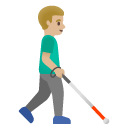
Appearance varies by platform and device. Google Noto, Twemoji, and OpenMoji are open-source.