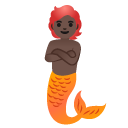
🧜🏿
The Emoji
Merperson: Dark Skin Tone
U+1F9DC U+1F3FF · :merperson_dark_skin_tone:
Trend 58
Meaning layers
- interpretation
- Used to express feeling ethereal, mysterious, or like you don't quite belong on land (in regular society). Also used to signal being deeply connected to the ocean, embracing a fantasy alter ego, or existing outside conventional gender norms.
- tiktok usage
- Appears in ocean aesthetic content, dark fantasy edits, and videos about being 'that girl' who lives by the sea. Also used in identity expression videos particularly by Black creators celebrating their mythological alter egos.
- irony level
- 3 / 10
Platform meanings
- meaning
- Represents ocean aesthetics, fantasy alter egos, and mystical Black identity. Popular in transformation videos, dark academia/dark fantasy edits, and water sign content.
- trend usage
- Used in 'mermaid era' trend videos, afro-fantasy TikToks, and ocean therapy content. Often paired with ethereal music and slow-motion water footage.
- hashtags
- #MermaidEra#AfroFantasy#DarkSkinMermaid#OceanAesthetic#MythologyCheck
- virality score
- 62 / 100
Cultural meanings
🇺🇸
Western / Gen-Z
Heavily associated with afrofuturism and inclusive fantasy aesthetics; celebrated especially after The Little Mermaid (2023) as a symbol of Black excellence in mythological spaces.
🇵🇰
Pakistan & India
Used primarily in the context of ocean travel, fantasy media fandom, or storytelling; the skin tone specificity is appreciated by darker-skinned South Asian users who feel represented.
🌍
Middle East
Mermaids exist in Arab folklore (banat al bahr — daughters of the sea), and this emoji is used in fantasy fan communities and ocean-related content, with the dark skin tone being particularly noted by Gulf Arab and North African users.
🌐
Global Neutral
Broadly understood as a fantasy/mythology emoji representing a merperson; the dark skin tone modifier is universally recognized as part of Unicode's diversity initiative.
🇧🇩
Bangladesh
Used mostly in fantasy media fan communities and among younger users who engage with global pop culture; the dark skin representation resonates with many Bangladeshi users.
🇱🇰
Sri Lanka
Used in ocean-related content given Sri Lanka's island identity, and in fantasy fan communities; appreciated by Sri Lankan users as a darker-skinned mythological representation.
🇨🇳
China
Mermaids (美人鱼, měirén yú) are popular in Chinese pop culture; this emoji is used in fantasy content but the skin tone modifier carries less cultural weight in mainland China's homogeneous emoji culture.
🇯🇵
Japan
Mermaids (人魚, ningyo) are part of Japanese folklore; this emoji appears in fantasy and ocean content but darker skin tones are less commonly engaged with in mainstream Japanese emoji usage.
🇰🇷
South Korea
Used in K-pop fan edits, ocean aesthetic content, and fantasy-themed posts; the dark skin tone modifier is occasionally noted in discussions about diversity in Korean fantasy media.
🇹🇼
Taiwan
Used casually in ocean-themed and fantasy content by younger Taiwanese users; representation aspect is recognized but not heavily foregrounded in usage.
🇭🇰
Hong Kong
Popular among fans of ocean culture and Western/Disney fantasy content; the skin tone diversity is noted by Hong Kong's more internationally connected, diverse social media users.
🇵🇭
Philippines
Deeply resonant — the Philippines has rich mermaid mythology (sirena); the dark skin tone variant is particularly meaningful as many Filipinos are darker-skinned and appreciate seeing themselves in mythological emojis.
🇮🇩
Indonesia
Indonesia's rich maritime culture and local mermaid folklore (putri duyung) make this emoji beloved; darker skin tone representation is celebrated in a country where many citizens are darker-complexioned.
🇹🇭
Thailand
Used in ocean and fantasy aesthetic content; Thailand's own water spirit mythology (nang tani, phra phum) gives this emoji cultural resonance, with dark skin representation appreciated in the beauty-diverse Thai population.
🇻🇳
Vietnam
Used by younger Vietnamese social media users in fantasy and ocean content; the dark skin inclusion is noted positively but the emoji is primarily used for its fantasy aesthetic.
🇲🇾
Malaysia
Malaysia's multicultural population makes the dark skin tone mermaid particularly inclusive and celebrated; used in ocean content, Malay folklore discussions, and afrofuturism-adjacent content.
🇸🇦
Saudi Arabia
Used primarily in fantasy and ocean contexts; mermaid lore exists in Arabic culture and younger Saudi users on platforms like Snapchat use this emoji for dreamy, escapist content.
🇦🇪
UAE
The UAE's diverse, cosmopolitan population means the dark skin tone is celebrated and used across multiple communities; appears in ocean luxury content and fantasy aesthetic posts.
🇪🇬
Egypt
Egypt's connection to the Mediterranean and Red Sea gives this emoji cultural resonance; the dark skin variant is embraced by Egyptians who feel represented in a region with diverse skin tones.
🇹🇷
Turkey
Used in ocean and fantasy content by younger Turkish users; Turkey's coastal culture makes mermaid imagery relatable, and the dark skin tone is noted in diversity conversations.
🇮🇷
Iran
Used in fantasy and ocean aesthetic content mostly among younger Iranians on Instagram; the dark skin modifier is less culturally foregrounded but present in representation discussions.
🇳🇬
Nigeria
Powerfully resonant — Nigeria's Mami Wata (water spirit) mythology deeply connects with mermaid imagery, and the dark skin tone is celebrated as essential Black representation in fantasy emoji.
🇿🇦
South Africa
South Africa's diverse population and strong ocean culture (Cape Town coastline) make this emoji widely used; the dark skin mermaid is celebrated in afrofuturism and Black excellence spaces.
🇬🇧
UK & Ireland
Used in fantasy media fandom, ocean aesthetic content, and diversity discourse; particularly active in UK Black communities celebrating the 2023 Little Mermaid and broader Black fantasy representation.
🇫🇷
France
Used in fantasy and ocean aesthetic content; in France's diverse, multicultural cities, the dark skin tone variant is celebrated as part of inclusive emoji culture and afrofuturism movements.
🇩🇪
Germany
Used by fantasy fans and ocean enthusiasts; in Germany's growing multicultural social media landscape, the dark skin modifier is noted positively in representation discussions.
🇪🇸
Spain & Italy
Popular in coastal culture content and fantasy fandoms; the darker skin tone is particularly appreciated along Mediterranean coastlines where diverse skin tones are common.
🇧🇷
Brazil
Deeply connected to Brazil's Iemanjá mythology (Afro-Brazilian water goddess); the dark skin mermaid emoji is powerful and widely celebrated, especially in communities honoring African Brazilian heritage.
🇲🇽
Mexico
Used in ocean aesthetic and fantasy content; Mexican pre-Columbian water deity mythology gives this emoji cultural depth, and the dark skin tone is celebrated in indigenous and Afro-Mexican communities.
🌎
Latin America
Across Latin America, where water spirits and mermaids appear in Indigenous and Afro-descendent folklore, this emoji carries cultural weight; the dark skin tone is particularly celebrated in Afro-Latinx communities.
🇦🇺
Australia & NZ
Used in ocean culture content (Australia and NZ have strong beach/surf identities) and in fantasy fandoms; Aboriginal Australian and Māori users particularly appreciate seeing darker-skinned mythological representations.
How its meaning shifted
- 2010
Did not exist — merperson emoji was not introduced until Unicode 10.0 (2017), and skin tone modifiers for fantasy creatures were not yet available.
- 2015
Still did not exist; the base merperson emoji hadn't been introduced yet. Ocean and fantasy emojis were limited, and diversity modifiers for mythological characters were not yet on Unicode's roadmap.
- 2020
Gaining traction following its introduction; used primarily in ocean aesthetic content, fantasy fandoms, and early afrofuturism spaces on Instagram and TikTok as the platform was exploding.
- 2026
Strongly associated with Afro-fantasy, Black mythological representation, and dark-skin ocean aesthetics; saw a major cultural resurgence with The Little Mermaid (2023) and ongoing afrofuturism movements in media.
See it on every platform
Adjacent emojis
Share & embed
Frequently asked
01What does the 🧜🏿 Merperson: Dark Skin Tone emoji mean?
A merperson (gender-neutral mythological half-human, half-fish creature) depicted with dark skin tone, representing diversity and inclusion in fantasy representation.
02What does 🧜🏿 mean on TikTok?
Represents ocean aesthetics, fantasy alter egos, and mystical Black identity. Popular in transformation videos, dark academia/dark fantasy edits, and water sign content.
03What does 🧜🏿 mean on WhatsApp?
Used in casual conversation to describe feeling magical, out of place, or deeply connected to water and nature.
04What does 🧜🏿 mean in Gen-Z slang?
Used to express feeling ethereal, mysterious, or like you don't quite belong on land (in regular society). Also used to signal being deeply connected to the ocean, embracing a fantasy alter ego, or existing outside conventional gender norms.
05Is the 🧜🏿 emoji safe to use?
A fantasy mythological creature emoji representing a dark-skinned merperson; used for ocean aesthetics, afrofuturism, fantasy identity expression, and diversity celebration.
06What does 🧜🏿 mean in texting?
Taps into escapism and the desire to transcend societal constraints. For darker-skinned users especially, this emoji carries emotional weight around representation and the joy of seeing oneself in fantasy spaces historically dominated by lighter-skinned depictions.
07What is the shortcode for 🧜🏿?
The shortcode for Merperson: Dark Skin Tone is :merperson_dark_skin_tone:
08What does 🧜🏿 mean in dating?
Used to signal someone is enchanting, elusive, and alluring — like a siren calling you closer. Often placed after a thirst trap or a mysterious message to hint at magnetic appeal.
Safety & usage
- Safe meaning
- A fantasy mythological creature emoji representing a dark-skinned merperson; used for ocean aesthetics, afrofuturism, fantasy identity expression, and diversity celebration.
- Caution
- Occasionally co-opted in mockery of The Little Mermaid (2023) casting discourse by bad-faith actors, though this is rare and the emoji itself remains overwhelmingly positive.
No significant toxic usage patterns. The emoji is largely safe and positive, though it can appear in heated conversations about diversity in media where it may be weaponized contextually.
How it looks across platforms


Appearance varies by platform and device. Google Noto, Twemoji, and OpenMoji are open-source.