🧑🏻🦽➡️
The Emoji
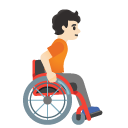
Person In Manual Wheelchair Facing Right: Light Skin Tone
U+1F9D1 U+1F3FB U+200D U+1F9BD U+200D U+27A1 U+FE0F · :person_in_manual_wheelchair_facing_right_light_skin_tone:
Trend 28
Meaning layers
- interpretation
- Used to signal independence, resilience, or 'moving forward' energy. Sometimes used humorously to say 'I'm out of here' or 'rolling away from my problems.' Gen Z also uses it as an accessibility ally symbol or in disability pride contexts.
- tiktok usage
- Appears in videos about disability awareness, adaptive sports, or in humorous 'rolling away from drama' skits. Also used in captions like 'me escaping accountability 🧑🏻🦽➡️'
- irony level
- 4 / 10
Platform meanings
- meaning
- Disability representation, accessibility advocacy, or comedic 'rolling away' trope in short videos
- trend usage
- Used in trending sounds about escaping situations, disability pride month content, and adaptive athlete spotlights
- hashtags
- #DisabilityPride#WheelchairLife#AccessibilityMatters#RollingAway#AdaptiveAthlete
- virality score
- 32 / 100
Cultural meanings
🇺🇸
Western / Gen-Z
Used widely in disability pride contexts and humorously in 'rolling away from problems' meme culture; seen as both a representation tool and a comedic movement emoji.
🇵🇰
Pakistan & India
Primarily understood literally as representing a physically disabled person; used in social media discussions about disability rights and accessibility infrastructure, which are growing conversations in both countries.
🌍
Middle East
Generally interpreted literally as a wheelchair user symbol; used in disability charity campaigns and awareness posts, though cultural stigma around disability can limit casual or humorous usage.
🌐
Global Neutral
Universally recognized as representing a manual wheelchair user moving forward; carries connotations of mobility, independence, and disability representation across contexts.
🇧🇩
Bangladesh
Understood literally as a disability symbol; appears in NGO social media content related to disability welfare and rehabilitation programs, particularly after natural disaster recovery narratives.
🇱🇰
Sri Lanka
Used in disability advocacy posts and healthcare discussions; communities increasingly use it to signal accessibility awareness in a country building out disability rights frameworks.
🇨🇳
China
Primarily literal in meaning, associated with disability welfare and inclusivity; used in state media campaigns promoting social harmony and care for disabled citizens.
🇯🇵
Japan
Used literally in disability awareness and UD (Universal Design) discussions; Japan's strong accessibility culture means this emoji is respected and used in transit and public service contexts.
🇰🇷
South Korea
Appears in disability rights discourse and K-content about inclusive casting; Korean users may also use it in humorous 'escaping' contexts mirroring Western meme culture.
🇹🇼
Taiwan
Used in progressive disability rights conversations and accessibility advocacy; Taiwan's active civil society embraces this emoji in inclusive design and policy discussions.
🇭🇰
Hong Kong
Appears in accessibility advocacy and social welfare discussions; also used in protest-adjacent content metaphorically to represent perseverance against obstacles.
🇵🇭
Philippines
Used in disability awareness campaigns by NGOs and government agencies; also resonates in OFW communities referencing elderly or disabled family members abroad.
🇮🇩
Indonesia
Associated with charity and social welfare for disabled individuals; used in Ramadan social giving campaigns and disability rights content on Instagram and TikTok.
🇹🇭
Thailand
Used in disability awareness posts and Buddhist-influenced compassion narratives about caring for disabled community members; also appears in healthcare social media.
🇻🇳
Vietnam
Primarily literal and tied to disability welfare content; used in government health communications and NGO campaigns promoting inclusion of disabled people in society.
🇲🇾
Malaysia
Used in multicultural inclusion discourse and disability rights posts; appears in government accessibility initiative promotions and social enterprise content.
🇸🇦
Saudi Arabia
Understood as a disability representation symbol; used in Vision 2030 accessibility and inclusion campaigns as Saudi Arabia works to modernize public spaces.
🇦🇪
UAE
Appears in Dubai Expo-era inclusion campaigns and Expo 2020 legacy accessibility discussions; the UAE's modern infrastructure narrative embraces disability inclusion symbolism.
🇪🇬
Egypt
Used primarily in disability charity and awareness contexts; Egyptian social media users reference it in discussions about improving accessibility in Cairo's challenging urban environment.
🇹🇷
Turkey
Associated with disability rights movements and social welfare discourse; used in posts about accessible transportation and government support for disabled citizens.
🇮🇷
Iran
Used in social welfare and disability support contexts, often tied to government-run charitable organizations and rehabilitation centers' social media content.
🇳🇬
Nigeria
Used in disability awareness campaigns by NGOs and churches; also appears in content about adaptive sports like wheelchair basketball which is growing in West Africa.
🇿🇦
South Africa
Used in disability rights advocacy tied to post-apartheid constitutional rights; appears in discussions about accessible public spaces and inclusive employment policies.
🇬🇧
UK & Ireland
Used in disability pride contexts, NHS-related posts, and Paralympic sports content; also used humorously in 'rolling away' meme culture consistent with British dry humor.
🇫🇷
France
Associated with handicap awareness campaigns and discussions about French accessibility laws; used in Paralympic Games 2024 host-country pride and inclusion narratives.
🇩🇪
Germany
Used in disability rights and Inklusion (inclusion) policy discussions; Germans tend to use it literally and earnestly in accessibility advocacy and social welfare contexts.
🇪🇸
Spain & Italy
Used in disability awareness campaigns; Spain's Paralympic tradition gives this emoji sports resonance, while Italy uses it in social welfare and inclusive tourism discussions.
🇧🇷
Brazil
Used in disability rights advocacy, adaptive sports culture, and Carnival accessibility discussions; also appears in humorous social media content reflecting Brazil's energetic emoji culture.
🇲🇽
Mexico
Appears in disability awareness content and advocacy for better urban accessibility; also used humorously consistent with Mexican internet culture's playful use of movement emojis.
🌎
Latin America
Broadly used across Latin America in disability inclusion campaigns and adaptive sports content; regional humor also incorporates it in 'moving on' or 'escaping' contexts.
🇦🇺
Australia & NZ
Used in NDIS (National Disability Insurance Scheme) related discussions, disability pride, and Paralympic sporting pride; also integrated into 'rolling out' casual slang on social media.
How its meaning shifted
- 2010
This specific emoji did not exist in 2010; general wheelchair emojis were not yet part of Unicode and disability representation in emoji was essentially nonexistent.
- 2015
Basic wheelchair-adjacent symbols were beginning to emerge in Unicode discussions; disability representation was a growing conversation in the emoji diversity movement.
- 2020
The directional wheelchair emojis were introduced in Unicode 12.0 (2019) and gained traction in 2020 during disability awareness conversations amplified by COVID-19's disproportionate impact on disabled communities.
- 2026
By 2026 this emoji is used fluidly in both serious disability representation and lighthearted 'moving forward' or 'rolling away' meme contexts, with increased visibility due to Paralympic coverage and disability creator growth on social media.
See it on every platform
Compare with
Adjacent emojis
Share & embed
Frequently asked
01What does the 🧑🏻🦽➡️ Person In Manual Wheelchair Facing Right: Light Skin Tone emoji mean?
A person using a manual wheelchair, facing right, with light skin tone. This is a directional variant of the wheelchair user emoji introduced to allow more expressive representation of movement direction.
02What does 🧑🏻🦽➡️ mean on TikTok?
Disability representation, accessibility advocacy, or comedic 'rolling away' trope in short videos
03What does 🧑🏻🦽➡️ mean on WhatsApp?
Literally referring to a wheelchair user or disability topic; casually used to say 'I'm heading out' or 'moving on'
04What does 🧑🏻🦽➡️ mean in Gen-Z slang?
Used to signal independence, resilience, or 'moving forward' energy. Sometimes used humorously to say 'I'm out of here' or 'rolling away from my problems.' Gen Z also uses it as an accessibility ally symbol or in disability pride contexts.
05Is the 🧑🏻🦽➡️ emoji safe to use?
Representation of a manual wheelchair user; disability pride symbol; forward movement metaphor; accessibility advocacy marker.
06What does 🧑🏻🦽➡️ mean in texting?
This emoji evokes feelings of determination and independence. Psychologically it can represent agency and self-sufficiency, countering narratives of helplessness often associated with disability. It also signals belonging for disabled users.
07What is the shortcode for 🧑🏻🦽➡️?
The shortcode for Person In Manual Wheelchair Facing Right: Light Skin Tone is :person_in_manual_wheelchair_facing_right_light_skin_tone:
08What does 🧑🏻🦽➡️ mean in dating?
Rarely used in flirting contexts. Occasionally sent to say 'I'm rolling into your DMs' as a lighthearted opener. Not a common flirt tool.
Safety & usage
- Safe meaning
- Representation of a manual wheelchair user; disability pride symbol; forward movement metaphor; accessibility advocacy marker.
- Caution
- Rarely used toxically; could theoretically be used mockingly in ableist contexts to demean disabled people, but this is uncommon.
Generally safe and positive emoji. Care should be taken not to use it to mock or diminish disabled individuals. Non-disabled users should be mindful of context when using it humorously to ensure it doesn't veer into ableist territory.
How it looks across platforms
Appearance varies by platform and device. Google Noto, Twemoji, and OpenMoji are open-source.