🧑🏾🦼➡️
The Emoji
Person In Motorized Wheelchair Facing Right: Medium-dark Skin Tone
U+1F9D1 U+1F3FE U+200D U+1F9BC U+200D U+27A1 U+FE0F · :person_in_motorized_wheelchair_facing_right_mediumdark_skin_tone:
Trend 32
Meaning layers
- interpretation
- Used to signal movement, forward momentum, or 'on the go' energy. Also used genuinely to represent disabled individuals or accessibility advocacy. Occasionally used humorously to indicate being 'carried' or rolling through a situation effortlessly.
- tiktok usage
- Appears in accessibility advocacy videos, disability pride content, and sometimes in meme edits where someone is 'rolling out' of a situation or conversation.
- irony level
- 3 / 10
Platform meanings
- meaning
- Represents mobility, accessibility, disability pride, or humorous 'exiting a situation' energy.
- trend usage
- Used in #DisabilityTikTok and #CripTok communities for authentic representation. Also appears in meme edits where creators 'roll away' from trending drama or challenges.
- hashtags
- #DisabilityTikTok#CripTok#AccessibilityMatters#DisabilityPride#WheelchairLife
- virality score
- 38 / 100
Cultural meanings
🇺🇸
Western / Gen-Z
Used by Gen Z in Western countries both authentically for disability representation and in lighthearted 'rolling away' meme contexts, with growing awareness about avoiding ableist humor.
🇵🇰
Pakistan & India
Primarily interpreted literally as representing a person with a disability; used in disability awareness campaigns and social media advocacy for accessible infrastructure.
🌍
Middle East
Used in contexts related to disability awareness and Islamic principles of caring for people with disabilities; appears in charity and welfare-related content.
🌐
Global Neutral
Universally recognized as representing a person using a motorized wheelchair; understood across cultures as a symbol of disability and mobility assistance.
🇧🇩
Bangladesh
Used in disability rights advocacy and accessible infrastructure discussions; the emoji resonates with growing NGO and social awareness campaigns around disability inclusion.
🇱🇰
Sri Lanka
Appears in disability welfare and health-related social media content; used by advocacy organizations promoting rights for differently-abled individuals.
🇨🇳
China
Used in disability representation contexts and WeChat/Weibo posts about accessibility in public spaces; China's growing disability rights discourse makes this relevant.
🇯🇵
Japan
In Japan, where disability culture and visibility are evolving, this emoji is used in accessibility advocacy and by disabled creators on social media platforms like Twitter/X.
🇰🇷
South Korea
Used in Korean disability rights content and SNS posts about accessible public transportation and social inclusion for disabled citizens.
🇹🇼
Taiwan
Appears in Taiwanese social media discussions about disability accessibility, inclusive design, and representation in media.
🇭🇰
Hong Kong
Used in advocacy for improved accessibility infrastructure in Hong Kong and in social media posts supporting disability rights.
🇵🇭
Philippines
Used in Filipino social media for disability awareness campaigns and posts about PWD (Persons With Disabilities) rights and accessibility.
🇮🇩
Indonesia
Appears in Indonesian social media content about difabel (differently-abled) rights and accessibility, particularly in urban development discussions.
🇹🇭
Thailand
Used in Thai social media for disability representation and posts about accessible tourism and public infrastructure improvements.
🇻🇳
Vietnam
Used in Vietnamese online content about disability inclusion, accessibility in public spaces, and stories of disabled individuals' resilience.
🇲🇾
Malaysia
Appears in Malaysian social media discussions about OKU (Orang Kurang Upaya) rights, accessibility laws, and disability representation.
🇸🇦
Saudi Arabia
Used in context of disability welfare initiatives aligned with Saudi Vision 2030's inclusion goals and social care programs.
🇦🇪
UAE
Featured in UAE-based disability advocacy content and social media posts celebrating accessible infrastructure in Dubai and Abu Dhabi.
🇪🇬
Egypt
Used in Egyptian social media to discuss disability rights, accessibility challenges, and awareness campaigns about differently-abled individuals.
🇹🇷
Turkey
Appears in Turkish social media content about engelli (disabled) rights, accessible public spaces, and disability pride initiatives.
🇮🇷
Iran
Used in Iranian online spaces for disability awareness and discussion of معلولین (disabled persons) rights and social inclusion.
🇳🇬
Nigeria
Used in Nigerian social media for disability advocacy, particularly around PWD rights legislation and inclusion in education and employment.
🇿🇦
South Africa
Appears in South African disability rights discussions, particularly relating to accessibility and inclusion under the country's progressive constitution.
🇬🇧
UK & Ireland
Used authentically in disability advocacy, Disabled People's Organizations content, and social media discussions about accessibility and benefits policy.
🇫🇷
France
Used in French social media for disability representation (handicap) and discussions about accessibility legislation and inclusion in public life.
🇩🇪
Germany
Appears in German online content about Barrierefreiheit (accessibility) and disability rights, often in professional and advocacy contexts.
🇪🇸
Spain & Italy
Used in disability awareness campaigns across Spain and Italy, and in social media content supporting inclusion and accessible tourism.
🇧🇷
Brazil
Used in Brazilian social media for disability rights content, PCDs (Pessoas com Deficiência) advocacy, and accessibility in urban spaces.
🇲🇽
Mexico
Appears in Mexican social media discussing disability inclusion, accessible public transportation, and PcD (Personas con Discapacidad) rights.
🌎
Latin America
Broadly used across Latin America in disability advocacy, accessibility discussions, and social inclusion campaigns by NGOs and activists.
🇦🇺
Australia & NZ
Used in Australian and New Zealand contexts for disability representation, NDIS discussions, and social media content by disabled creators and advocates.
How its meaning shifted
- 2010
This specific emoji did not exist in 2010; the concept of directional and skin-tone modified wheelchair emojis was years away from standardization.
- 2015
Still not available; basic wheelchair emoji concepts were being discussed in Unicode proposals but directional variants and skin tone combinations were not yet introduced.
- 2020
The motorized wheelchair emoji was introduced around this period; early usage was primarily in disability advocacy, representation, and accessibility awareness content.
- 2026
Widely used in disability pride content, accessibility advocacy, and meme culture. The rightward-facing variant signals forward movement and is embraced by the disability community and allies globally.
See it on every platform
Adjacent emojis
Share & embed
Frequently asked
01What does the 🧑🏾🦼➡️ Person In Motorized Wheelchair Facing Right: Medium-dark Skin Tone emoji mean?
A person using a motorized wheelchair, facing right, with medium-dark skin tone. The emoji represents mobility aid users and is part of the accessibility and disability inclusion emoji set.
02What does 🧑🏾🦼➡️ mean on TikTok?
Represents mobility, accessibility, disability pride, or humorous 'exiting a situation' energy.
03What does 🧑🏾🦼➡️ mean on WhatsApp?
Represents a person in a motorized wheelchair; used in conversations about disability, accessibility, or health-related topics.
04What does 🧑🏾🦼➡️ mean in Gen-Z slang?
Used to signal movement, forward momentum, or 'on the go' energy. Also used genuinely to represent disabled individuals or accessibility advocacy. Occasionally used humorously to indicate being 'carried' or rolling through a situation effortlessly.
05Is the 🧑🏾🦼➡️ emoji safe to use?
Representation of a person with a disability using a motorized wheelchair; used for disability advocacy, accessibility awareness, and identity expression.
06What does 🧑🏾🦼➡️ mean in texting?
This emoji carries significant emotional weight for disabled individuals as a symbol of representation and visibility. For the broader population, it evokes empathy, inclusivity, and recognition of diverse physical experiences.
07What is the shortcode for 🧑🏾🦼➡️?
The shortcode for Person In Motorized Wheelchair Facing Right: Medium-dark Skin Tone is :person_in_motorized_wheelchair_facing_right_mediumdark_skin_tone:
08What does 🧑🏾🦼➡️ mean in dating?
Rarely used in flirting contexts. Could be used authentically by someone with a disability to represent themselves or in a 'rolling into your DMs' playful context.
Safety & usage
- Safe meaning
- Representation of a person with a disability using a motorized wheelchair; used for disability advocacy, accessibility awareness, and identity expression.
- Caution
- Can be used mockingly to imply someone is lazy, unable to function independently, or to demean disabled individuals — though this is rare and considered highly offensive.
This emoji should not be used to mock, diminish, or stereotype disabled people. Using it in 'rolling away' jokes, while common, can be seen as trivializing disability experiences by some community members. Always use with respect and awareness.
How it looks across platforms
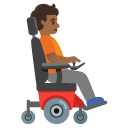
Appearance varies by platform and device. Google Noto, Twemoji, and OpenMoji are open-source.