🤾🏽
The Emoji
Person Playing Handball: Medium Skin Tone
U+1F93E U+1F3FD · :person_playing_handball_medium_skin_tone:
Trend 18
Meaning layers
- interpretation
- Used to signal hustle, competitive energy, or being in the zone. Sometimes ironic shorthand for 'I'm out here giving it my all' or flexing niche sports knowledge.
- tiktok usage
- Appears in sports highlight videos, gym motivation clips, or sarcastically when someone is overexerting effort on something trivial.
- irony level
- 4 / 10
Platform meanings
- meaning
- Used in sports motivation videos, training montages, or ironically when exerting effort on something mundane.
- trend usage
- Appears in #sportscheck, gym transformation videos, and athlete POV content.
- hashtags
- #handball#sportlife#athletevibes#gymgrind#sportsemoji
- virality score
- 22 / 100
Cultural meanings
🇺🇸
Western / Gen-Z
Used ironically as a flex emoji or as genuine sports representation; often appears in self-deprecating humor about trying too hard at obscure activities.
🇵🇰
Pakistan & India
Handball is not a mainstream sport here, so the emoji is rarely used; when it appears, it signals niche sports awareness or is used generically for 'playing sports'.
🌍
Middle East
Used primarily in athletic and school sports contexts; handball is played in physical education programs across the region, giving it mild recognition.
🌐
Global Neutral
Broadly understood as a sports-related emoji representing athletic activity and physical competition.
🇧🇩
Bangladesh
Uncommon in everyday usage; may appear in school or college sports event announcements or generic athletic content.
🇱🇰
Sri Lanka
Rarely used organically; may appear in sports event posts or school athletics contexts as a generic active person emoji.
🇨🇳
China
Handball is a recognized Olympic sport in China, so this emoji surfaces during international sports events or school sports competitions.
🇯🇵
Japan
Japan has a competitive handball culture, particularly in high schools and universities, so this emoji sees moderate use in sports-related social posts.
🇰🇷
South Korea
South Korea has a strong handball tradition especially in women's handball; this emoji is used proudly in sports fan and athlete communities.
🇹🇼
Taiwan
Used in the context of Olympic coverage and school sports; not a dominant emoji in everyday messaging.
🇭🇰
Hong Kong
Appears in sports community chats and Olympic viewing discussions; handball is a niche but recognized sport.
🇵🇭
Philippines
Handball is not widely played here; the emoji is used generically to represent sports activity or athletic effort.
🇮🇩
Indonesia
Rarely used in mainstream contexts; may appear in school sports or general athletic motivation posts.
🇹🇭
Thailand
Used in fitness and sports lifestyle content; handball is gaining traction in educational sports programs.
🇻🇳
Vietnam
Not widely recognized as a handball-specific emoji; used more generically as a sports activity symbol.
🇲🇾
Malaysia
Handball is played at the school and national level; the emoji surfaces in sports club chats and event announcements.
🇸🇦
Saudi Arabia
Physical education and sports are increasingly prominent in Saudi culture; this emoji appears in school sports and national sports initiative content.
🇦🇪
UAE
Used in multicultural sports communities and school sports contexts; the diverse population includes users from handball-playing countries.
🇪🇬
Egypt
Handball is a popular team sport in Egypt; this emoji sees meaningful use in sports fan pages and club community chats.
🇹🇷
Turkey
Turkey has an active handball scene; the emoji is used in sports club communications, fan posts, and athlete content.
🇮🇷
Iran
Handball is an established sport in Iran; the emoji appears in sports community contexts and national team discussions.
🇳🇬
Nigeria
Handball is played at national and collegiate levels; the emoji is used in sports development and athletics posts.
🇿🇦
South Africa
Used in school sports and athletics contexts; handball is a recognized but niche sport in the country.
🇬🇧
UK & Ireland
Handball is relatively niche; the emoji is used humorously or in sports diversity conversations, with occasional genuine use by handball clubs.
🇫🇷
France
France has a dominant handball culture and Olympic legacy; this emoji is used proudly by sports fans, especially during major tournaments.
🇩🇪
Germany
Germany is a handball powerhouse; the emoji is actively used by fans, clubs, and athletes celebrating the sport's strong cultural presence.
🇪🇸
Spain & Italy
Both countries have active handball scenes; the emoji appears in sports media, fan communities, and athletic club content.
🇧🇷
Brazil
Handball has a growing following in Brazil; the emoji is used in sports event posts and national federation communications.
🇲🇽
Mexico
Handball is a growing sport in Mexico; the emoji appears in athletic and school sports contexts.
🌎
Latin America
Used broadly to signal sports participation or athletic energy across Latin American communities, with growing handball interest.
🇦🇺
Australia & NZ
Handball as a sport is niche but recognized; the emoji is used in school sports settings and occasionally in Olympic sports discussions.
How its meaning shifted
- 2010
Emoji did not exist yet; handball was not represented in early emoji sets, and sports emojis were limited to mainstream activities.
- 2015
Early adoption after Unicode introduction; used primarily by handball players and sports enthusiasts to represent the sport in basic messaging.
- 2020
Broader use during Tokyo Olympics buildup; skin tone variants became more socially significant as inclusive representation was celebrated.
- 2026
Used across sports platforms and athlete content; ironic usage has grown alongside genuine sports representation, with skin tone selection seen as a natural personal expression.
See it on every platform
Adjacent emojis
- Often confused with
- person playing water poloperson throwing ballperson golfing
- Can replace
- basketball playersoccer ballathletic shoe
Share & embed
Frequently asked
01What does the 🤾🏽 Person Playing Handball: Medium Skin Tone emoji mean?
A person playing handball with medium skin tone, depicted mid-throw or in athletic motion during a handball game.
02What does 🤾🏽 mean on TikTok?
Used in sports motivation videos, training montages, or ironically when exerting effort on something mundane.
03What does 🤾🏽 mean on WhatsApp?
Sent between friends to signal sports plans, handball matches, or general athletic activity.
04What does 🤾🏽 mean in Gen-Z slang?
Used to signal hustle, competitive energy, or being in the zone. Sometimes ironic shorthand for 'I'm out here giving it my all' or flexing niche sports knowledge.
05Is the 🤾🏽 emoji safe to use?
A sports and athletic emoji representing handball play and physical activity — completely safe and positive in virtually all contexts.
06What does 🤾🏽 mean in texting?
Evokes a sense of kinetic drive and competitive spirit; psychologically associated with goal-directed behavior and physical empowerment.
07What is the shortcode for 🤾🏽?
The shortcode for Person Playing Handball: Medium Skin Tone is :person_playing_handball_medium_skin_tone:
08What does 🤾🏽 mean in dating?
Rarely used in flirting, but could signal 'I'm sporty and active — keep up with me' energy in a dating profile.
Safety & usage
- Safe meaning
- A sports and athletic emoji representing handball play and physical activity — completely safe and positive in virtually all contexts.
- Caution
- Extremely rare toxic usage; could theoretically be used to imply 'throwing' something harmful at someone in a metaphorical argument.
No significant warning concerns. The skin tone modifier may occasionally prompt conversations about representation, but this is generally a constructive discourse.
How it looks across platforms
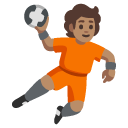


Appearance varies by platform and device. Google Noto, Twemoji, and OpenMoji are open-source.