🧑🏻🦯➡️
The Emoji
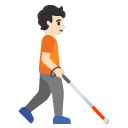
Person With White Cane Facing Right: Light Skin Tone
U+1F9D1 U+1F3FB U+200D U+1F9AF U+200D U+27A1 U+FE0F · :person_with_white_cane_facing_right_light_skin_tone:
Trend 28
Meaning layers
- interpretation
- Used to signal someone who is oblivious, walking into obvious danger, or refusing to see the truth. Also used genuinely for disability representation and accessibility advocacy.
- tiktok usage
- Appears in videos about 'walking blind into situations,' navigating life without awareness, or as a metaphor for ignoring red flags. Also used in disability awareness content.
- irony level
- 5 / 10
Platform meanings
- meaning
- Represents obliviousness, disability representation, or metaphorical 'walking blind' into situations. Common in both earnest disability content and ironic commentary.
- trend usage
- Used in POV videos of ignoring red flags, walking into chaos confidently, or in disability awareness trending challenges.
- hashtags
- #DisabilityTikTok#BlindToIt#AccessibilityMatters#WalkingBlind#DisabilityPride
- virality score
- 38 / 100
Cultural meanings
🇺🇸
Western / Gen-Z
Primarily used in two modes — genuine disability pride and representation, or as a metaphor for walking confidently into chaos without seeing the obvious. Both usages coexist with awareness.
🇵🇰
Pakistan & India
More likely used literally in disability awareness or health contexts; ironic use is less common but growing in urban youth digital spaces. Associated with White Cane Day awareness posts.
🌍
Middle East
Used in disability solidarity contexts and Islamic charity/care narratives about supporting blind individuals; metaphorical ironic use is less prevalent.
🌐
Global Neutral
Universally understood as representing visual impairment or blindness; the rightward direction adds a sense of purposeful forward movement.
🇧🇩
Bangladesh
Primarily used in disability advocacy, health content, and NGO communication about visual impairment support programs.
🇱🇰
Sri Lanka
Used in disability rights contexts and health awareness campaigns; less common in casual ironic usage.
🇨🇳
China
Used carefully — disability representation emojis are used in health and social welfare discussions; ironic use could be seen as insensitive. More common in WeChat accessibility groups.
🇯🇵
Japan
Associated with disability welfare and public assistance systems; used respectfully in accessibility campaigns and occasionally in navigational metaphors in self-reflective content.
🇰🇷
South Korea
Used in disability awareness and inclusion campaigns; Korean social media communities also use it metaphorically for someone who is 'socially blind' to situations.
🇹🇼
Taiwan
Used in disability advocacy and accessibility tech discussions; also appears in self-deprecating humor among young users navigating uncertain life decisions.
🇭🇰
Hong Kong
Appears in disability rights discussions and protest-era metaphors about navigating blindly through uncertain political environments.
🇵🇭
Philippines
Used in disability awareness campaigns and charity content; also used humorously in OFW communities to describe navigating foreign countries without a clue.
🇮🇩
Indonesia
Primarily used in disability awareness, government accessibility announcements, and social welfare discussions; growing ironic use among urban youth.
🇹🇭
Thailand
Used in disability representation posts and Buddhist-inflected content about compassion toward visually impaired individuals; some metaphorical use in youth culture.
🇻🇳
Vietnam
Common in health awareness and disability support content; the emoji appears in NGO campaigns and is gaining metaphorical traction among younger Vietnamese internet users.
🇲🇾
Malaysia
Used in disability inclusion discussions and accessibility campaigns; multicultural digital communities also use it in self-deprecating navigation humor.
🇸🇦
Saudi Arabia
Used in disability welfare and charity contexts aligned with Islamic values of care for the disabled; metaphorical use is limited but present in youth spaces.
🇦🇪
UAE
Appears in inclusive design campaigns, smart city accessibility announcements, and disability pride content in the diverse UAE digital sphere.
🇪🇬
Egypt
Used in disability awareness and social welfare content; also appears in humor contexts where someone is described as metaphorically 'blind' to an obvious truth.
🇹🇷
Turkey
Used in disability rights advocacy and accessibility news; also used colloquially in youth digital culture to describe oblivious social behavior.
🇮🇷
Iran
Used primarily in disability welfare and health communication; metaphorical use exists in underground youth digital spaces to describe navigating censored or uncertain environments.
🇳🇬
Nigeria
Used in disability representation and accessibility advocacy; also carries a resilience narrative — moving forward despite challenges, which resonates strongly in Nigerian motivational content.
🇿🇦
South Africa
Used in disability rights and accessibility campaigns; the emoji appears in content about inclusive design and navigating systemic challenges.
🇬🇧
UK & Ireland
Used in disability advocacy, accessibility announcements, and White Cane Safety Day content; also used ironically in British humor about walking blindly into problems.
🇫🇷
France
Used in disability inclusion posts and public transport accessibility campaigns; metaphorical use in commentary about political or social obliviousness is common.
🇩🇪
Germany
Used in disability welfare communications and precision-focused accessibility discussions; Germans also use it in straightforward metaphorical contexts about lack of foresight.
🇪🇸
Spain & Italy
Used in disability awareness campaigns; expressive Southern European digital culture also employs it in dramatic self-deprecating humor about navigating life without a plan.
🇧🇷
Brazil
Used in disability advocacy and inclusion content; Brazilian meme culture readily adopts it for 'walking blind into chaos' humor, given the rich tradition of absurdist internet culture.
🇲🇽
Mexico
Used in disability representation content and accessibility campaigns; also appears in Mexican humor about confidently walking into complicated situations.
🌎
Latin America
Broadly used across Latin America in disability advocacy and social inclusion campaigns; meme culture in the region also uses it for comic obliviousness narratives.
🇦🇺
Australia & NZ
Used in disability inclusion campaigns, NDIS-related discussions, and accessibility advocacy; also used in laid-back Aussie humor about winging situations without preparation.
How its meaning shifted
- 2010
This specific emoji combination did not exist in 2010; person with cane emojis were not yet part of the Unicode standard and disability representation in emoji was extremely limited.
- 2015
Early disability representation emojis began appearing; the concept of a person with a white cane was being discussed in Unicode proposals but not yet widely available.
- 2020
The emoji became available as part of expanded disability representation updates; used primarily in disability advocacy, accessibility awareness, and health communication. Ironic or metaphorical use was just beginning to emerge.
- 2026
Now used across dual registers — genuine disability pride and representation in advocacy spaces, plus a well-established metaphorical use in meme culture for confident obliviousness and 'walking blind into situations.' The light skin tone variant sees use across both contexts.
See it on every platform
Adjacent emojis
- Often confused with
- person walkingperson runningman with probing cane
Share & embed
Frequently asked
01What does the 🧑🏻🦯➡️ Person With White Cane Facing Right: Light Skin Tone emoji mean?
A person with a white cane facing right, with light skin tone. The white cane is internationally recognized as a symbol of blindness or visual impairment.
02What does 🧑🏻🦯➡️ mean on TikTok?
Represents obliviousness, disability representation, or metaphorical 'walking blind' into situations. Common in both earnest disability content and ironic commentary.
03What does 🧑🏻🦯➡️ mean on WhatsApp?
Used to indicate someone is navigating a tough situation, visually impaired representation, or humorously that the sender is stumbling through life.
04What does 🧑🏻🦯➡️ mean in Gen-Z slang?
Used to signal someone who is oblivious, walking into obvious danger, or refusing to see the truth. Also used genuinely for disability representation and accessibility advocacy.
05Is the 🧑🏻🦯➡️ emoji safe to use?
Represents visual impairment, disability pride, and the use of a white cane for navigation. A positive symbol of accessibility and independence.
06What does 🧑🏻🦯➡️ mean in texting?
Evokes a sense of courage and self-reliance; for disabled communities it signals identity and pride, while for broader audiences it may evoke empathy or metaphorical self-awareness about navigating uncertainty.
07What is the shortcode for 🧑🏻🦯➡️?
The shortcode for Person With White Cane Facing Right: Light Skin Tone is :person_with_white_cane_facing_right_light_skin_tone:
08What does 🧑🏻🦯➡️ mean in dating?
Rarely used in flirting directly; occasionally used humorously to say 'I'm walking blind into falling for you.'
Safety & usage
- Safe meaning
- Represents visual impairment, disability pride, and the use of a white cane for navigation. A positive symbol of accessibility and independence.
- Caution
- Can be used mockingly to imply someone is blind to obvious truths, which risks trivializing visual impairment. In rare cases, used in ableist commentary.
Use with care when employing metaphorically — framing someone as 'blind' can inadvertently mock or stigmatize actual visual impairment. In disability communities, context is everything.
How it looks across platforms
Appearance varies by platform and device. Google Noto, Twemoji, and OpenMoji are open-source.