🧑🏼🦯
The Emoji
Person With White Cane: Medium-light Skin Tone
U+1F9D1 U+1F3FC U+200D U+1F9AF · :person_with_white_cane_mediumlight_skin_tone:
Trend 32
Meaning layers
- interpretation
- Used to represent blindness, not seeing something obvious, or metaphorically 'walking blind' into a situation. Also used sincerely for disability representation and advocacy.
- tiktok usage
- Appears in accessibility awareness content, blind reaction videos, and metaphorically in 'I was totally blind to this' commentary.
- irony level
- 3 / 10
Platform meanings
- meaning
- Represents visual impairment, accessibility, disability advocacy, or metaphor for not seeing something obvious.
- trend usage
- Common in #DisabilityTikTok, blind creator content, reaction videos, and accessibility awareness trends.
- hashtags
- #DisabilityTikTok#BlindTok#AccessibilityMatters#DisabilityPride#WhiteCane
- virality score
- 38 / 100
Cultural meanings
🇺🇸
Western / Gen-Z
Used both sincerely for disability representation and metaphorically for 'I had no idea what I was walking into'; disability visibility is increasingly important in Western Gen Z spaces.
🇵🇰
Pakistan & India
Primarily interpreted literally as representing a blind or visually impaired person; used on social media for awareness days like White Cane Day or disability rights discussions.
🌍
Middle East
Used in disability awareness content and accessibility advocacy; carries a respectful connotation toward individuals with visual impairment in Islamic contexts of caring for the vulnerable.
🌐
Global Neutral
Universally understood as representing a person with visual impairment using a white cane; recognized across cultures as an accessibility and disability symbol.
🇧🇩
Bangladesh
Interpreted literally as a blind or visually impaired person; used in social awareness content, NGO communications, and disability rights discussions.
🇱🇰
Sri Lanka
Used in disability advocacy content and accessibility discussions; recognized in NGO and healthcare social media contexts.
🇨🇳
China
Interpreted as representing a blind person; used in accessible design discussions, disability support content, and awareness campaigns on platforms like Weibo.
🇯🇵
Japan
Recognized as a disability symbol with cultural respect; Japan has strong accessibility culture, and this emoji aligns with depictions of white cane users common in public signage.
🇰🇷
South Korea
Used in disability representation content and accessibility discussions; Korean disability advocates use it in campaigns for inclusive infrastructure.
🇹🇼
Taiwan
Recognized as a visual impairment symbol; used in disability rights and accessibility advocacy, particularly around transit and urban planning discussions.
🇭🇰
Hong Kong
Used in accessibility advocacy and disability inclusion conversations; reflects Hong Kong's growing awareness of disability rights post-2020.
🇵🇭
Philippines
Interpreted literally as representing a blind person; used in disability awareness posts, charitable organization content, and support community discussions.
🇮🇩
Indonesia
Used in disability awareness content, particularly around education and mobility accessibility for visually impaired individuals.
🇹🇭
Thailand
Recognized as representing a blind or visually impaired person; used in disability support groups and government accessibility announcements.
🇻🇳
Vietnam
Primarily literal interpretation as a visually impaired person; used in disability advocacy NGO content and social media awareness campaigns.
🇲🇾
Malaysia
Used in disability rights discussions and accessibility content; recognized as a symbol of visual impairment in multiracial Malaysian social media contexts.
🇸🇦
Saudi Arabia
Used in disability awareness content with respect; Islamic values of caring for those with disabilities align with the positive representation this emoji carries.
🇦🇪
UAE
Appears in disability inclusion content reflecting UAE's investment in accessible infrastructure; used in government and NGO accessibility campaigns.
🇪🇬
Egypt
Used in disability awareness and support content; carries empathetic connotations in community-focused Egyptian social media discourse.
🇹🇷
Turkey
Used in disability advocacy content and accessibility awareness campaigns; recognized as a symbol of visual impairment and navigational independence.
🇮🇷
Iran
Interpreted literally as a blind or visually impaired person; used in disability support content and social media awareness campaigns.
🇳🇬
Nigeria
Used in disability advocacy and accessibility conversations; increasingly appears in content about inclusion in urban environments and education.
🇿🇦
South Africa
Used in disability rights discussions and accessibility advocacy; relevant in conversations about inclusive infrastructure and disability support services.
🇬🇧
UK & Ireland
Used sincerely in disability representation and accessibility content; commonly seen around White Cane Day and Guide Dogs UK awareness campaigns.
🇫🇷
France
Interpreted as a symbol of disability and independence; used in discussions about accessibility rights and French disability legislation (loi handicap).
🇩🇪
Germany
Used in accessibility and disability inclusion content; Germany's strong social welfare discourse means this emoji carries positive, supportive connotations.
🇪🇸
Spain & Italy
Used in disability awareness posts and accessibility advocacy; appears in content around European disability rights and inclusive urban design.
🇧🇷
Brazil
Used in disability representation content and accessibility discussions; common in Brazilian NGO and disability rights organization social media.
🇲🇽
Mexico
Interpreted as representing a visually impaired person; used in disability advocacy and accessibility awareness, especially around public transit discussions.
🌎
Latin America
Used across Latin American social media for disability representation and accessibility advocacy; carries sincere and respectful connotations.
🇦🇺
Australia & NZ
Used in disability inclusion content, White Cane Day awareness, and discussions about accessible infrastructure in urban planning contexts.
How its meaning shifted
- 2010
Emoji did not exist; disability representation in digital communication was extremely limited and largely text-based.
- 2015
Early versions of disability-related emojis existed but skin tone variants were just being introduced; white cane emoji was not yet available.
- 2020
Introduced as part of the Unicode 12.0 accessibility emoji push; initially used almost exclusively for literal disability representation and awareness campaigns.
- 2026
Dual use has solidified — sincere disability advocacy and metaphorical 'going in blind' usage coexist; medium-light skin tone variant used both for specific representation and general usage.
See it on every platform
Compare with
Adjacent emojis
- Opposite
- eyeseyeface with monocle
- Often confused with
- walking caneperson walkingold man
- Can replace
- person with white caneguide dogdeaf person
Share & embed
Frequently asked
01What does the 🧑🏼🦯 Person With White Cane: Medium-light Skin Tone emoji mean?
A person with medium-light skin tone using a white cane, representing individuals who are blind or have low vision navigating with an assistive mobility tool.
02What does 🧑🏼🦯 mean on TikTok?
Represents visual impairment, accessibility, disability advocacy, or metaphor for not seeing something obvious.
03What does 🧑🏼🦯 mean on WhatsApp?
Directly represents a visually impaired or blind person; used in disability conversations or accessibility discussions.
04What does 🧑🏼🦯 mean in Gen-Z slang?
Used to represent blindness, not seeing something obvious, or metaphorically 'walking blind' into a situation. Also used sincerely for disability representation and advocacy.
05Is the 🧑🏼🦯 emoji safe to use?
Represents a person with visual impairment using a white cane; used for disability representation, accessibility advocacy, and awareness campaigns.
06What does 🧑🏼🦯 mean in texting?
Evokes feelings of admiration for independence and resilience. Can also trigger empathy or awareness of ableism in viewers depending on context.
07What is the shortcode for 🧑🏼🦯?
The shortcode for Person With White Cane: Medium-light Skin Tone is :person_with_white_cane_mediumlight_skin_tone:
08What does 🧑🏼🦯 mean in dating?
Rarely used in flirting; if used, it might mean 'I'm blind to your flaws in the best way' or signal genuine disability representation.
Safety & usage
- Safe meaning
- Represents a person with visual impairment using a white cane; used for disability representation, accessibility advocacy, and awareness campaigns.
- Caution
- Occasionally weaponized to mock someone for being 'blind' to obvious information in online arguments; rarely used offensively.
Using this emoji to mock or demean visually impaired individuals or to ridicule someone is ableist and harmful; sarcastic use should be context-aware.
How it looks across platforms
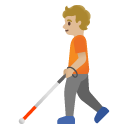


Appearance varies by platform and device. Google Noto, Twemoji, and OpenMoji are open-source.