👷🏼♀️
The Emoji
Woman Construction Worker: Medium-light Skin Tone
U+1F477 U+1F3FC U+200D U+2640 U+FE0F · :woman_construction_worker_mediumlight_skin_tone:
Trend 48
Meaning layers
- interpretation
- Used to signal hard work, hustle culture, being 'under construction' emotionally or personally, or to represent someone who is actively building something — literally or metaphorically. Also used ironically to describe chaotic self-improvement.
- tiktok usage
- Appears in 'building myself' montages, girlboss content, and 'she's a working woman' trend videos. Often used when someone is showing progress on a project or life goal.
- irony level
- 4 / 10
Platform meanings
- meaning
- Symbol of female empowerment in the workforce, hustle culture, and self-improvement narratives. Appears in 'building my life from scratch' content.
- trend usage
- Used in transformation videos, trades-girl content, and blue-collar representation TikTok. Popular in #WomenInTrades and DIY community videos.
- hashtags
- #WomenInTrades#GirlBoss#UnderConstruction#HardHatBabe#BuildingMyself
- virality score
- 52 / 100
Cultural meanings
🇺🇸
Western / Gen-Z
Seen as a symbol of smashing gender norms and female empowerment. Also used ironically in 'building my life' or 'working on myself' contexts.
🇵🇰
Pakistan & India
Represents female labor breaking cultural barriers, often used respectfully to acknowledge women in blue-collar or infrastructure work, though still relatively uncommon in casual digital communication.
🌍
Middle East
Used cautiously, more often in professional or advocacy contexts regarding women entering the workforce. Has positive connotations in urban, progressive digital spaces.
🌐
Global Neutral
Universally understood as a female construction or site worker. Used across international platforms to promote gender diversity in labor industries.
🇧🇩
Bangladesh
Resonates in a country with a strong female labor force in manufacturing and construction. Used with pride when referencing women in skilled trades or infrastructure development.
🇱🇰
Sri Lanka
Associated with women contributing to national development and infrastructure. Used in contexts of female empowerment and labor rights advocacy.
🇨🇳
China
Used in pragmatic contexts reflecting China's history of gender equality in labor. Seen as a normal representation of women in construction without significant taboo.
🇯🇵
Japan
Relatively niche but growing in use as Japan slowly increases representation of women in construction and engineering fields. Carries a 'pioneering woman' nuance.
🇰🇷
South Korea
Used in feminist discourse and representation conversations, often shared positively in communities challenging traditional gender role expectations.
🇹🇼
Taiwan
Positively received in a culture with progressive gender equality values. Used to represent hardworking women in skilled trades or as a general hustle symbol.
🇭🇰
Hong Kong
Used in professional and advocacy contexts around women in male-dominated industries, with a dual meaning of female empowerment and economic hustle.
🇵🇭
Philippines
OFW (Overseas Filipino Worker) culture gives this emoji a strong resonance — used to honor hardworking women, especially in construction or labor abroad.
🇮🇩
Indonesia
Represents the growing presence of women in Indonesia's booming construction and infrastructure sector. Used with admiration in labor rights circles.
🇹🇭
Thailand
Used to represent women in the skilled trades, construction, and labor markets. Has a dual meaning in online spaces of 'building a better life.'
🇻🇳
Vietnam
In a culture valuing female industriousness, this emoji is used to celebrate hardworking women in construction, development, and trade professions.
🇲🇾
Malaysia
Used positively in conversations about women breaking into male-dominated industries. Also appears in content about Malaysia's infrastructure development.
🇸🇦
Saudi Arabia
Increasingly relevant as Saudi Vision 2030 opens more industries to women. Used in progressive online circles to celebrate female entry into construction and engineering fields.
🇦🇪
UAE
Common in professional circles given the UAE's massive construction sector. Used to highlight women in project management, engineering, and site supervision roles.
🇪🇬
Egypt
Used in social media content celebrating women in construction and infrastructure, particularly as awareness of female trade workers grows in Egyptian cities.
🇹🇷
Turkey
Represents female labor and resilience. Used in feminist social media spaces and in construction industry contexts, especially post-earthquake rebuilding discussions.
🇮🇷
Iran
Used quietly in progressive online communities to symbolize female workforce participation and resistance to gender-based labor restrictions.
🇳🇬
Nigeria
Represents hustle, ambition, and female empowerment. In a country with a thriving informal construction sector, it's a badge of honor for working women.
🇿🇦
South Africa
Resonates in discussions about women in construction BEE (Broad-Based Black Economic Empowerment) initiatives and skilled trades training programs.
🇬🇧
UK & Ireland
Used with a mix of seriousness and humor — celebrating women in trades while also appearing in 'lads doing DIY' ironic content. Common in Women in Construction Week posts.
🇫🇷
France
Used in labor rights and gender equality contexts. France's strong trade union culture gives this emoji a serious, politically aware connotation.
🇩🇪
Germany
Highly practical interpretation — used to represent women in Germany's strong apprenticeship/trades culture (Berufsausbildung). Little ironic usage; mostly professional.
🇪🇸
Spain & Italy
Used in empowerment content and humor alike. In Italy, associated with women challenging traditional gender roles; in Spain, connected to feminist labor movement conversations.
🇧🇷
Brazil
Used with a vibrant, positive energy to celebrate mulheres that are hard workers and builders. Appears in content about female empowerment and Brazil's construction boom.
🇲🇽
Mexico
Associated with 'la mujer que trabaja duro' — a woman who works hard. Used proudly in trade communities and feminist social media spaces across Mexico.
🌎
Latin America
Broadly used across Latin America to celebrate female laborers, challenge machismo culture, and represent women building better lives for themselves and families.
🇦🇺
Australia & NZ
Very positively received in a culture that values tradies. Used proudly by female tradeswomen, especially with the growing 'women in trades' movement in both countries.
How its meaning shifted
- 2010
This specific emoji did not exist yet. Female representation in construction emoji was absent; the generic construction worker emoji was yellow-skinned and male-presenting by default.
- 2015
The base construction worker emoji existed but lacked gender and skin tone variants. Female construction workers online typically used the default hard hat emoji without personalization.
- 2020
The woman construction worker emoji with skin tone modifiers became well-established following Unicode updates. Usage grew in Women in Trades campaigns, gender equality posts, and COVID-era infrastructure conversations.
- 2026
Widely used across professional and social platforms as a symbol of female empowerment, skilled labor, and self-building narratives. Increasingly appears in ironic Gen Z content about personal growth and hustle culture.
See it on every platform
Adjacent emojis
- Often confused with
- woman firefighterpolice officerwoman guard
- Can replace
- construction workerhammermuscle
Share & embed
Frequently asked
01What does the 👷🏼♀️ Woman Construction Worker: Medium-light Skin Tone emoji mean?
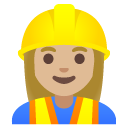
A woman wearing a hard hat and construction vest, representing a female construction worker with medium-light skin tone. This is a ZWJ sequence combining the construction worker emoji with the female gender sign and medium-light skin tone modifier.
02What does 👷🏼♀️ mean on TikTok?
Symbol of female empowerment in the workforce, hustle culture, and self-improvement narratives. Appears in 'building my life from scratch' content.
03What does 👷🏼♀️ mean on WhatsApp?
Sent to describe being busy at work, literally being a construction worker, or working hard on something. Often used casually among friends: 'In full grind mode 👷🏼♀️'
04What does 👷🏼♀️ mean in Gen-Z slang?
Used to signal hard work, hustle culture, being 'under construction' emotionally or personally, or to represent someone who is actively building something — literally or metaphorically. Also used ironically to describe chaotic self-improvement.
05Is the 👷🏼♀️ emoji safe to use?
Represents female construction workers, women in trades, hard work, and gender equality in the workforce. Completely safe and positive in standard usage.
06What does 👷🏼♀️ mean in texting?
Signals competence, resilience, and breaking gender norms. Psychologically associated with self-efficacy and the drive to build or create. Can also carry a sense of exhaustion when used humorously about overworking.
07What is the shortcode for 👷🏼♀️?
The shortcode for Woman Construction Worker: Medium-light Skin Tone is :woman_construction_worker_mediumlight_skin_tone:
08What does 👷🏼♀️ mean in dating?
Rarely used as a flirtation tool directly, but may be used by someone signaling independence and self-sufficiency — a 'I build my own life' flex. Can suggest confidence and capability.
Safety & usage
- Safe meaning
- Represents female construction workers, women in trades, hard work, and gender equality in the workforce. Completely safe and positive in standard usage.
- Caution
- Extremely rare misuse potential. Could theoretically be used mockingly to demean women in physical labor, but this is uncommon and context-dependent.
No significant safety concerns. This emoji is generally positive, empowering, and professionally appropriate. No known harmful usage patterns.
How it looks across platforms
Appearance varies by platform and device. Google Noto, Twemoji, and OpenMoji are open-source.