👷🏽♀️
The Emoji
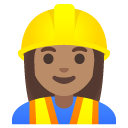
Woman Construction Worker: Medium Skin Tone
U+1F477 U+1F3FD U+200D U+2640 U+FE0F · :woman_construction_worker_medium_skin_tone:
Trend 48
Meaning layers
- interpretation
- Used to signal hustle culture, blue-collar pride, or ironically when someone is 'building' something in their life — a relationship, a career, or a creative project. Also used to represent a no-nonsense, get-it-done energy.
- tiktok usage
- Appears in 'girl boss' transformation videos, DIY project reveals, and 'women in trades' representation content. Sometimes used ironically when someone is 'constructing' an elaborate excuse or drama.
- irony level
- 4 / 10
Platform meanings
- meaning
- Represents hustle, construction/DIY content, and female empowerment in trades. Also used metaphorically in 'I'm building my life' type content.
- trend usage
- Appears in #womenintrades, transformation videos, home renovation reveals, and 'building my dream life' POV content.
- hashtags
- #womenintrades#constructiongirl#girlboss#buildingmydream#tradeswoman
- virality score
- 52 / 100
Cultural meanings
🇺🇸
Western / Gen-Z
Celebrated as a symbol of gender-norm disruption and blue-collar girl power; frequently used in empowerment content and ironic self-deprecating hustle humor.
🇵🇰
Pakistan & India
Relatively rare in casual use but gaining traction among urban progressive communities; represents an aspirational break from traditional gender role expectations in the workforce.
🌍
Middle East
Used cautiously in more conservative contexts but increasingly adopted by progressive and urban users to signal women's workforce participation, especially in Gulf modernization narratives.
🌐
Global Neutral
Universally understood as a woman doing construction or trades work; used broadly to represent female labor and physical capability across cultures.
🇧🇩
Bangladesh
Gaining visibility in digital spaces aligned with garment industry worker rights advocacy and urban development narratives, though still not mainstream in casual chat.
🇱🇰
Sri Lanka
Used primarily in professional or advocacy contexts related to women's economic empowerment and infrastructure development discussions.
🇨🇳
China
Used in contexts celebrating women in STEM and construction as part of national development narratives; the gender-inclusive spin aligns with workforce participation campaigns.
🇯🇵
Japan
Relatively niche usage; appears in discussions of gender diversity in Japan's construction sector, which has historically been male-dominated, gaining more visibility with policy changes.
🇰🇷
South Korea
Used by younger Koreans in feminist discourse and 'woman in trades' aesthetic content, especially as female representation in male-dominated jobs becomes a social conversation.
🇹🇼
Taiwan
Embraced in progressive and feminist online communities to celebrate women in technical and physical professions; Taiwan's relatively progressive gender landscape makes this emoji well-received.
🇭🇰
Hong Kong
Used in professional and activist contexts, particularly around labor rights and gender equity discussions in urban development and construction industries.
🇵🇭
Philippines
Associated with OFW (overseas Filipino worker) culture, where many women work in construction-adjacent roles abroad; carries connotations of strength and sacrifice.
🇮🇩
Indonesia
Used in urban professional and advocacy circles; resonates with campaigns promoting women's access to skilled trades and technical education.
🇹🇭
Thailand
Seen in content about women in trades and construction, especially in development-focused social media; also used humorously in the context of building something elaborate.
🇻🇳
Vietnam
Used in contexts celebrating hardworking women, particularly in construction and manufacturing; Vietnam's culture of female economic contribution makes this emoji relatable.
🇲🇾
Malaysia
Used in professional development and diversity advocacy contexts; also appears in light-hearted content about home renovation and DIY projects.
🇸🇦
Saudi Arabia
Increasingly relevant given Vision 2030 workforce diversification; appears in content celebrating women entering previously restricted professions, often with a tone of progress and pride.
🇦🇪
UAE
Fits well within the UAE's modernization and gender inclusion narrative; used in content about women in construction, engineering, and project management in the Gulf.
🇪🇬
Egypt
Used by progressive online communities to advocate for women's entry into trades; contrasts with traditional gender norms and signals change within digital discourse.
🇹🇷
Turkey
Used in feminist and labor rights contexts; resonates with younger Turkish women advocating for equal workplace representation in physical industries.
🇮🇷
Iran
Used carefully in progressive and diaspora communities online to signal female empowerment and resistance to gender restrictions in the workforce.
🇳🇬
Nigeria
Embraced in entrepreneurial and hustle-culture content; Nigerian digital culture celebrates women who 'build' their futures, both literally and metaphorically.
🇿🇦
South Africa
Used in contexts related to construction industry transformation, BEE (Black Economic Empowerment) initiatives, and women in trades advocacy, carrying positive progressive connotations.
🇬🇧
UK & Ireland
Used both professionally and casually; fits well in content about women in trades, apprenticeships, and the UK's push to diversify the construction workforce.
🇫🇷
France
Used in content about gender parity in the workplace, particularly in 'métiers techniques' (technical trades); aligns with French feminist discourse around professional equality.
🇩🇪
Germany
Associated with Ausbildung (vocational training) culture; used in content celebrating women who choose trades apprenticeships, fitting Germany's respect for skilled labor.
🇪🇸
Spain & Italy
Used in content about women breaking into traditionally male industries; resonates with younger audiences engaged in gender equality discourse in Southern Europe.
🇧🇷
Brazil
Popular in empowerment content celebrating 'mulheres que trabalham' (women who work); also used in meme culture about women who hustle and build their own path.
🇲🇽
Mexico
Tied to narratives of female resilience and economic independence; used in content celebrating women in construction and trade professions, with strong cultural resonance around female strength.
🌎
Latin America
Broadly used across Latin America in feminist empowerment content, labor advocacy, and motivational posts celebrating women in non-traditional roles.
🇦🇺
Australia & NZ
Common in content about women in trades, mining, and construction industries — sectors actively recruiting women through government initiatives; used both professionally and casually with pride.
How its meaning shifted
- 2010
This emoji did not exist in 2010; Unicode had not yet introduced gender-specific or skin-tone-modified worker emoji.
- 2015
Early versions of construction worker emoji were introduced, but gender-diverse and skin-tone options were limited; female variants were not yet widely available.
- 2020
Established as a meaningful symbol of gender representation in trades; widely adopted in women's empowerment content, DIY culture, and professional diversity discussions during the remote-work and social justice awareness boom.
- 2026
Normalized across professional and casual digital contexts; used fluently in LinkedIn posts, TikTok empowerment content, and ironic meme culture with high cross-cultural recognition and nuanced metaphorical usage.
See it on every platform
Compare with
Adjacent emojis
Share & embed
Frequently asked
01What does the 👷🏽♀️ Woman Construction Worker: Medium Skin Tone emoji mean?
A woman wearing a hard hat and safety vest, representing a female construction worker or engineer on a job site. Available in medium skin tone.
02What does 👷🏽♀️ mean on TikTok?
Represents hustle, construction/DIY content, and female empowerment in trades. Also used metaphorically in 'I'm building my life' type content.
03What does 👷🏽♀️ mean on WhatsApp?
Typically means the sender is at work, doing physical labor, or busy building/fixing something. Can also mean 'working hard on something.'
04What does 👷🏽♀️ mean in Gen-Z slang?
Used to signal hustle culture, blue-collar pride, or ironically when someone is 'building' something in their life — a relationship, a career, or a creative project. Also used to represent a no-nonsense, get-it-done energy.
05Is the 👷🏽♀️ emoji safe to use?
A woman in a construction hard hat and vest representing female tradespeople, engineers, or anyone doing physical labor or building work.
06What does 👷🏽♀️ mean in texting?
Evokes a sense of capability and self-sufficiency. The combination of femininity and a traditionally male role taps into feelings of breaking barriers and defying stereotypes, which resonates strongly with progressive audiences.
07What is the shortcode for 👷🏽♀️?
The shortcode for Woman Construction Worker: Medium Skin Tone is :woman_construction_worker_medium_skin_tone:
08What does 👷🏽♀️ mean in dating?
Rarely used flirtatiously unless in the context of 'I'm building something and I need a partner' metaphors. Could be used to signal independence and capability rather than romantic availability.
Safety & usage
- Safe meaning
- A woman in a construction hard hat and vest representing female tradespeople, engineers, or anyone doing physical labor or building work.
- Caution
- Extremely rare, but could theoretically be used mockingly to demean women in trades in misogynistic contexts online.
Generally a safe and positive emoji with no widely known toxic or NSFW appropriations. Minimal risk of misuse.
How it looks across platforms
Appearance varies by platform and device. Google Noto, Twemoji, and OpenMoji are open-source.