👩🏻🦽➡️
The Emoji
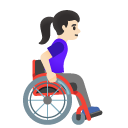
Woman In Manual Wheelchair Facing Right: Light Skin Tone
U+1F469 U+1F3FB U+200D U+1F9BD U+200D U+27A1 U+FE0F · :woman_in_manual_wheelchair_facing_right_light_skin_tone:
Trend 28
Meaning layers
- interpretation
- Used to signal moving forward, pushing through obstacles, or representing disabled identity with pride. Sometimes used ironically for 'rolling out' of a situation or conversation.
- tiktok usage
- Appears in disability advocacy videos, accessibility awareness content, and occasionally in 'leaving the drama behind' narrative edits.
- irony level
- 3 / 10
Platform meanings
- meaning
- Disability pride, mobility awareness, or comedic 'rolling away' from problems
- trend usage
- Used in #DisabilityTok videos, accessibility challenge content, and escape-themed POV skits
- hashtags
- #DisabilityTok#WheelchairLife#DisabilityPride#AccessibilityMatters#RollingOut
- virality score
- 38 / 100
Cultural meanings
🇺🇸
Western / Gen-Z
Celebrated as a symbol of disability pride and intersectional identity, commonly used in activist and self-advocacy spaces by young disabled people.
🇵🇰
Pakistan & India
Primarily interpreted literally as representing disability or a wheelchair user; used in accessibility awareness contexts and occasionally in healthcare discussions.
🌍
Middle East
Understood as a symbol for physical disability; used in charitable contexts and awareness campaigns, though disability visibility in everyday communication remains limited.
🌐
Global Neutral
Universally recognized as representing a woman using a manual wheelchair; interpreted as disability-related in most cross-cultural contexts.
🇧🇩
Bangladesh
Used in medical and social welfare contexts; awareness of disability representation emojis is growing but emoji usage for this symbol remains relatively rare.
🇱🇰
Sri Lanka
Interpreted as representing disability or a wheelchair user; appears in healthcare NGO communications and disability rights advocacy materials.
🇨🇳
China
Used in contexts discussing disability services, rehabilitation, or accessibility; the directional variant is less commonly used than the base wheelchair emoji.
🇯🇵
Japan
Associated with accessibility infrastructure and barrier-free living; Japan's high sensitivity to disability accommodation makes this emoji respected in formal and informal contexts.
🇰🇷
South Korea
Used in discussions about disability rights and accessible design; K-culture's increasing focus on inclusion has made disability emojis more visible in advocacy spaces.
🇹🇼
Taiwan
Appears in disability awareness and accessible transit discussions; Taiwan's strong civic culture around rights means this emoji is used respectfully in advocacy.
🇭🇰
Hong Kong
Used in disability rights and accessibility infrastructure discussions; appears in social service organization communications and advocacy posts.
🇵🇭
Philippines
Interpreted as representing a person with disability; used in social welfare contexts, PWD advocacy, and occasionally in humor around 'rolling out' situations.
🇮🇩
Indonesia
Primarily understood as representing disability; used in healthcare, social services, and disability advocacy contexts with growing visibility.
🇹🇭
Thailand
Seen as a symbol for physical disability and accessibility; used in tourist accessibility campaigns and disability welfare organization communications.
🇻🇳
Vietnam
Used in disability welfare and social support contexts; the directional element may be less noticed, with the wheelchair being the primary visual signifier.
🇲🇾
Malaysia
Interpreted as representing a disabled person or wheelchair user; used in OKU (Orang Kurang Upaya) community discussions and accessibility advocacy.
🇸🇦
Saudi Arabia
Used in disability awareness and charitable giving contexts; associations with rehabilitation and social support are primary interpretations.
🇦🇪
UAE
Appears in accessibility and inclusive smart-city discourse; the UAE's investment in accessible infrastructure gives this emoji visibility in urban planning conversations.
🇪🇬
Egypt
Primarily used in disability charity and welfare contexts; social media disability awareness campaigns increasingly use this emoji for representation.
🇹🇷
Turkey
Understood as representing physical disability; used in healthcare, social welfare, and accessibility rights discussions with growing awareness.
🇮🇷
Iran
Interpreted as a disability symbol; primarily seen in healthcare and welfare contexts, with limited use in casual communication.
🇳🇬
Nigeria
Used in disability rights and accessibility discussions; organizations supporting persons with disabilities use it in awareness campaigns on social media.
🇿🇦
South Africa
Appears in disability rights discourse and inclusive development conversations; connected to broader conversations about accessibility and equal rights.
🇬🇧
UK & Ireland
Used in disability pride, accessibility advocacy, and daily life documentation by wheelchair users; culturally resonant with strong disability rights movements in both countries.
🇫🇷
France
Interpreted as a symbol of handicap and accessibility; used in disability rights discussions and increasingly in inclusive representation conversations.
🇩🇪
Germany
Used in accessibility policy discussions and disability rights advocacy; Germany's strong social welfare culture gives this emoji a respected, practical context.
🇪🇸
Spain & Italy
Primarily understood as representing disability; used in social welfare and accessibility campaigns, with growing disability pride visibility in urban centers.
🇧🇷
Brazil
Used in disability rights and accessibility activism; Brazil's large disability community and active advocacy space mean this emoji appears in significant online discourse.
🇲🇽
Mexico
Interpreted as representing disability; used in social welfare contexts and disability inclusion campaigns, with growing visibility in urban accessibility discussions.
🌎
Latin America
Broadly understood as a disability symbol across Latin America; used in NGO communications, government accessibility campaigns, and disability community organizing.
🇦🇺
Australia & NZ
Used in disability pride, NDIS-related discussions, and accessibility advocacy; both countries have strong disability rights frameworks that make this emoji culturally visible.
How its meaning shifted
- 2010
Wheelchair emoji variants did not exist yet; disability representation in emoji was essentially absent, covered only by generic medical symbols.
- 2015
Basic wheelchair emoji beginning to emerge in Unicode proposals; disability representation was a growing advocacy topic but directional variants were not yet available.
- 2020
Directional wheelchair emojis introduced, gaining traction in disability pride communities and accessibility advocacy, particularly during COVID-19 discussions about vulnerable populations.
- 2026
Established part of the disability pride emoji lexicon; used widely by wheelchair users for authentic self-representation, in accessibility tech discussions, and in Gen Z ironic 'escape' meme formats.
See it on every platform
Compare with
Adjacent emojis
Share & embed
Frequently asked
01What does the 👩🏻🦽➡️ Woman In Manual Wheelchair Facing Right: Light Skin Tone emoji mean?
A woman using a manual wheelchair, facing right, with light skin tone. Combines the woman emoji, light skin tone modifier, manual wheelchair, and rightward direction indicator.
02What does 👩🏻🦽➡️ mean on TikTok?
Disability pride, mobility awareness, or comedic 'rolling away' from problems
03What does 👩🏻🦽➡️ mean on WhatsApp?
Represents a wheelchair user, disability, or someone moving on/leaving
04What does 👩🏻🦽➡️ mean in Gen-Z slang?
Used to signal moving forward, pushing through obstacles, or representing disabled identity with pride. Sometimes used ironically for 'rolling out' of a situation or conversation.
05Is the 👩🏻🦽➡️ emoji safe to use?
Representation of a woman with a mobility disability using a manual wheelchair, moving rightward; used for disability pride, accessibility advocacy, and identity expression.
06What does 👩🏻🦽➡️ mean in texting?
Evokes themes of independence and perseverance. For disabled individuals, it can be a powerful symbol of self-identification and pride; for non-disabled users it often signals allyship or solidarity.
07What is the shortcode for 👩🏻🦽➡️?
The shortcode for Woman In Manual Wheelchair Facing Right: Light Skin Tone is :woman_in_manual_wheelchair_facing_right_light_skin_tone:
08What does 👩🏻🦽➡️ mean in dating?
Rarely used in flirting contexts; occasionally used by wheelchair users to self-identify on dating profiles or to communicate their situation openly.
Safety & usage
- Safe meaning
- Representation of a woman with a mobility disability using a manual wheelchair, moving rightward; used for disability pride, accessibility advocacy, and identity expression.
- Caution
- Could be used mockingly or in ableist contexts to demean disabled individuals, though this is uncommon given the specificity of the emoji.
Care should be taken not to use this emoji in ableist jokes or to trivialize disability. Non-disabled users should be mindful when using disability representation emojis to avoid appropriation.
How it looks across platforms
Appearance varies by platform and device. Google Noto, Twemoji, and OpenMoji are open-source.