🧔🏼♀️
The Emoji
Woman: Medium-light Skin Tone, Beard
U+1F9D4 U+1F3FC U+200D U+2640 U+FE0F · :woman_mediumlight_skin_tone_beard:
Trend 38
Meaning layers
- interpretation
- Used to celebrate gender nonconformity, queer identity, and the rejection of binary gender norms. Also used humorously when someone is defying expectations or doing something unexpectedly masculine.
- tiktok usage
- Appears in videos about gender identity, LGBTQ+ content, 'girlies with beards' positive representation, and sometimes ironically when a girl says something stereotypically 'bro-coded'.
- irony level
- 6 / 10
Platform meanings
- meaning
- Symbol of gender nonconformity and queer pride; used in transformation videos, coming-out content, or humorous 'girlboss who is also a beard-haver' energy.
- trend usage
- Appears in LGBTQ+ TikTok, gender-reveal parody videos, and body-positivity content. Sometimes used as a punchline in self-deprecating humor about facial hair.
- hashtags
- #beardedwomen#gendernonconforming#queertiktok#bodypositivity#lgbtqplus
- virality score
- 42 / 100
Cultural meanings
🇺🇸
Western / Gen-Z
Widely understood and embraced as a symbol of gender nonconformity and queer pride; used casually in both serious and humorous contexts within progressive communities.
🇵🇰
Pakistan & India
Largely unfamiliar or confusing to mainstream audiences; may be associated with hijra or third-gender communities in South Asia, though digital awareness is growing among younger, urban LGBTQ+ individuals.
🌍
Middle East
Generally misunderstood or seen as taboo due to conservative gender norms; may be used covertly by queer individuals in private digital spaces.
🌐
Global Neutral
Understood as a representation of gender diversity and inclusivity; interpretation varies widely based on cultural context and familiarity with LGBTQ+ discourse.
🇧🇩
Bangladesh
Largely misunderstood in mainstream culture; may evoke associations with hijra communities; usage is limited to small online LGBTQ+ circles.
🇱🇰
Sri Lanka
Uncommon in mainstream usage; within progressive urban youth circles it may signal queer identity, but broadly it causes confusion.
🇨🇳
China
Rarely used and often misunderstood due to strict platform regulations and cultural conservatism around gender; may appear in niche LGBTQ+ WeChat or Weibo groups.
🇯🇵
Japan
Understood within LGBTQ+ communities and anime/manga fandoms that explore gender-fluid characters; broader public may find it unusual but not necessarily offensive.
🇰🇷
South Korea
Growing awareness due to K-pop's gender-fluid aesthetics; used in queer Korean online spaces, though societal acceptance of the concept is still evolving.
🇹🇼
Taiwan
Fairly well understood given Taiwan's progressive LGBTQ+ legal landscape; used positively in queer pride and gender-diversity contexts.
🇭🇰
Hong Kong
Used within LGBTQ+ activist communities; younger generations familiar with international queer discourse understand its meaning.
🇵🇭
Philippines
Understood in the context of the visible bakla and nonbinary communities; used positively in LGBTQ+ Filipino digital spaces.
🇮🇩
Indonesia
Uncommon in mainstream usage due to conservative social norms; may be used in underground or private LGBTQ+ communities.
🇹🇭
Thailand
Resonates in a culture familiar with gender diversity (kathoey culture); used in LGBTQ+ spaces and among progressive youth.
🇻🇳
Vietnam
Limited mainstream usage; growing understanding in urban LGBTQ+ communities following increased visibility of queer culture.
🇲🇾
Malaysia
Used discreetly within LGBTQ+ circles due to legal and social restrictions; not widely understood in mainstream culture.
🇸🇦
Saudi Arabia
Essentially unused publicly due to strict gender norms and legal context; may exist in very private, coded digital communication.
🇦🇪
UAE
Similar to Saudi Arabia — rarely used openly; among expatriate and underground queer communities it may appear in private contexts.
🇪🇬
Egypt
Taboo in mainstream culture; associated with queer identity in ways that could be risky to display publicly; limited to private queer digital spaces.
🇹🇷
Turkey
Used among Turkish LGBTQ+ youth and activists, particularly in contexts celebrating Pride or resisting gender-based discrimination.
🇮🇷
Iran
Used covertly in private LGBTQ+ digital spaces; publicly it would be considered highly provocative given legal and cultural restrictions.
🇳🇬
Nigeria
Largely misunderstood or viewed negatively due to anti-LGBTQ+ legal frameworks; used only in very discreet queer online communities.
🇿🇦
South Africa
Better understood than much of Africa due to constitutional LGBTQ+ protections; used positively in Cape Town-centered queer digital culture.
🇬🇧
UK & Ireland
Well understood in progressive and LGBTQ+ circles; used to celebrate gender diversity, especially during Pride events and in queer online communities.
🇫🇷
France
Understood in LGBTQ+ and feminist circles; France's strong tradition of gender debate gives this emoji resonance in discussions about gender norms and identity.
🇩🇪
Germany
Positively received in Germany's relatively progressive LGBTQ+ environment; used in queer spaces and diversity-focused conversations.
🇪🇸
Spain & Italy
In Spain, embraced in progressive and LGBTQ+ communities; in Italy, less common but gaining traction among younger, urban queer individuals.
🇧🇷
Brazil
Brazil's large and vibrant LGBTQ+ community uses this emoji enthusiastically in queer pride and gender-positivity content.
🇲🇽
Mexico
Used in Mexican LGBTQ+ spaces and progressive feminist circles; understanding varies significantly between urban and rural contexts.
🌎
Latin America
Increasingly used in LGBTQ+ communities across Latin America, particularly in Argentina, Chile, and Colombia where gender identity discourse is growing.
🇦🇺
Australia & NZ
Well understood and positively received in both countries' progressive, LGBTQ+-inclusive cultures; used freely in queer pride and gender-diversity content.
How its meaning shifted
- 2010
This emoji did not exist in 2010; the concept of gendered emoji with beards had not yet been introduced to Unicode.
- 2015
Still non-existent; gender-diverse emoji were only beginning to be discussed in Unicode proposals around this time.
- 2020
Introduced as part of Unicode's expanded gender-inclusive emoji set; initial usage was primarily in LGBTQ+ communities and among progressive social media users.
- 2026
Established as a recognized symbol of gender nonconformity; used across queer communities, ally content, and body-positive spaces, with growing mainstream familiarity especially among Gen Z.
See it on every platform
Compare with
Adjacent emojis
Share & embed
Frequently asked
01What does the 🧔🏼♀️ Woman: Medium-light Skin Tone, Beard emoji mean?
A woman with a beard and medium-light skin tone, representing gender nonconformity, bearded women, or individuals who do not conform to traditional gender presentation norms.
02What does 🧔🏼♀️ mean on TikTok?
Symbol of gender nonconformity and queer pride; used in transformation videos, coming-out content, or humorous 'girlboss who is also a beard-haver' energy.
03What does 🧔🏼♀️ mean on WhatsApp?
Sent to express queer identity or gender-nonconforming energy; also used humorously between friends when someone does something unexpectedly 'macho'.
04What does 🧔🏼♀️ mean in Gen-Z slang?
Used to celebrate gender nonconformity, queer identity, and the rejection of binary gender norms. Also used humorously when someone is defying expectations or doing something unexpectedly masculine.
05Is the 🧔🏼♀️ emoji safe to use?
Representation of gender-nonconforming individuals, bearded women, and queer/nonbinary pride; a symbol of inclusivity and self-expression.
06What does 🧔🏼♀️ mean in texting?
For those who identify with the emoji, it can be a powerful symbol of self-affirmation. For others it may signal humor, allyship, or curiosity about gender expression, reflecting broader cultural shifts in how identity is understood.
07What is the shortcode for 🧔🏼♀️?
The shortcode for Woman: Medium-light Skin Tone, Beard is :woman_mediumlight_skin_tone_beard:
08What does 🧔🏼♀️ mean in dating?
Rarely used in flirting contexts; when it is, it may signal openness to queer or nonbinary partners, or be used playfully to say 'I'm a whole vibe, don't box me in.'
Safety & usage
- Safe meaning
- Representation of gender-nonconforming individuals, bearded women, and queer/nonbinary pride; a symbol of inclusivity and self-expression.
- Caution
- Can be weaponized in transphobic or misogynistic harassment contexts to mock or belittle gender-nonconforming individuals.
While the emoji itself is benign and inclusive, it can be used maliciously in anti-LGBTQ+ contexts. Platforms should monitor for its use in targeted harassment of gender-nonconforming or transgender individuals.
How it looks across platforms
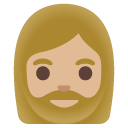
Appearance varies by platform and device. Google Noto, Twemoji, and OpenMoji are open-source.