🤾🏿♀️
The Emoji
Woman Playing Handball: Dark Skin Tone
U+1F93E U+1F3FF U+200D U+2640 U+FE0F · :woman_playing_handball_dark_skin_tone:
Trend 22
Meaning layers
- interpretation
- Used to flex athletic energy, hustle mentality, or when someone is going hard at something. Also used ironically to say 'throwing hands' or 'going off' on someone metaphorically.
- tiktok usage
- Appears in gym transformation videos, sports highlight clips, or as a stand-in for 'she's not playing around' energy in caption culture.
- irony level
- 4 / 10
Platform meanings
- meaning
- Athletic power, hustle culture, or ironic overcommitment energy
- trend usage
- Used in sports challenge videos, gym motivation captions, and 'she's built different' narrative TikToks
- hashtags
- #athlete#girlswhosport#handballer#darkskintone#shenotplaying
- virality score
- 28 / 100
Cultural meanings
🇺🇸
Western / Gen-Z
Seen as a symbol of athletic hustle and female empowerment; the dark skin tone modifier is consciously chosen to affirm Black representation in sports.
🇵🇰
Pakistan & India
Handball is not a dominant sport here so this emoji is rarely used in its literal sense; may be used generically to signal 'playing sports' or competitive energy.
🌍
Middle East
Handball has a following in some Gulf states; the emoji may be used by female athletes navigating conservative spaces to signal sporting identity proudly.
🌐
Global Neutral
Universally recognized as a sportswoman emoji; the dark skin tone is seen as a diversity-positive choice without strong secondary connotations.
🇧🇩
Bangladesh
Rarely used in its specific context; may be generically interpreted as a female athlete or used in school/university sports group chats.
🇱🇰
Sri Lanka
Infrequently used given handball's low popularity; may appear in pan-sports contexts or international sports discussions.
🇨🇳
China
Handball has limited cultural traction; the emoji may appear during Olympic coverage or in sports-adjacent meme communities on Weibo.
🇯🇵
Japan
Used occasionally in sports fan communities; the dark skin tone is noted as a diversity symbol and is used respectfully in inclusive sports content.
🇰🇷
South Korea
Appears in sports content and fitness culture on platforms like KakaoTalk; the athletic energy aligns with Korea's strong gym and sports culture.
🇹🇼
Taiwan
Used in sports discussions and Olympic context; seen as a forward-thinking emoji choice for its skin tone diversity representation.
🇭🇰
Hong Kong
Understood as a sports emoji in athletic circles; the inclusivity aspect is appreciated in cosmopolitan Hong Kong's digital culture.
🇵🇭
Philippines
Used in sports motivation posts; Filipinos may use it generically to express 'she's going all out' regardless of the specific sport shown.
🇮🇩
Indonesia
Occasionally used in fitness and sports content; seen more as a generic active woman symbol than a specific handball reference.
🇹🇭
Thailand
Used in sports and wellness content; the dark skin tone modifier may be selected deliberately by Thai users to show solidarity or diversity.
🇻🇳
Vietnam
Rarely used in its literal sense; may appear in motivational content or when discussing international sports events.
🇲🇾
Malaysia
Used in sports community chats and fitness groups; the multicultural context makes the dark skin tone modifier seen as natural and inclusive.
🇸🇦
Saudi Arabia
With growing women's sports visibility in Saudi Arabia, this emoji has gained relevance in female athletic communities and sports advocacy posts.
🇦🇪
UAE
Used in diverse, cosmopolitan UAE digital culture to represent athletic women; fits well in Dubai's fitness and wellness content ecosystem.
🇪🇬
Egypt
Handball is relatively popular in Egypt; this emoji may be used in handball fan communities and to celebrate Egyptian women athletes.
🇹🇷
Turkey
Turkey has an active handball culture; this emoji is used in sports circles and by female athletes representing themselves online.
🇮🇷
Iran
Used sparingly; in contexts where women's sports are discussed online, it can carry a message of female athletic pride and quiet resistance.
🇳🇬
Nigeria
Used with pride to represent Black athletic women; the dark skin tone modifier resonates strongly in Nigerian digital culture as a representation win.
🇿🇦
South Africa
The dark skin tone is embraced as culturally affirming; used in sports communities and Black empowerment spaces to celebrate female athletes.
🇬🇧
UK & Ireland
Handball exists in the UK but is niche; used primarily to signal athletic energy or as a diversity-positive emoji choice in sports conversations.
🇫🇷
France
France has a strong handball culture and the emoji is used authentically by handball fans and female athletes, with the dark skin tone reflecting France's diverse national team.
🇩🇪
Germany
Germany is a handball powerhouse; this emoji is used genuinely by fans and players, and the dark skin tone is embraced as representing Germany's diverse athletic community.
🇪🇸
Spain & Italy
Handball is moderately popular; used in sports content and increasingly in female empowerment contexts, particularly around Olympic seasons.
🇧🇷
Brazil
Used in sports motivation content; Brazilians may adapt it for general athletic energy given handball's growing but still developing profile in Brazil.
🇲🇽
Mexico
Handball is not dominant; used generically to signal a sporty, competitive woman persona or in international sports event coverage.
🌎
Latin America
Across Latin America, used more for its energetic athletic symbolism than literal handball meaning; embraced in girl power and fitness content.
🇦🇺
Australia & NZ
Used in sports culture generally; the dark skin tone is seen as inclusive and the emoji appears in Indigenous and multicultural sports communities.
How its meaning shifted
- 2010
This specific emoji did not exist in 2010 as handball emojis and skin tone modifiers were not yet introduced; predecessor sports emoji were generic and yellow-toned.
- 2015
Skin tone modifiers were introduced to Unicode in 2015 but the handball player emoji came later; sports emoji diversity was just beginning to expand.
- 2020
Used primarily by handball players, female athletes, and emoji diversity advocates; saw increased usage during the Tokyo Olympics 2020 discussions about representation.
- 2026
Increasingly used as a general-purpose 'she's not playing' energy emoji; the dark skin tone version is actively chosen as a representation statement in sports and empowerment content.
See it on every platform
Adjacent emojis
- Often confused with
- woman playing water poloperson throwing ballwoman cartwheeling
- Can replace
- woman runningflexed bicepsfire
Share & embed
Frequently asked
01What does the 🤾🏿♀️ Woman Playing Handball: Dark Skin Tone emoji mean?
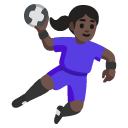
A woman with dark skin tone playing handball, depicted mid-throw in an athletic stance. Combines the woman emoji, dark skin tone modifier, and handball player base.
02What does 🤾🏿♀️ mean on TikTok?
Athletic power, hustle culture, or ironic overcommitment energy
03What does 🤾🏿♀️ mean on WhatsApp?
Signals sporting activity, workout plans, or athletic scheduling in group chats
04What does 🤾🏿♀️ mean in Gen-Z slang?
Used to flex athletic energy, hustle mentality, or when someone is going hard at something. Also used ironically to say 'throwing hands' or 'going off' on someone metaphorically.
05Is the 🤾🏿♀️ emoji safe to use?
A sportswoman playing handball; used to celebrate athletic achievement, female empowerment, and skin tone diversity in sports.
06What does 🤾🏿♀️ mean in texting?
Evokes feelings of physical agency, competitive drive, and pride in representation. The dark skin tone modifier adds a layer of cultural identity affirmation for users of color.
07What is the shortcode for 🤾🏿♀️?
The shortcode for Woman Playing Handball: Dark Skin Tone is :woman_playing_handball_dark_skin_tone:
08What does 🤾🏿♀️ mean in dating?
Rarely used in flirting directly; sometimes used to signal an active, sporty lifestyle as a personality marker in dating profiles.
Safety & usage
- Safe meaning
- A sportswoman playing handball; used to celebrate athletic achievement, female empowerment, and skin tone diversity in sports.
- Caution
- Extremely rare toxic use; could theoretically be used dismissively in contexts minimizing women's sports but this is not an established pattern.
No significant toxic usage patterns documented. The dark skin tone modifier may occasionally be misappropriated in mockery contexts on fringe platforms but this is uncommon.
How it looks across platforms
Appearance varies by platform and device. Google Noto, Twemoji, and OpenMoji are open-source.