👩🏿🦯➡️
The Emoji
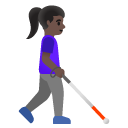
Woman With White Cane Facing Right: Dark Skin Tone
U+1F469 U+1F3FF U+200D U+1F9AF U+200D U+27A1 U+FE0F · :woman_with_white_cane_facing_right_dark_skin_tone:
Trend 18
Meaning layers
- interpretation
- Used to signal 'moving forward despite obstacles,' metaphorically representing perseverance, blind confidence, or navigating life without a clear map. Sometimes ironic when someone is clearly lost or clueless.
- tiktok usage
- Appears in 'finding my way' narratives, self-improvement content, or satirically when creators humorously admit they have no idea what they're doing but are pressing forward anyway.
- irony level
- 4 / 10
Platform meanings
- meaning
- Represents moving forward through challenges, visual impairment awareness, or ironic 'I have no idea what I'm doing but I'm going' sentiment.
- trend usage
- Appears in disability visibility TikToks, self-improvement series, and occasionally in comedic 'life is chaos' content.
- hashtags
- #DisabilityVisibility#BlindToItAll#MovingForward#RepresentationMatters#NavigatingLife
- virality score
- 22 / 100
Cultural meanings
🇺🇸
Western / Gen-Z
Interpreted as both a literal disability representation emoji and a metaphorical symbol for moving forward confidently without full clarity. Gen Z in Western countries use it to represent disability pride and adaptive resilience.
🇵🇰
Pakistan & India
Primarily understood as a disability indicator; disability representation is growing in awareness here, and this emoji appears in advocacy and social media posts about visual impairment support systems.
🌍
Middle East
Used mainly in contexts of disability awareness or charity, often in posts during Islamic charitable giving seasons related to supporting people with disabilities.
🌐
Global Neutral
Universally readable as representing a woman with a visual disability using a white cane, moving forward — widely accepted as an inclusive and representational emoji.
🇧🇩
Bangladesh
Appears in disability rights advocacy content; white cane symbolism is recognized, and the emoji is used in social welfare and accessibility discussions.
🇱🇰
Sri Lanka
Used in disability support communities and health awareness posts; largely interpreted literally as representing visual impairment.
🇨🇳
China
Interpreted straightforwardly as a disability symbol; Chinese social media users may use it in posts about blind individuals or accessibility tech like AI navigation.
🇯🇵
Japan
Japan's strong culture around accessible design means this emoji is respected in accessibility conversations; used in disability inclusion and universal design discussions.
🇰🇷
South Korea
Recognized as a disability representation emoji; South Korean users may deploy it in disability awareness content or when discussing Korean accessibility policies.
🇹🇼
Taiwan
Used in inclusive design and disability advocacy circles; Taiwan's progressive disability rights landscape means this emoji appears in empowerment contexts.
🇭🇰
Hong Kong
Appears in disability rights and social justice posts; the directional element may add metaphorical use in 'moving forward' protest or resilience contexts.
🇵🇭
Philippines
Interpreted as disability representation; used in OFW communities discussing mobility challenges or in disability support and awareness posts.
🇮🇩
Indonesia
Primarily literal in interpretation; used in disability awareness campaigns and Islamic social welfare content about supporting visually impaired individuals.
🇹🇭
Thailand
Used in disability awareness and accessibility content; Thai users also use it metaphorically in motivational posts about navigating life's uncertainties.
🇻🇳
Vietnam
Seen in disability advocacy and social welfare content; the white cane is a recognized symbol and this emoji appears in posts about assistive tools and blind communities.
🇲🇾
Malaysia
Used in disability representation and accessibility posts; Malaysia's multicultural user base may interpret it through both literal and metaphorical lenses.
🇸🇦
Saudi Arabia
Appears in disability awareness and charity contexts, particularly during Ramadan-related giving posts; the dark skin tone representation adds cultural diversity visibility.
🇦🇪
UAE
Used in inclusive UAE social initiatives and disability awareness events; the emoji reflects the UAE's growing focus on accessibility and inclusion policies.
🇪🇬
Egypt
Interpreted as disability representation; used in posts about social support, charitable giving to visually impaired individuals, and disability rights discussions.
🇹🇷
Turkey
Appears in disability advocacy content and accessibility discussions; Turkish users also occasionally use it metaphorically for navigating tough life moments.
🇮🇷
Iran
Used in disability awareness and social welfare contexts; the emoji's representation of an independent, moving figure carries positive connotations of agency.
🇳🇬
Nigeria
Used in disability representation and awareness posts; Nigeria's growing disability rights movement sees this emoji in advocacy and empowerment content.
🇿🇦
South Africa
Appears in disability rights and inclusion content; South Africa's awareness of intersectional identity means the dark skin tone representation is positively noted.
🇬🇧
UK & Ireland
Used in disability visibility and accessibility campaigns; Gen Z users also use it metaphorically for 'going forward blindly' in ironic or self-deprecating humor.
🇫🇷
France
Interpreted both literally in disability awareness content and metaphorically; French users may use it in discussions about inclusion policies or personal resilience.
🇩🇪
Germany
Used in accessibility and disability representation discussions; Germany's emphasis on structured inclusion policies means this emoji appears in formal advocacy contexts.
🇪🇸
Spain & Italy
Appears in disability representation posts and motivational content; Southern European users often interpret the directional element as forward movement and progress.
🇧🇷
Brazil
Used in disability awareness campaigns and inclusivity posts; Brazil's vibrant social media culture sees it occasionally in motivational or empowerment content.
🇲🇽
Mexico
Interpreted as disability representation; used in social advocacy content, disability rights discussions, and occasionally in metaphorical 'finding my way' posts.
🌎
Latin America
Broadly used in Latin American disability rights and inclusion content; the emoji resonates in discussions about accessibility infrastructure and empowerment.
🇦🇺
Australia & NZ
Used in disability visibility and accessibility advocacy; Australian and New Zealand users also use it in humor about 'navigating life without a clue' in self-deprecating Gen Z style.
How its meaning shifted
- 2010
This specific emoji combination did not exist in 2010; white cane emojis and directional modifiers were not yet part of Unicode, and disability representation in emoji was virtually nonexistent.
- 2015
Basic disability-related emojis were beginning to be discussed in Unicode proposals; representation for visual impairment was still absent and this specific combination was years away.
- 2020
With the expansion of disability emojis around 2019-2020, white cane emojis became available; early usage was primarily literal disability representation and advocacy, with skin tone options gaining traction.
- 2026
By 2026, this emoji is used in disability pride content, accessibility tech discussions, Gen Z metaphorical 'navigating life' posts, and intersectional representation conversations combining race and disability visibility.
See it on every platform
Adjacent emojis
- Often confused with
- person walkingwoman with probing caneold woman
Share & embed
Frequently asked
01What does the 👩🏿🦯➡️ Woman With White Cane Facing Right: Dark Skin Tone emoji mean?
A woman with dark skin tone using a white cane, depicted facing right, indicating navigation or movement toward the right direction. The white cane is a universal symbol of visual impairment.
02What does 👩🏿🦯➡️ mean on TikTok?
Represents moving forward through challenges, visual impairment awareness, or ironic 'I have no idea what I'm doing but I'm going' sentiment.
03What does 👩🏿🦯➡️ mean on WhatsApp?
Used to indicate someone is 'finding their way' through a situation or feeling around in the dark about a decision.
04What does 👩🏿🦯➡️ mean in Gen-Z slang?
Used to signal 'moving forward despite obstacles,' metaphorically representing perseverance, blind confidence, or navigating life without a clear map. Sometimes ironic when someone is clearly lost or clueless.
05Is the 👩🏿🦯➡️ emoji safe to use?
A respectful representation of a dark-skinned woman with a visual impairment using a white cane, navigating forward. Used in disability awareness, representation, and empowerment content.
06What does 👩🏿🦯➡️ mean in texting?
Psychologically this emoji evokes themes of independence, adaptive coping, and forward momentum. Viewers tend to project either admiration for overcoming adversity or use it as a metaphor for navigating uncertainty without full information.
07What is the shortcode for 👩🏿🦯➡️?
The shortcode for Woman With White Cane Facing Right: Dark Skin Tone is :woman_with_white_cane_facing_right_dark_skin_tone:
08What does 👩🏿🦯➡️ mean in dating?
Rarely used in flirting contexts; occasionally deployed humorously to say 'I'm just feeling my way through this relationship situation.'
Safety & usage
- Safe meaning
- A respectful representation of a dark-skinned woman with a visual impairment using a white cane, navigating forward. Used in disability awareness, representation, and empowerment content.
- Caution
- Could potentially be used mockingly to call someone oblivious or imply someone is 'blind' to obvious truths in a belittling way, though this is uncommon.
Avoid using this emoji sarcastically to demean someone's awareness or intelligence, as it appropriates disability symbolism in a disrespectful way. When in doubt, use it only in supportive or neutral contexts.
How it looks across platforms
Appearance varies by platform and device. Google Noto, Twemoji, and OpenMoji are open-source.