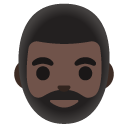
🧔🏿♂️
The Emoji
Man: Dark Skin Tone, Beard
U+1F9D4 U+1F3FF U+200D U+2642 U+FE0F · :man_dark_skin_tone_beard:
Trend 58
Meaning layers
- interpretation
- Used to represent a rugged, masculine, stylish bearded Black man; often deployed to express admiration, relatability, or to signal a 'that's my vibe' energy.
- tiktok usage
- Appears in comments to hype up dark-skinned men with beards, used in 'POV: you're him' trends, or as a self-identifier in relatable content.
- irony level
- 2 / 10
Platform meanings
- meaning
- Self-representation emoji for bearded dark-skinned men; also used in comment sections to hype creators who match this appearance.
- trend usage
- Used in 'rating my beard journey' videos, Black man glow-up trends, and 'POV: you are him' skits.
- hashtags
- #BeardedMen#BlackMenWithBeards#BeardGang#DarkSkinMen#BeardedKing
- virality score
- 62 / 100
Cultural meanings
🇺🇸
Western / Gen-Z
Used as a proud self-identifier by young dark-skinned bearded men and as a hyping emoji in social circles celebrating Black masculinity.
🇵🇰
Pakistan & India
May represent a bearded South Asian man of darker complexion; used in family or friend chats to identify someone by appearance.
🌍
Middle East
Beards are culturally significant in many Middle Eastern cultures; this emoji may be used to represent a dark-skinned bearded elder or respected man.
🌐
Global Neutral
Universally interpreted as a bearded dark-skinned man, used for straightforward representation and identification.
🇧🇩
Bangladesh
Used to represent dark-complexioned bearded men, often in the context of family references or identifying male contacts.
🇱🇰
Sri Lanka
Carries meaning of a mature or traditional dark-skinned man with a beard; used in casual family or social group chats.
🇨🇳
China
Less culturally specific, may be used to represent a foreign or diverse male character in international contexts.
🇯🇵
Japan
Seen as representing a 'cool foreigner' or a mature, rugged male character; beards are less common in Japanese culture so the emoji stands out.
🇰🇷
South Korea
Used to represent diversity; in K-culture spaces it may be associated with admiration for African-American or Black culture and style.
🇹🇼
Taiwan
Generally used as a neutral representation of a bearded dark-skinned man in diverse or international contexts.
🇭🇰
Hong Kong
Used in international or cosmopolitan conversations to represent diversity and multicultural identity.
🇵🇭
Philippines
Often used to represent a dark-skinned bearded male friend or public figure, especially in African-American pop culture discussions.
🇮🇩
Indonesia
May represent a dark-skinned bearded man in a religious or cultural context, given the significance of beards in Islamic tradition.
🇹🇭
Thailand
Used in casual conversation to identify a foreign or dark-skinned bearded character; less culturally loaded than in Western contexts.
🇻🇳
Vietnam
Primarily used for identification or representation; may appear in discussions about Western or African cultural content.
🇲🇾
Malaysia
Given Malaysia's multiracial context, this emoji may be used to represent Malay, Indian, or Black bearded men with positive connotations.
🇸🇦
Saudi Arabia
Beards are deeply respected in Saudi culture; the dark skin tone version may represent men from African or South Asian backgrounds living in the Kingdom.
🇦🇪
UAE
In the diverse UAE context, used to represent one of many nationalities; positively associated with groomed, professional appearance.
🇪🇬
Egypt
May represent a Nubian or darker-complexioned Egyptian or African man; beards are respected, lending the emoji a dignified connotation.
🇹🇷
Turkey
Used to represent a dark-skinned bearded man, possibly in the context of migration, diversity, or international pop culture discussions.
🇮🇷
Iran
Beards are culturally and religiously significant; this emoji may represent a dark-complexioned Iranian or African man with respect.
🇳🇬
Nigeria
Widely embraced as a representation of Nigerian or West African men; associated with pride, masculinity, and Afrobeats culture.
🇿🇦
South Africa
Used proudly to represent South African Black men with beards; associated with dignity, style, and Ubuntu culture.
🇬🇧
UK & Ireland
Used in British Black culture to celebrate bearded dark-skinned men, often in Afrobeats, grime, or football contexts.
🇫🇷
France
Associated with Afro-French identity and pride; used in diverse communities celebrating Black masculinity in France.
🇩🇪
Germany
Used in multicultural contexts to represent Afro-German or African diaspora men with a beard.
🇪🇸
Spain & Italy
Appears in conversations about Afro-European identity or in reaction to African or Black male public figures.
🇧🇷
Brazil
Widely relatable in Brazil given its large Afro-Brazilian population; used to celebrate Black Brazilian men and their identity.
🇲🇽
Mexico
Used in discussions of Afro-Mexican identity or in reactions to Black American pop culture in Mexican communities.
🌎
Latin America
Represents Afro-Latino men across Latin America; gaining visibility as Afro-Latin identity movements grow.
🇦🇺
Australia & NZ
Used in multicultural communities to represent Indigenous, Pacific Islander, or African-descended bearded men.
How its meaning shifted
- 2010
The emoji did not exist in 2010; beard and diverse skin tone emojis were not yet part of the Unicode standard.
- 2015
Basic beard and skin tone emojis began emerging; combined ZWJ sequences like this were in early development as Unicode expanded diversity efforts.
- 2020
Widely adopted following major Unicode diversity updates; used prominently in Black Lives Matter discussions, Black excellence content, and beard culture communities.
- 2026
Firmly established as a standard self-representation emoji for dark-skinned bearded men across all major platforms, embedded in beard culture, Black male identity content, and inclusive design.
See it on every platform
Compare with
Adjacent emojis
Share & embed
Frequently asked
01What does the 🧔🏿♂️ Man: Dark Skin Tone, Beard emoji mean?
A man with a dark skin tone and a beard, represented as a combined ZWJ sequence of the bearded person emoji with a male sign and dark skin tone modifier.
02What does 🧔🏿♂️ mean on TikTok?
Self-representation emoji for bearded dark-skinned men; also used in comment sections to hype creators who match this appearance.
03What does 🧔🏿♂️ mean on WhatsApp?
Used to represent oneself or a friend who is a dark-skinned bearded man in casual conversation.
04What does 🧔🏿♂️ mean in Gen-Z slang?
Used to represent a rugged, masculine, stylish bearded Black man; often deployed to express admiration, relatability, or to signal a 'that's my vibe' energy.
05Is the 🧔🏿♂️ emoji safe to use?
A respectful, celebratory representation of dark-skinned bearded men used for identity, pride, and cultural expression.
06What does 🧔🏿♂️ mean in texting?
Representation matters deeply; this emoji carries emotional weight for dark-skinned men who rarely saw themselves reflected in digital communication, evoking pride and validation.
07What is the shortcode for 🧔🏿♂️?
The shortcode for Man: Dark Skin Tone, Beard is :man_dark_skin_tone_beard:
08What does 🧔🏿♂️ mean in dating?
Used on dating apps or DMs to signal attraction to bearded dark-skinned men, or by such men as a self-representational emoji in bios.
Safety & usage
- Safe meaning
- A respectful, celebratory representation of dark-skinned bearded men used for identity, pride, and cultural expression.
- Caution
- Rarely weaponized, but can occasionally appear in racial stereotyping or profiling contexts in toxic online spaces.
Generally safe; monitor for use in racially charged or derogatory contexts where appearance-based stereotypes may be invoked.
How it looks across platforms
Appearance varies by platform and device. Google Noto, Twemoji, and OpenMoji are open-source.