🧚🏼♂️
The Emoji
Man Fairy: Medium-light Skin Tone
U+1F9DA U+1F3FC U+200D U+2642 U+FE0F · :man_fairy_mediumlight_skin_tone:
Trend 68
Meaning layers
- interpretation
- Used to signal whimsy, chaotic magical energy, or a 'main character' vibe. Also deployed ironically to describe someone who does absolutely nothing useful but thinks they're special.
- tiktok usage
- Appears in 'delulu' content, fantasy aesthetic videos, and ironically in videos about doing the bare minimum while feeling magical about it.
- irony level
- 7 / 10
Platform meanings
- meaning
- Signals fantasy aesthetic, unbothered chaotic energy, or ironic magical thinking. Heavy in cottagecore and dark academia adjacent content.
- trend usage
- Used in 'POV: you're a fairy who avoids responsibilities' trends and 'delulu is the solulu' content waves.
- hashtags
- #fairycore#cottagecore#magicvibes#delusionalera#fairyaesthetic
- virality score
- 72 / 100
Cultural meanings
🇺🇸
Western / Gen-Z
Heavily used in ironic 'delulu' and fairycore content; signals unbothered magical energy and queer-coded whimsy. Peak Gen Z fairy era usage.
🇵🇰
Pakistan & India
Rarely used seriously; may appear in playful fantasy contexts, Bollywood fairy tale references, or children's content. Occasionally used ironically by younger urban users.
🌍
Middle East
Uncommon in mainstream use; may appear in fantasy gaming contexts or by younger Westernized users familiar with global emoji culture.
🌐
Global Neutral
Generally understood as a magical fantasy creature character, associated with children's stories and fairy tales across cultures.
🇧🇩
Bangladesh
Limited use; primarily understood as a fantasy or children's story character. May appear in youth social media with Western influence.
🇱🇰
Sri Lanka
Rare usage; associated with Western fairy tale characters. Younger social media users may deploy it in fantasy aesthetic contexts.
🇨🇳
China
Not widely used in mainstream Chinese social media; may appear in gaming contexts or among users of Western platforms. Associated with Western mythology rather than local folklore.
🇯🇵
Japan
More familiar due to fantasy gaming and anime culture; the fairy archetype is well-known from RPGs. Used in fantasy cosplay and otaku communities.
🇰🇷
South Korea
Used among K-pop fans who apply fairy imagery to ethereal idol aesthetics. Also appears in fantasy gaming content and webtoon fan communities.
🇹🇼
Taiwan
Appears in fantasy gaming and cosplay communities; younger users familiar with Western emoji culture use it in whimsical aesthetic content.
🇭🇰
Hong Kong
Used among younger, Westernized users in fantasy and aesthetic contexts. May appear alongside broader pop culture and gaming references.
🇵🇭
Philippines
Used in fantasy aesthetic content and among fans of Western fantasy media. Gen Z Filipinos use it in fairycore and cottagecore inspired posts.
🇮🇩
Indonesia
Appears in fantasy and gaming communities. Some use it in reference to 'peri' (fairy) concepts from local storytelling mixed with Western imagery.
🇹🇭
Thailand
Used in fantasy aesthetic and cosplay communities. Thai users may associate it with spiritual/supernatural beings from local folklore in a lighthearted way.
🇻🇳
Vietnam
Limited but growing use among younger users influenced by global aesthetic trends. Primarily seen in fantasy gaming and K-pop adjacent content.
🇲🇾
Malaysia
Used among younger, digitally connected users in fantasy and aesthetic contexts. Occasionally tied to cosplay and gaming communities.
🇸🇦
Saudi Arabia
Rare in mainstream use; more likely to appear among younger users on global platforms in fantasy gaming or aesthetic contexts.
🇦🇪
UAE
More common among the younger, globally connected population; used in fantasy aesthetic and cosmopolitan social media content.
🇪🇬
Egypt
Limited use; primarily by younger users familiar with global emoji culture. May appear in fantasy gaming or lighthearted whimsical posts.
🇹🇷
Turkey
Used among younger users in fantasy and aesthetic content. Turkish Gen Z may deploy it in 'delulu' or whimsical relatable memes.
🇮🇷
Iran
Rare in mainstream use; younger users on global platforms may use it in fantasy gaming or aesthetic contexts despite internet restrictions.
🇳🇬
Nigeria
Used among young, globally connected users in playful or fantasy contexts. May also appear in Afrobeats-adjacent content with a carefree vibe.
🇿🇦
South Africa
Used in fantasy aesthetic and gaming contexts. South African Gen Z users may deploy it in ironic or whimsical social media content.
🇬🇧
UK & Ireland
Common in British slang contexts — 'away with the fairies' cultural familiarity makes it a natural fit for describing dreamy or oblivious people playfully.
🇫🇷
France
Used in whimsical and fantasy aesthetic contexts. French users may deploy it in fairy tale references or ironic 'enchanted' responses.
🇩🇪
Germany
Appears in fantasy gaming and aesthetic communities. German users may connect it to Germanic fairy tale traditions (Märchen) in a modern context.
🇪🇸
Spain & Italy
Used in playful, fantasy, and aesthetic contexts. Mediterranean users may tie it to magical realism cultural sensibilities or carnaval/fantasy cosplay.
🇧🇷
Brazil
Popular among Brazilian Gen Z in fantasy aesthetic and cottagecore content. Used with high irony in meme culture around magical thinking.
🇲🇽
Mexico
Used in fantasy and aesthetic contexts; may appear alongside magical realism cultural references. Mexican Gen Z users deploy it in whimsical meme formats.
🌎
Latin America
Broadly used across Latin American Gen Z communities in fantasy aesthetic and ironic 'magical thinking' meme content.
🇦🇺
Australia & NZ
Common in Gen Z ironic and whimsical content. Australians may use it in the 'away with the fairies' sense or in cottagecore and fantasy aesthetic posts.
How its meaning shifted
- 2010
This specific skin tone variant did not exist; the base fairy emoji wasn't introduced until 2016. Fairy concepts were conveyed with star and sparkle emojis.
- 2015
Still pre-release. Fantasy and magical content relied on star, sparkle, and wand adjacent emojis. Fairy as a concept existed in text only.
- 2020
Emerged with the rise of cottagecore and fairycore aesthetics during pandemic escapism. Used earnestly in fantasy aesthetic content and early 'delulu' culture.
- 2026
Firmly embedded in ironic Gen Z 'delulu era' meme culture while also serving genuine fairycore and queer-coded aesthetic communities. Skin tone variants normalized for self-representation.
See it on every platform
Adjacent emojis
- Often confused with
- angelperson with wingssuperhero
- Can replace
- sparklesmagic wandperson bouncing ball
Share & embed
Frequently asked
01What does the 🧚🏼♂️ Man Fairy: Medium-light Skin Tone emoji mean?
A male fairy with medium-light skin tone, depicted with wings and often a wand or magical elements. Represents fantasy, magic, and mythical fairy beings.
02What does 🧚🏼♂️ mean on TikTok?
Signals fantasy aesthetic, unbothered chaotic energy, or ironic magical thinking. Heavy in cottagecore and dark academia adjacent content.
03What does 🧚🏼♂️ mean on WhatsApp?
Playful way to say someone is dreamy, otherworldly, or living in their own world. Often sent as a teasing compliment.
04What does 🧚🏼♂️ mean in Gen-Z slang?
Used to signal whimsy, chaotic magical energy, or a 'main character' vibe. Also deployed ironically to describe someone who does absolutely nothing useful but thinks they're special.
05Is the 🧚🏼♂️ emoji safe to use?
Fantasy, magic, whimsy, fairy tale characters, playful imagination, cottagecore aesthetic, carefree energy.
06What does 🧚🏼♂️ mean in texting?
Tapping into the human desire for magic and transcendence, this emoji often signals a coping mechanism of playful denial or a genuine embrace of imagination over harsh reality.
07What is the shortcode for 🧚🏼♂️?
The shortcode for Man Fairy: Medium-light Skin Tone is :man_fairy_mediumlight_skin_tone:
08What does 🧚🏼♂️ mean in dating?
Used flirtatiously to suggest someone has a magical, enchanting personality or to say 'I'll cast a spell on you.' Can also be self-deprecating about being a hopeless romantic.
Safety & usage
- Safe meaning
- Fantasy, magic, whimsy, fairy tale characters, playful imagination, cottagecore aesthetic, carefree energy.
- Caution
- Can be used mockingly to imply someone is delusional, out of touch with reality, or 'flighty.' Occasionally used to mock someone for being naive.
Generally safe. In rare contexts may be used to mock effeminate or LGBTQ+ individuals, though this is uncommon. Skin tone variants are used for representation and should not be co-opted mockingly.
How it looks across platforms
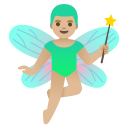
Appearance varies by platform and device. Google Noto, Twemoji, and OpenMoji are open-source.