🧔🏾♂️
The Emoji
Man: Medium-dark Skin Tone, Beard
U+1F9D4 U+1F3FE U+200D U+2642 U+FE0F · :man_mediumdark_skin_tone_beard:
Trend 58
Meaning layers
- interpretation
- Often used to represent a rugged, mature, or stylishly scruffy guy. Can signal 'zaddy energy' or a distinguished older man aesthetic.
- tiktok usage
- Used in thirst-trap comment sections, 'type of guy' memes, and videos celebrating bearded men of color.
- irony level
- 3 / 10
Platform meanings
- meaning
- Represents the attractive bearded man trope; used in comments to describe a crush or compliment someone's look.
- trend usage
- Appears in 'my type' trend videos, beard transformation content, and thirst edits of bearded men of color.
- hashtags
- #beardgang#melaninmen#beardedmen#brownskin#zaddy
- virality score
- 62 / 100
Cultural meanings
🇺🇸
Western / Gen-Z
Seen as a representation of the 'zaddy' or rugged attractive man archetype; used freely in compliment culture and diversity appreciation posts.
🇵🇰
Pakistan & India
Highly relatable and widely used as self-representation; beards carry strong cultural, religious, and masculine significance in South Asian communities.
🌍
Middle East
Very commonly used as a self-identifier; beards are a sign of religious devotion, masculinity, and social respect in many Middle Eastern cultures.
🌐
Global Neutral
Generally understood as a representation of a bearded man with medium-dark skin, used for identification or representation across most global contexts.
🇧🇩
Bangladesh
Used similarly to South Asian contexts, where beards are associated with religiosity, maturity, and cultural pride among Bengali men.
🇱🇰
Sri Lanka
Used as a self-identifier or to describe a bearded man; less culturally loaded than in South Asia but still positively associated with maturity.
🇨🇳
China
Less commonly used as beards are not traditionally celebrated in Chinese culture; may be used to describe a foreign or non-Han appearance.
🇯🇵
Japan
Rarely used in self-identification; more likely to appear in discussions about foreign cultures or in anime and gaming character contexts.
🇰🇷
South Korea
Used in K-pop and men's grooming discussions; the beard aesthetic is growing in popularity among younger Korean men but remains niche.
🇹🇼
Taiwan
Occasionally used in diverse representation discussions or to describe a foreign aesthetic; not a dominant cultural signifier.
🇭🇰
Hong Kong
Used in multicultural contexts; may reference South Asian or Middle Eastern communities in Hong Kong more than local Chinese identity.
🇵🇭
Philippines
Used to represent a mature, rugged Filipino man or to comment on a celebrity's beard; positively associated with attractiveness.
🇮🇩
Indonesia
Widely relatable due to the Muslim majority population where beards carry religious significance; used proudly as self-representation.
🇹🇭
Thailand
Occasionally used in men's grooming content; beards are less central to Thai male aesthetics but recognized in international contexts.
🇻🇳
Vietnam
Less common as beards are not traditionally prominent in Vietnamese male culture; used more in reference to multicultural or diaspora identities.
🇲🇾
Malaysia
Used frequently by Malay Muslim men as self-representation, given the religious and cultural significance of beards in Malaysian society.
🇸🇦
Saudi Arabia
Very positively received; represents a traditional and respected masculine aesthetic deeply tied to Islamic culture and Saudi identity.
🇦🇪
UAE
Used widely to represent both Emirati and South Asian communities in the UAE; beards are respected and common across the diverse population.
🇪🇬
Egypt
Used to represent a traditionally masculine Egyptian man; beards are associated with religious observance and cultural pride in Egypt.
🇹🇷
Turkey
Used to represent Turkish masculinity; beards have seen a cultural resurgence among younger Turkish men tied to both tradition and modern style.
🇮🇷
Iran
Used in self-identification and religious contexts; beards carry significant cultural and political connotations in Iranian society.
🇳🇬
Nigeria
Used to represent a stylish, mature Nigerian man; beard culture is strong in Nigeria and associated with fashion, success, and masculinity.
🇿🇦
South Africa
Used across diverse communities to represent a bearded man of color; resonates with Zulu, Xhosa, and Cape Malay beard traditions.
🇬🇧
UK & Ireland
Used in diverse urban communities; represents South Asian, African, or mixed-heritage bearded men in multicultural British contexts.
🇫🇷
France
Used to represent North African or Sub-Saharan African heritage communities in France; increasingly normalized in diverse representation discourse.
🇩🇪
Germany
Used in multicultural contexts; often associated with Turkish-German or Arab-German communities where beard culture is prominent.
🇪🇸
Spain & Italy
Resonates with Mediterranean and Latin cultures where beards are fashionable; the skin tone connects to Southern European or North African identities.
🇧🇷
Brazil
Used to represent Afro-Brazilian or mixed-heritage bearded men; part of broader Afro-Brazilian cultural pride and representation.
🇲🇽
Mexico
Used to represent a bearded Mexican or Latin man with darker skin; associated with masculine identity and indigenous or mestizo pride.
🌎
Latin America
Widely used across Latin America to represent bearded men of color; resonates in communities with strong Afro-Latin or indigenous heritage.
🇦🇺
Australia & NZ
Used in multicultural contexts; represents South Asian, Pacific Islander, or Aboriginal bearded men in diverse Australian and New Zealand communities.
How its meaning shifted
- 2010
This emoji did not exist yet; skin tone modifiers and gender-specific emoji variants were not yet part of Unicode.
- 2015
The base bearded person emoji was just being introduced; skin tone diversity was newly added to Unicode and gaining traction on early platforms.
- 2020
Established as a go-to representation emoji for bearded men of color; used heavily in diversity and inclusion conversations boosted by social justice movements.
- 2026
A staple representation emoji used casually in self-identification, flirting, and cultural pride contexts across all major platforms.
See it on every platform
Compare with
Adjacent emojis
Share & embed
Frequently asked
01What does the 🧔🏾♂️ Man: Medium-dark Skin Tone, Beard emoji mean?
A man with a beard and medium-dark skin tone, used to represent a bearded male individual with a brown complexion.
02What does 🧔🏾♂️ mean on TikTok?
Represents the attractive bearded man trope; used in comments to describe a crush or compliment someone's look.
03What does 🧔🏾♂️ mean on WhatsApp?
Used to refer to a specific bearded man in conversation, often a partner, friend, or celebrity crush.
04What does 🧔🏾♂️ mean in Gen-Z slang?
Often used to represent a rugged, mature, or stylishly scruffy guy. Can signal 'zaddy energy' or a distinguished older man aesthetic.
05Is the 🧔🏾♂️ emoji safe to use?
A neutral representation emoji for bearded men of medium-dark skin tone; widely used in positive, inclusive, and identity contexts.
06What does 🧔🏾♂️ mean in texting?
Beards are culturally associated with masculinity, wisdom, and maturity. The medium-dark skin tone adds a layer of cultural identity and representation pride.
07What is the shortcode for 🧔🏾♂️?
The shortcode for Man: Medium-dark Skin Tone, Beard is :man_mediumdark_skin_tone_beard:
08What does 🧔🏾♂️ mean in dating?
Sent to flirt with or compliment a bearded man of color, or to express a type preference. Often dropped in DMs as a subtle 'you look like this emoji' compliment.
Safety & usage
- Safe meaning
- A neutral representation emoji for bearded men of medium-dark skin tone; widely used in positive, inclusive, and identity contexts.
- Caution
- In rare cases, could be used in stereotyping or profiling conversations, though this is uncommon and context-dependent.
Minimal risk emoji; could theoretically be misused in racial stereotyping but is generally benign. The combination of beard and skin tone could occasionally be used in insensitive jokes.
How it looks across platforms
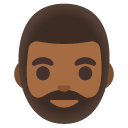
Appearance varies by platform and device. Google Noto, Twemoji, and OpenMoji are open-source.