🏌️♀️
The Emoji
Woman Golfing
U+1F3CC U+FE0F U+200D U+2640 U+FE0F · :woman_golfing:
Trend 38
Meaning layers
- interpretation
- Used ironically to signal wealthy or bougie behavior, leisure privilege, or 'I don't have real problems' energy. Also used unironically by actual golfers and golf-culture enthusiasts.
- tiktok usage
- Appears in 'girlboss' content, country club aesthetic videos, and ironic 'rich girl activities' compilations. Sometimes used to mock privilege or flex a relaxed, elite lifestyle.
- irony level
- 6 / 10
Platform meanings
- meaning
- Signals bougie leisure, golf-girl aesthetic, or ironic wealth flexing. Common in country club TikTok and preppy fashion content.
- trend usage
- Appears in 'soft life' trend content, old-money aesthetic videos, and side-by-side privilege comparison skits.
- hashtags
- #GolfGirl#OldMoneyAesthetic#CountryClubVibes#GolfTok#PrepLife
- virality score
- 42 / 100
Cultural meanings
🇺🇸
Western / Gen-Z
Used ironically to signal old-money aesthetics, privilege, or bougie leisure. Also genuinely embraced by the growing women's golf community on social media.
🇵🇰
Pakistan & India
Golf is an elite, upper-class sport in South Asia, so this emoji signals wealth and high social status. Rarely used casually; more common among affluent urban youth or sports professionals.
🌍
Middle East
Associated with luxury golf resorts in Dubai and Doha. Signals elite leisure and is used positively by affluent women in contexts involving premium sports facilities.
🌐
Global Neutral
Universally understood as representing a woman playing golf. Signals leisure, sport, and female athletic participation without strong cultural connotations.
🇧🇩
Bangladesh
Golf is niche and elite in Bangladesh, so this emoji is rarely used outside sports or wealthy social circles. When used, it signals an aspirational or privileged lifestyle.
🇱🇰
Sri Lanka
Associated with colonial-era country clubs still operating in Sri Lanka. Signals upper-class affiliation or a sport enjoyed by the socially elite.
🇨🇳
China
Golf has faced political complexity in China due to anti-corruption crackdowns on elite golf culture. The emoji may carry subtle connotations of wealth or pre-ban elite lifestyle.
🇯🇵
Japan
Golf is extremely popular among Japanese business professionals and retirees. This emoji is used positively and straightforwardly, often in business networking and leisure contexts.
🇰🇷
South Korea
Golf is hugely popular in South Korea, especially among women thanks to LPGA success from Korean players. Used proudly and enthusiastically by golf fans and players.
🇹🇼
Taiwan
Golf is a popular leisure activity for the Taiwanese middle and upper class. The emoji is used genuinely for sport-related posts and weekend activity updates.
🇭🇰
Hong Kong
Associated with elite country clubs and expat culture in Hong Kong. Used by members of golf clubs and as a signal of a well-heeled, cosmopolitan lifestyle.
🇵🇭
Philippines
Golf is associated with the Filipino elite and business class. This emoji signals wealth and social status, used by country club members and sports enthusiasts.
🇮🇩
Indonesia
Golf is a premium leisure activity in Indonesia, popular among business elites. The emoji is used to signal high social standing and leisurely wealth.
🇹🇭
Thailand
Thailand has a strong golf tourism industry, so this emoji is used in hospitality and tourism contexts as well as by local golf enthusiasts. Signals relaxation and luxury.
🇻🇳
Vietnam
Golf is growing in Vietnam among the new wealthy class. The emoji signals an aspirational, modern, and affluent lifestyle, popular in business and entrepreneurial circles.
🇲🇾
Malaysia
Golf is popular among Malaysian professionals and is tied to business networking culture. The emoji is used genuinely by golfers and to signal a comfortable, successful lifestyle.
🇸🇦
Saudi Arabia
Golf is gaining popularity in Saudi Arabia, especially with Vision 2030 sports investments. The emoji is used by sports enthusiasts and signals modernization of women's active lifestyles.
🇦🇪
UAE
The UAE has world-class golf courses and a strong golf tourism culture. This emoji is commonly used for luxury golf resort content, women's sports empowerment, and leisure lifestyle posts.
🇪🇬
Egypt
Golf is limited to elite circles in Egypt, associated with Cairo's upscale country clubs. The emoji signals wealth and social exclusivity in the local context.
🇹🇷
Turkey
Golf is a niche, upper-class activity in Turkey. The emoji is used by golf club members and sports enthusiasts, signaling an affluent, cosmopolitan lifestyle.
🇮🇷
Iran
Golf is extremely rare and elite in Iran. The emoji has little cultural traction and would be seen primarily as a foreign or aspirational symbol of leisure.
🇳🇬
Nigeria
Golf is an elite sport in Nigeria, strongly associated with corporate executives and political figures. The emoji signals wealth, status, and business-world social circles.
🇿🇦
South Africa
Golf has deep roots in South Africa with a strong professional golf culture. The emoji is used genuinely by golf fans and players, with some ironic use reflecting the sport's legacy associations.
🇬🇧
UK & Ireland
Golf has a strong cultural identity in the UK and Ireland, from Ryder Cup culture to casual weekend play. Used genuinely and also ironically to signal 'posh' or 'dad energy' in a female context.
🇫🇷
France
Golf is seen as elegant and upper-class in France. The emoji is used by affluent leisure communities and is associated with vacation golf in the south of France.
🇩🇪
Germany
Golf is growing in Germany as a leisure sport among professionals. The emoji is used straightforwardly by German golfers and occasionally in ironic commentary about corporate culture.
🇪🇸
Spain & Italy
Golf is associated with Mediterranean resort culture and the European Tour. Used positively in holiday and leisure content, particularly for coastal and resort golf experiences.
🇧🇷
Brazil
Golf is emerging among Brazil's upper middle class and wealthy communities. The emoji signals a modern, aspirational lifestyle, used in lifestyle and sports content.
🇲🇽
Mexico
Golf is associated with resort destinations like Los Cabos and luxury country clubs. The emoji signals a high-end leisure lifestyle and is used genuinely by golf enthusiasts.
🌎
Latin America
Across Latin America, golf is a marker of elite social status. The emoji is used by wealthy communities and occasionally ironically to comment on class disparity.
🇦🇺
Australia & NZ
Golf is a widely popular and accessible sport in Australia and New Zealand across social classes. The emoji is used enthusiastically and straightforwardly by a large community of casual and professional golfers.
How its meaning shifted
- 2010
The emoji did not exist in 2010. Golf emoji representation was limited and gender-specific options were not yet available in Unicode.
- 2015
Still pre-release. General golf emoji (non-gendered) existed but the woman-specific variant was not yet introduced. Women's golf was gaining digital visibility through social media.
- 2020
Established as a niche emoji used by women's golf communities, lifestyle bloggers, and ironically in 'bourgeois life' memes. Old-money aesthetics began driving ironic usage.
- 2026
Firmly embedded in old-money and preppy aesthetic content on TikTok and Instagram. Used both sincerely by a growing women's golf community and ironically in class-commentary meme culture.
See it on every platform
Compare with
Adjacent emojis
- Often confused with
- man golfingwoman playing water polowoman bouncing ball
- Can replace
- man golfingflag in holesport medal
Share & embed
Frequently asked
01What does the 🏌️♀️ Woman Golfing emoji mean?
A woman swinging a golf club, representing the sport of golf as played by female athletes.
02What does 🏌️♀️ mean on TikTok?
Signals bougie leisure, golf-girl aesthetic, or ironic wealth flexing. Common in country club TikTok and preppy fashion content.
03What does 🏌️♀️ mean on WhatsApp?
Casually signals going golfing, enjoying leisure time, or teasing someone about having a relaxed day.
04What does 🏌️♀️ mean in Gen-Z slang?
Used ironically to signal wealthy or bougie behavior, leisure privilege, or 'I don't have real problems' energy. Also used unironically by actual golfers and golf-culture enthusiasts.
05Is the 🏌️♀️ emoji safe to use?
A woman playing golf — a legitimate sport emoji used for leisure, athletic, and lifestyle content.
06What does 🏌️♀️ mean in texting?
Golf is culturally associated with patience, precision, and upper-class composure. The female version signals empowerment through traditionally male-dominated space, evoking quiet confidence rather than loud assertion.
07What is the shortcode for 🏌️♀️?
The shortcode for Woman Golfing is :woman_golfing:
08What does 🏌️♀️ mean in dating?
Rarely used as a direct flirt. May appear in dating profiles to signal an active, outdoorsy, or affluent lifestyle. Could be used playfully as in 'let me take you to the golf course sometime.'
Safety & usage
- Safe meaning
- A woman playing golf — a legitimate sport emoji used for leisure, athletic, and lifestyle content.
- Caution
- May be weaponized to mock privilege or class-signal dismissively in political arguments. Very low risk of genuinely toxic usage.
Minimal safety concerns. May occasionally appear in class warfare discourse as a symbol of elite detachment, but is not inherently harmful.
How it looks across platforms
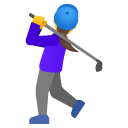
Appearance varies by platform and device. Google Noto, Twemoji, and OpenMoji are open-source.