🏌🏾♀️
The Emoji
Woman Golfing: Medium-dark Skin Tone
U+1F3CC U+1F3FE U+200D U+2640 U+FE0F · :woman_golfing_mediumdark_skin_tone:
Trend 42
Meaning layers
- interpretation
- Used to flex a luxurious or bougie lifestyle, signal effortless confidence, or humorously reference 'not caring' energy — as in 'I'm out here living my best life while you stress.' Also used ironically to say someone is unbothered or moving in silence.
- tiktok usage
- Appears in 'that girl' aesthetic videos, luxury lifestyle content, and ironic 'rich auntie energy' skits. Often paired with self-improvement or main character content.
- irony level
- 6 / 10
Platform meanings
- meaning
- Represents aspirational lifestyle content, unbothered energy, or 'that girl' aesthetics. Used to signal leveling up or thriving quietly.
- trend usage
- Appears in 'soft life' trend videos, morning routine content, luxury lifestyle skits, and ironically in 'not my problem' reaction videos.
- hashtags
- #SoftLife#ThatGirl#UnbotheredEnergy#LevelUp#MainCharacter
- virality score
- 48 / 100
Cultural meanings
🇺🇸
Western / Gen-Z
Widely used as a symbol of unbothered confidence and aspirational 'soft life' energy; the representation of a dark-skinned woman adds a layer of Black girl magic celebration and visibility in spaces like golf that have historically excluded Black women.
🇵🇰
Pakistan & India
Rarely used in casual conversation; when it appears, it typically signals aspiration toward elite sports or a Western leisure lifestyle, and may reflect upper-class social signaling in metropolitan contexts.
🌍
Middle East
Golf is associated with wealthy Gulf culture and elite expat communities; this emoji may be used in aspirational content about luxury lifestyle but is not commonly used in everyday messaging.
🌐
Global Neutral
Universally understood as representing a woman playing golf; carries connotations of sport, leisure, and aspiration without strong cultural specificity beyond that.
🇧🇩
Bangladesh
Rarely used in everyday contexts; golf is not a widely popular sport domestically, so the emoji is more likely to appear in aspirational or Western-influenced social media content.
🇱🇰
Sri Lanka
Limited everyday usage; more likely to appear in content referencing upscale tourism, hotel golf courses, or content inspired by Western social media trends.
🇨🇳
China
Golf has a complex status in China — it was briefly restricted under anti-corruption drives — so the emoji may carry subtle associations with elite, Western-style leisure or nouveau riche signaling.
🇯🇵
Japan
Golf is a popular sport among business professionals in Japan; this emoji may appear in contexts related to corporate outings, leisure, or aspirational lifestyle content, with the female representation noted positively.
🇰🇷
South Korea
Golf has surged in popularity in South Korea, especially among younger women; this emoji resonates as a symbol of trendy, aspirational sport and may appear in K-lifestyle and fitness content.
🇹🇼
Taiwan
Associated with leisure and upscale sport culture; used in aspirational lifestyle content, especially among younger, cosmopolitan Taiwanese users who follow global wellness trends.
🇭🇰
Hong Kong
Golf connects to the city's colonial history and elite leisure culture; the emoji may appear in luxury lifestyle, expat community, or satirical content about the upper class.
🇵🇭
Philippines
Golf is associated with the wealthy elite; the emoji may be used aspirationally or humorously in OFW (Overseas Filipino Worker) success stories or upper-class lifestyle content.
🇮🇩
Indonesia
Primarily associated with wealthy business culture; the emoji appears in aspirational content about luxury living or in posts about golf as a sport gaining younger audiences.
🇹🇭
Thailand
Golf is popular among both locals and tourists in Thailand; the emoji may appear in sports content, tourism promotion, or aspirational lifestyle posts targeting the growing middle and upper class.
🇻🇳
Vietnam
Golf is a growing status symbol in Vietnam; the emoji may be used to signal upward mobility, success, or aspirational living among younger, urban Vietnamese users.
🇲🇾
Malaysia
Golf carries strong associations with corporate and upper-class life; the emoji appears in aspirational posts and may be used humorously to reference the 'golf course business deal' stereotype.
🇸🇦
Saudi Arabia
Golf is a growing sport in Saudi Arabia especially with Vision 2030 tourism initiatives; the female golfer emoji takes on added significance in a context where women's sports participation has recently expanded.
🇦🇪
UAE
Golf is a beloved luxury sport in the UAE with world-class courses in Dubai and Abu Dhabi; this emoji fits naturally into the region's aspirational, luxury lifestyle content culture.
🇪🇬
Egypt
Golf is niche and associated with elite or tourist communities; the emoji may appear in aspirational or humorous contexts but is not commonly used in everyday Egyptian digital communication.
🇹🇷
Turkey
Golf is becoming more popular as a leisure activity in Turkey; the emoji may appear in travel content, resort lifestyle posts, or aspirational messaging among urban youth.
🇮🇷
Iran
Golf has a limited footprint in Iran; the emoji is rarely used in everyday contexts and may appear primarily in content referencing foreign or elite Western lifestyle.
🇳🇬
Nigeria
The emoji resonates strongly with 'slay' culture, Black excellence, and aspirational living; in Nigerian social media, it can signal wealth, ambition, and unbothered feminine power in a celebratory way.
🇿🇦
South Africa
Golf has deep historical associations with elite white communities in South Africa, making a dark-skinned woman golfer emoji a symbol of barrier-breaking and transformation; used in empowerment and aspiration contexts.
🇬🇧
UK & Ireland
Golf is a popular sport across the UK; the emoji is used both literally for golf-related content and figuratively for 'posh' or 'bougie' humor, and the female + dark skin representation is seen as progressive.
🇫🇷
France
Golf is considered a bourgeois sport in France; the emoji may be used ironically to mock elitism or sincerely in upscale lifestyle content, with the female representation celebrated in feminist contexts.
🇩🇪
Germany
Associated with business networking and elite sport culture; the emoji appears in professional and aspirational contexts and is appreciated for its diversity representation.
🇪🇸
Spain & Italy
Golf is popular in coastal and resort regions; the emoji may appear in vacation, lifestyle, and aspirational content, often paired with sunny, leisure-focused imagery.
🇧🇷
Brazil
Golf is considered an elite sport in Brazil; the emoji may be used to signal luxury aspiration or humorously reference 'rich people problems' while the dark-skinned female representation resonates with Afro-Brazilian pride.
🇲🇽
Mexico
Golf is associated with the wealthy class and resort culture; the emoji appears in aspirational content and may be used humorously to mock or celebrate elite lifestyle signaling.
🌎
Latin America
Across Latin America, golf signals elite status; the emoji is used aspirationally or sarcastically to comment on class dynamics, and the dark-skinned female representation may resonate with Afro-Latinx communities.
🇦🇺
Australia & NZ
Golf is a widely enjoyed recreational sport across Australia and New Zealand; the emoji appears naturally in sports, lifestyle, and humor content, with the diverse representation appreciated in these increasingly multicultural societies.
How its meaning shifted
- 2010
Emoji did not exist in this form; early golf-related emoji were absent from Unicode, and skin tone modifiers had not yet been introduced to the standard.
- 2015
Skin tone modifiers were just being introduced; base golf emoji existed but gendered and skin-tone-specific variants like this one were not yet available or widely adopted.
- 2020
Began appearing in diversity-focused content, women's empowerment posts, and aspirational lifestyle content as awareness of inclusive emoji representation grew.
- 2026
Established as a versatile symbol across 'soft life,' 'unbothered,' and aspirational aesthetics; carries strong connotations of Black feminine excellence, leisure-as-power, and effortless confidence in digital culture.
See it on every platform
Compare with
Adjacent emojis
Share & embed
Frequently asked
01What does the 🏌🏾♀️ Woman Golfing: Medium-dark Skin Tone emoji mean?
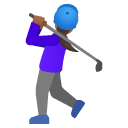
A woman playing golf with a medium-dark skin tone, shown in a swinging pose with a golf club. This emoji combines the woman golfer base emoji with the medium-dark skin tone modifier (Fitzpatrick scale type V).
02What does 🏌🏾♀️ mean on TikTok?
Represents aspirational lifestyle content, unbothered energy, or 'that girl' aesthetics. Used to signal leveling up or thriving quietly.
03What does 🏌🏾♀️ mean on WhatsApp?
Signals that someone is relaxed, doing their own thing, unbothered, or enjoying leisure time. Can mean 'I'm busy living my best life.'
04What does 🏌🏾♀️ mean in Gen-Z slang?
Used to flex a luxurious or bougie lifestyle, signal effortless confidence, or humorously reference 'not caring' energy — as in 'I'm out here living my best life while you stress.' Also used ironically to say someone is unbothered or moving in silence.
05Is the 🏌🏾♀️ emoji safe to use?
A woman playing golf; used for sports content, leisure activities, aspirational lifestyle posts, and empowerment messaging.
06What does 🏌🏾♀️ mean in texting?
Golf as a symbol of elevated social status triggers aspirational emotions. The female representation adds empowerment undertones, while the medium-dark skin tone adds cultural visibility and representation pride.
07What is the shortcode for 🏌🏾♀️?
The shortcode for Woman Golfing: Medium-dark Skin Tone is :woman_golfing_mediumdark_skin_tone:
08What does 🏌🏾♀️ mean in dating?
Rarely used directly for flirting but can signal 'I have expensive taste' or 'I'm high-value' in a subtle flex — sometimes used to imply 'come match my energy.'
Safety & usage
- Safe meaning
- A woman playing golf; used for sports content, leisure activities, aspirational lifestyle posts, and empowerment messaging.
- Caution
- No known toxic or coded harmful meanings; occasionally used sarcastically to mock the ultra-wealthy or out-of-touch behavior.
No significant warnings. The emoji is generally safe across contexts. Rarely, it could be used in class-shaming or elitist discourse, but this is not a primary concern.
How it looks across platforms
Appearance varies by platform and device. Google Noto, Twemoji, and OpenMoji are open-source.