🤾🏻♀️
The Emoji
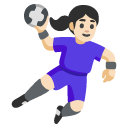
Woman Playing Handball: Light Skin Tone
U+1F93E U+1F3FB U+200D U+2640 U+FE0F · :woman_playing_handball_light_skin_tone:
Trend 22
Meaning layers
- interpretation
- Used to signal athletic energy, hustle mentality, or 'I'm out here giving it my all.' Sometimes deployed ironically to describe any situation requiring sudden effort or throwing something (metaphorically or literally).
- tiktok usage
- Appears in sports highlight reels, gym motivation content, and ironically in 'POV: me throwing my responsibilities away' style humor videos.
- irony level
- 5 / 10
Platform meanings
- meaning
- Represents athletic hustle, sports girl energy, or the act of dramatically hurling something away — used in motivational and comedic sports content alike.
- trend usage
- Appears in #GymTok, sports highlight compilations, female athlete appreciation videos, and ironic 'throwing my problems away' trend formats.
- hashtags
- #SportsTok#HandballLife#AthleteTok#GymGirl#FitnessMotivation
- virality score
- 28 / 100
Cultural meanings
🇺🇸
Western / Gen-Z
Used by sporty Gen Z girls to represent athletic hustle and girl power energy; also deployed ironically in 'throwing things away' humor formats popular in US/Canadian youth culture.
🇵🇰
Pakistan & India
Handball is a niche sport in South Asia, so this emoji is rarely used in mainstream chats; when it appears, it's typically in international sports fan discussions or urban fitness communities.
🌍
Middle East
Limited handball visibility in many Middle Eastern countries means this emoji is mostly used by expat communities or international sports fans; occasionally used to represent general athletic activity for women.
🌐
Global Neutral
Universally understood as a sportswoman in action; used across cultures as a straightforward representation of female athletic participation without loaded secondary meanings.
🇧🇩
Bangladesh
Very niche usage given handball's low profile in Bangladesh; may appear in social media posts by sports enthusiasts or students exposed to international sports through streaming platforms.
🇱🇰
Sri Lanka
Uncommon in everyday digital communication; may be used by Sri Lankan athletes or students involved in school-level handball programs introduced through international sports development initiatives.
🇨🇳
China
Handball has a growing presence in China through international competitions; used in sports fan communities and Women's Sports discourse on Weibo or WeChat, often tied to national team pride.
🇯🇵
Japan
Japan has a competitive handball culture, especially women's handball; used sincerely in sports fan communities, high school team chats, and athletic achievement posts on Twitter/X and Instagram.
🇰🇷
South Korea
South Korea has a strong women's handball tradition (Olympic history); this emoji carries genuine pride and is used in sports fan discussions, national team support, and athlete admiration posts.
🇹🇼
Taiwan
Used in sports enthusiast communities and international sports commentary; moderate usage tied to Taiwan's growing interest in women's athletics and Olympic coverage.
🇭🇰
Hong Kong
Niche usage primarily within sports communities and fitness culture; may appear in gym or sports-oriented social media content, reflecting Hong Kong's diverse athletic subcultures.
🇵🇭
Philippines
Handball is not a dominant sport in the Philippines, so usage is limited to international sports followers and school sports programs; more commonly used by fitness-focused youth online.
🇮🇩
Indonesia
Limited handball visibility locally; used mostly by urban youth familiar with international sports, appearing in fitness and sports motivation content on Instagram and TikTok.
🇹🇭
Thailand
Used within international sports fan circles and school sports contexts; Thailand's growing fitness culture means this occasionally appears in women's empowerment and active lifestyle content.
🇻🇳
Vietnam
Niche usage, primarily among sports enthusiasts following international handball competitions; appears in gym communities and sports fan pages on Facebook and Zalo.
🇲🇾
Malaysia
Limited general recognition but used in school sports and fitness communities; may appear in posts celebrating women in sports as part of broader women's empowerment content.
🇸🇦
Saudi Arabia
With growing women's sports visibility post-2017 reforms, this emoji is used positively in women's fitness and sports content; represents progress and female athletic identity in a culturally evolving context.
🇦🇪
UAE
Used in multicultural UAE sports communities; resonates with expatriate populations from handball-active countries and the UAE's growing interest in women's sports development.
🇪🇬
Egypt
Egypt has an established handball culture with men's national team fame; women's handball is growing and this emoji appears in sports fan and female athlete empowerment content.
🇹🇷
Turkey
Turkey has a competitive handball scene; this emoji is used in sports fan communities, club team chats, and women's sports advocacy posts on Twitter/X and Instagram.
🇮🇷
Iran
Used carefully within sports communities given restrictions on women's public sports participation; among online communities it can carry a subtle symbol of female athletic aspiration.
🇳🇬
Nigeria
Handball is a recognized school sport in Nigeria; used in student sports contexts, women's sports advocacy posts, and general athletic motivation content on Twitter/X and Instagram.
🇿🇦
South Africa
Used in sports-diverse South Africa within handball clubs and school sports communities; also appears in women's sports empowerment content reflecting broader gender equality conversations.
🇬🇧
UK & Ireland
Handball is gaining traction in UK/Irish schools; used by younger generations in sports contexts and gym culture content, occasionally with ironic British humor about obscure sports.
🇫🇷
France
France has a strong handball culture including women's national teams; this emoji is used sincerely and frequently in French sports fan communities, especially during EHF Championship periods.
🇩🇪
Germany
Germany is a powerhouse in handball including women's divisions; this emoji is used seriously in sports discussions, club fan pages, and national team support contexts with strong cultural resonance.
🇪🇸
Spain & Italy
Both countries have active handball scenes; used in sports fan communities with genuine enthusiasm, particularly during European Championship events and women's league matches.
🇧🇷
Brazil
Handball is growing in Brazil especially through school sports programs; used in sports motivation content, female empowerment posts, and occasionally in Olympic sports fan culture.
🇲🇽
Mexico
Limited mainstream recognition of handball; used primarily within academic sports circles and international sports fan communities; occasionally appears in fitness and active lifestyle content.
🌎
Latin America
Across Latin America, handball awareness varies; generally used by sports enthusiasts and school athletes, with stronger recognition in countries with European immigrant influences like Argentina.
🇦🇺
Australia & NZ
Handball (European style) is niche in Australia and NZ; used by sports enthusiasts familiar with European sports, expat communities, and occasionally in Olympic sports fan content.
How its meaning shifted
- 2010
Emoji did not yet exist in this form; handball sports representation was absent from standard emoji sets, limiting digital expression for handball athletes entirely.
- 2015
Early emoji adoption phase; basic sports emojis existed but specific handball representation was still absent. Athletes used generic sports emojis like ⚽ or 🏃♀️ as proxies.
- 2020
Handball emoji with skin tone modifiers now available; used primarily by literal handball players, sports fans during Olympic coverage, and female athlete communities on Instagram and Twitter.
- 2026
Broader adoption in fitness culture and ironic internet humor; appears in 'girl who goes hard' aesthetic content, women's sports empowerment discourse, and sarcastically in 'throwing things away' meme formats across TikTok and Threads.
See it on every platform
Adjacent emojis
- Opposite
- sleeping facecouch and lampzzz
- Often confused with
- woman playing water polowoman golfingwoman rowing boat
Share & embed
Frequently asked
01What does the 🤾🏻♀️ Woman Playing Handball: Light Skin Tone emoji mean?
A woman playing handball, depicted in motion throwing or jumping, with light skin tone modifier applied. Part of the sports activity emoji set introduced to represent handball as a recognized sport.
02What does 🤾🏻♀️ mean on TikTok?
Represents athletic hustle, sports girl energy, or the act of dramatically hurling something away — used in motivational and comedic sports content alike.
03What does 🤾🏻♀️ mean on WhatsApp?
Signals athletic activity, excitement about a sports event, or used lightheartedly to indicate throwing something away or out of one's life.
04What does 🤾🏻♀️ mean in Gen-Z slang?
Used to signal athletic energy, hustle mentality, or 'I'm out here giving it my all.' Sometimes deployed ironically to describe any situation requiring sudden effort or throwing something (metaphorically or literally).
05Is the 🤾🏻♀️ emoji safe to use?
Represents female athletic participation in handball; entirely safe and positive in virtually all standard usage contexts.
06What does 🤾🏻♀️ mean in texting?
Evokes a sense of active engagement and athletic focus. Psychologically linked to achievement motivation — the act of throwing in sports symbolizes both release and directed effort, resonating with people channeling stress into productive action.
07What is the shortcode for 🤾🏻♀️?
The shortcode for Woman Playing Handball: Light Skin Tone is :woman_playing_handball_light_skin_tone:
08What does 🤾🏻♀️ mean in dating?
Rarely used as a direct flirt tool, but can signal 'I'm sporty and active' on dating profiles. May be used to suggest a sporty date idea or as lighthearted self-promotion of one's active lifestyle.
Safety & usage
- Safe meaning
- Represents female athletic participation in handball; entirely safe and positive in virtually all standard usage contexts.
- Caution
- No known toxic or harmful usage patterns. Extremely rare misuse potential.
No significant warning concerns. In extremely rare cases, could be used contextually in harassment of female athletes online, but this is not an established pattern.
How it looks across platforms
Appearance varies by platform and device. Google Noto, Twemoji, and OpenMoji are open-source.