👩🏿🦯
The Emoji
Woman With White Cane: Dark Skin Tone
U+1F469 U+1F3FF U+200D U+1F9AF · :woman_with_white_cane_dark_skin_tone:
Trend 28
Meaning layers
- interpretation
- Used to represent independence, navigating life 'blind' through chaos, or metaphorically moving forward despite not being able to see what's ahead. Also used to affirm disability visibility and intersectional identity.
- tiktok usage
- Appears in disability awareness content, blind lifestyle vlogs, and occasionally in 'walking into a situation without knowing what you're doing' humor.
- irony level
- 2 / 10
Platform meanings
- meaning
- Represents blind navigation through life, disability pride, or visually impaired creator identity. Popular in disability TikTok communities.
- trend usage
- Appears in #BlindTikTok, disability lifestyle content, and occasionally in ironic 'I have no idea what I'm doing' trend videos.
- hashtags
- #BlindTikTok#DisabilityTikTok#DisabilityPride#BlindLife#AccessibilityMatters
- virality score
- 32 / 100
Cultural meanings
🇺🇸
Western / Gen-Z
Celebrated by Gen Z as a symbol of intersectional identity and disability pride, especially in Black disabled creator spaces online.
🇵🇰
Pakistan & India
Primarily interpreted literally as representing a blind woman; used in disability awareness campaigns and social media posts about accessibility rights.
🌍
Middle East
Understood as a disability representation symbol; used in accessibility advocacy content and posts about support services for visually impaired individuals.
🌐
Global Neutral
Universally recognized as representing a visually impaired woman using a white cane, used in disability awareness and inclusion contexts worldwide.
🇧🇩
Bangladesh
Used in disability rights discussions and awareness campaigns, representing the need for better accessibility infrastructure and support.
🇱🇰
Sri Lanka
Appears in social media posts about disability inclusion, often used by NGOs and advocacy groups working on visual impairment support.
🇨🇳
China
Used in disability awareness content on platforms like Weibo, representing visually impaired individuals and accessibility advocacy.
🇯🇵
Japan
Associated with the concept of 'barrier-free' accessibility design and used in disability inclusion campaigns and public awareness messaging.
🇰🇷
South Korea
Used in disability representation content and accessibility advocacy, increasingly visible in inclusive K-content creator spaces.
🇹🇼
Taiwan
Appears in disability rights discussions and accessibility technology content, used to represent visually impaired community voices.
🇭🇰
Hong Kong
Used in social media posts about accessibility and disability rights, often in the context of urban navigation challenges for the visually impaired.
🇵🇭
Philippines
Used in disability awareness campaigns and posts about support for visually impaired Filipinos, often tied to charitable or community initiatives.
🇮🇩
Indonesia
Appears in disability representation posts and Islamic-focused discussions about caring for community members with disabilities.
🇹🇭
Thailand
Used in disability inclusion content and posts about accessibility improvements in public spaces, often by NGOs and government agencies.
🇻🇳
Vietnam
Used in disability awareness posts, particularly around rehabilitation services and education support for visually impaired individuals.
🇲🇾
Malaysia
Appears in disability rights discussions and posts about accessibility in public infrastructure, used by advocacy groups and individuals.
🇸🇦
Saudi Arabia
Used in disability awareness content, particularly around vision-related charities and Islamic obligations of care for disabled community members.
🇦🇪
UAE
Featured in inclusive UAE initiative posts and disability representation content, often tied to national accessibility improvement campaigns.
🇪🇬
Egypt
Used in posts about disability rights and visual impairment support organizations, appearing in awareness campaigns and advocacy content.
🇹🇷
Turkey
Appears in disability inclusion discussions and accessibility-focused social media campaigns, used by both NGOs and individual advocates.
🇮🇷
Iran
Used in disability awareness content on Persian social platforms, representing visually impaired individuals and their independence.
🇳🇬
Nigeria
Celebrated in disability advocacy spaces as a dual representation of Blackness and disability visibility, resonating strongly with local creators.
🇿🇦
South Africa
Used in intersectional disability rights content, particularly meaningful in contexts addressing both racial and disability-based discrimination.
🇬🇧
UK & Ireland
Used in disability representation and accessibility advocacy posts, with particular resonance in conversations about racial and disability intersectionality.
🇫🇷
France
Appears in disability inclusion posts and accessibility discussions, used by advocates pushing for better urban accessibility and representation.
🇩🇪
Germany
Used in disability rights content and accessibility policy discussions, often appearing in posts about inclusive workplace and public space design.
🇪🇸
Spain & Italy
Featured in disability awareness campaigns and posts about accessibility in historic city infrastructure, used by advocates and organizations.
🇧🇷
Brazil
Used in disability representation content and posts about accessibility rights in Brazilian cities, often tied to broader inclusion movement conversations.
🇲🇽
Mexico
Appears in disability advocacy posts and discussions about accessibility infrastructure, used by community organizations and individual creators.
🌎
Latin America
Used across Latin American platforms in disability rights discussions and representation content, valued for showing racial and disability diversity together.
🇦🇺
Australia & NZ
Used in inclusive representation posts and disability advocacy content, appearing frequently in discussions about NDIS support and accessibility improvements.
How its meaning shifted
- 2010
This emoji did not exist in 2010; accessibility and disability emoji were not yet part of Unicode, and skin tone modifiers had not been introduced.
- 2015
Still not available; the white cane emoji and its gendered/skin-tone variants were still in development discussions as Unicode began prioritizing disability representation.
- 2020
Introduced with wider disability emoji sets, used primarily in sincere disability representation and accessibility advocacy posts by communities pushing for inclusive emoji.
- 2026
Established as a recognized symbol of intersectional disability pride used by Black disabled creators, disability advocates, and in educational content about accessibility and inclusion.
See it on every platform
Adjacent emojis
- Opposite
- woman runningwoman dancingeyes
- Often confused with
- woman walkingperson fencingwoman with probing cane
Share & embed
Frequently asked
01What does the 👩🏿🦯 Woman With White Cane: Dark Skin Tone emoji mean?
A woman with dark skin tone using a white cane, representing a blind or visually impaired woman navigating independently.
02What does 👩🏿🦯 mean on TikTok?
Represents blind navigation through life, disability pride, or visually impaired creator identity. Popular in disability TikTok communities.
03What does 👩🏿🦯 mean on WhatsApp?
Used to identify as visually impaired, express solidarity with disabled friends, or metaphorically indicate navigating a situation without clear direction.
04What does 👩🏿🦯 mean in Gen-Z slang?
Used to represent independence, navigating life 'blind' through chaos, or metaphorically moving forward despite not being able to see what's ahead. Also used to affirm disability visibility and intersectional identity.
05Is the 👩🏿🦯 emoji safe to use?
Represents a visually impaired woman with dark skin tone, used for disability awareness, inclusion advocacy, and identity representation.
06What does 👩🏿🦯 mean in texting?
Evokes feelings of independence, strength, and quiet courage. The combination of disability and racial identity markers makes it emotionally significant for intersectional communities, conveying both visibility and self-determination.
07What is the shortcode for 👩🏿🦯?
The shortcode for Woman With White Cane: Dark Skin Tone is :woman_with_white_cane_dark_skin_tone:
08What does 👩🏿🦯 mean in dating?
Rarely used in flirting contexts; when used it may signal the sender is blind to red flags or jokingly saying 'I don't see the problem with you'.
Safety & usage
- Safe meaning
- Represents a visually impaired woman with dark skin tone, used for disability awareness, inclusion advocacy, and identity representation.
- Caution
- Could potentially be misused in mocking contexts targeting disabled individuals, though this is uncommon given the emoji's specific nature.
Care should be taken not to use this emoji as a punchline or in ways that mock disability; it is a sincere representation emoji and should be treated with respect.
How it looks across platforms
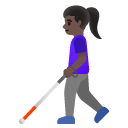


Appearance varies by platform and device. Google Noto, Twemoji, and OpenMoji are open-source.