🧜🏾♀️
The Emoji
Mermaid: Medium-dark Skin Tone
U+1F9DC U+1F3FE U+200D U+2640 U+FE0F · :mermaid_mediumdark_skin_tone:
Trend 68
Meaning layers
- interpretation
- Symbolizes a mystical, untouchable, or 'that girl' energy — someone who is effortlessly ethereal, unbothered, and living in their own fantasy world. Also used to claim a deep spiritual or emotional connection to the ocean.
- tiktok usage
- Used in captions about beach aesthetics, manifesting, or calling yourself mysterious and impossible to catch romantically. Common in 'dark mermaid' aesthetic content.
- irony level
- 3 / 10
Platform meanings
- meaning
- Signals ocean aesthetics, spiritual femininity, manifesting, and 'main character' fantasy energy. Used by Black and brown creators to reclaim mermaid mythology with their own skin tone.
- trend usage
- Featured in 'dark mermaid makeup tutorials,' 'mermaidcore' fashion trends, and 'ocean witch' spiritual content. Also used in 'swimmer girl aesthetic' and sea shanty-adjacent content.
- hashtags
- #mermaidcore#darkmermaid#oceanwitch#mermaidaesthetic#blackmermaid
- virality score
- 72 / 100
Cultural meanings
🇺🇸
Western / Gen-Z
Strongly associated with mermaidcore aesthetics, diverse fantasy representation, and the 'dark mermaid' trend. Used by Black and brown Gen Z to reclaim mythical femininity.
🇵🇰
Pakistan & India
Less common in mainstream use but appears in fantasy-themed content and among coastal communities. Skin tone diversity is increasingly appreciated in South Asian Gen Z digital spaces.
🌍
Middle East
Used in aesthetic and fantasy content, especially among Gulf-region youth on Instagram and TikTok. The medium-dark skin tone resonates with many users in the region seeking representation.
🌐
Global Neutral
Universally recognized as a fantasy sea creature symbol representing beauty, mystery, and the ocean, with the skin tone adding inclusive representation.
🇧🇩
Bangladesh
Primarily used in fantasy and creative content among younger, internet-connected demographics. Connects to coastal cultural identity given Bangladesh's relationship with water and the Bay of Bengal.
🇱🇰
Sri Lanka
Used in beach and ocean-related content, and increasingly in fantasy aesthetic posts by Sri Lankan youth. The island nation's strong ocean culture makes this emoji resonate.
🇨🇳
China
Mermaids (美人鱼) have strong cultural presence from folk tales. Used in fantasy and ocean content, though skin tone diversity emoji use is less emphasized in mainstream Chinese digital culture.
🇯🇵
Japan
Japan has its own mermaid lore (ningyo). The emoji is used in fantasy and ocean contexts, though Japanese emoji culture tends to favor locally designed characters over Unicode defaults.
🇰🇷
South Korea
Used in fantasy aesthetic content and K-beauty ocean-themed posts. Korean fans of diverse representation in media actively use skin-tone-specific emoji to celebrate inclusivity.
🇹🇼
Taiwan
Used in ocean and fantasy aesthetic contexts. Taiwanese youth digital culture embraces diverse emoji representation, especially in creative and artistic communities.
🇭🇰
Hong Kong
Appears in fantasy fan communities and ocean lifestyle content. Hong Kong's coastal identity makes the ocean connection resonant beyond just the fantasy aspect.
🇵🇭
Philippines
Connects to rich Filipino water mythology (Sirena). Very well-received; Filipino users often use it to reference their own mermaid folklore traditions and island culture.
🇮🇩
Indonesia
Resonates with Indonesia's vast archipelago culture and ocean mythology. Used in beach content, fantasy aesthetics, and increasingly in celebration of diverse representation.
🇹🇭
Thailand
Used in mermaid show tourism content (Thailand has famous mermaid performances) and beach aesthetic posts. Also appears in fantasy fan communities.
🇻🇳
Vietnam
Used in ocean and coastal lifestyle content. Vietnamese youth use it in fantasy aesthetics and beach-related social posts, with growing appreciation for diverse representation.
🇲🇾
Malaysia
Connects to coastal Malay culture and ocean identity. Used in beach content and fantasy aesthetics, with skin tone diversity increasingly valued in Malaysian digital spaces.
🇸🇦
Saudi Arabia
Used primarily in fantasy and aesthetic contexts among youth. The medium-dark skin tone is relatable for many Saudi users and is used in creative content.
🇦🇪
UAE
Popular in Dubai and Abu Dhabi's aspirational lifestyle content, fantasy aesthetics, and beach posts. The diverse population of the UAE means varied skin tone emojis are widely relatable.
🇪🇬
Egypt
Used in Red Sea and Nile-connected ocean content, fantasy aesthetics, and among Egyptian youth who celebrate diverse representation in mythology and media.
🇹🇷
Turkey
Connects to Turkey's rich coastal culture and Mediterranean identity. Used in beach and ocean content, fantasy aesthetics, and increasingly in representation-positive spaces.
🇮🇷
Iran
Used in fantasy and aesthetic content among Iranian youth, particularly those connected to Persian mythology and sea imagery. Appears in creative and artistic digital spaces.
🇳🇬
Nigeria
Highly significant — connects to Nigerian water deity mythology (Mami Wata). The medium-dark skin tone is directly relatable and this emoji is celebrated in Afrofuturism and Black fantasy spaces.
🇿🇦
South Africa
Used to celebrate Black and brown mermaid representation, connecting to Nguni water spirit traditions. Popular in Afrofuturism, beauty, and fantasy creative communities.
🇬🇧
UK & Ireland
Used in mermaidcore aesthetic content, coastal lifestyle posts, and diversity-in-fantasy discussions. British Black and brown communities actively use this emoji for representation.
🇫🇷
France
Used in beach and Mediterranean lifestyle content, fantasy aesthetics, and among French youth celebrating diverse media representation. Appears in Afropean creative spaces.
🇩🇪
Germany
Used in fantasy fan communities, ocean aesthetic content, and diversity-positive digital spaces. Less culturally loaded than in African-diaspora contexts but appreciated for representation.
🇪🇸
Spain & Italy
Strong coastal culture makes the ocean connection natural. Used in beach lifestyle content and fantasy aesthetics, with the skin tone celebrated in Mediterranean diversity conversations.
🇧🇷
Brazil
Connects to Brazilian water mythology (Iara the mermaid figure) and strong Afro-Brazilian identity. Widely used and celebrated, especially with the diverse skin tone reflecting Brazil's population.
🇲🇽
Mexico
Connected to La Llorona water spirit traditions and coastal culture. Used in fantasy, beach, and Latinx representation content, resonating with Mexico's diverse indigenous heritage.
🌎
Latin America
Broadly used across Latin America to connect with local water mythology, diverse skin tones, and coastal identities. Afro-Latinx communities particularly embrace the representation aspect.
🇦🇺
Australia & NZ
Used in beach and ocean lifestyle content, fantasy aesthetics, and First Nations/Māori representation conversations. The Pacific Islander and Indigenous Australian communities find the medium-dark skin tone relatable.
How its meaning shifted
- 2010
The mermaid emoji did not exist yet. Mermaid concepts were represented through text combinations or absent entirely from digital communication.
- 2015
Emoji was still not introduced (came in 2017). The general mermaid concept was gaining traction in social media through Little Mermaid nostalgia and early aesthetic Tumblr culture.
- 2020
Following its 2017 release and wider skin tone adoption, this emoji became part of the mermaidcore aesthetic wave, Black fantasy representation conversations, and early TikTok ocean content trends.
- 2026
A core symbol of mermaidcore fashion, diverse fantasy representation, Afrofuturism aesthetics, and ocean wellness content. Deeply embedded in Gen Z and millennial digital identity expression for Black and brown women.
See it on every platform
Adjacent emojis
- Often confused with
- fairyelfperson swimming
- Can replace
- mermaidwoman dancingsparkles
Share & embed
Frequently asked
01What does the 🧜🏾♀️ Mermaid: Medium-dark Skin Tone emoji mean?
A mermaid with medium-dark skin tone — a mythical creature with the upper body of a human woman and the tail of a fish, rendered with a Fitzpatrick scale type 5 skin modifier.
02What does 🧜🏾♀️ mean on TikTok?
Signals ocean aesthetics, spiritual femininity, manifesting, and 'main character' fantasy energy. Used by Black and brown creators to reclaim mermaid mythology with their own skin tone.
03What does 🧜🏾♀️ mean on WhatsApp?
Casually used to describe someone as mysterious, beautiful, and hard to reach — or as a self-identifier for ocean lovers and fantasy fans.
04What does 🧜🏾♀️ mean in Gen-Z slang?
Symbolizes a mystical, untouchable, or 'that girl' energy — someone who is effortlessly ethereal, unbothered, and living in their own fantasy world. Also used to claim a deep spiritual or emotional connection to the ocean.
05Is the 🧜🏾♀️ emoji safe to use?
A fantasy sea creature representing beauty, freedom, ocean love, mystery, and diverse mythical femininity. Entirely safe for general audiences.
06What does 🧜🏾♀️ mean in texting?
The mermaid archetype often represents a longing to belong to two worlds, emotional depth, and an idealized freedom from societal constraints. The medium-dark skin tone adds a layer of empowered self-representation for people of color who rarely see themselves in fantasy media.
07What is the shortcode for 🧜🏾♀️?
The shortcode for Mermaid: Medium-dark Skin Tone is :mermaid_mediumdark_skin_tone:
08What does 🧜🏾♀️ mean in dating?
Used flirtatiously to say 'I'm rare, magical, and hard to get' — signals someone who sees themselves as a catch but also elusive. Can be playfully seductive.
Safety & usage
- Safe meaning
- A fantasy sea creature representing beauty, freedom, ocean love, mystery, and diverse mythical femininity. Entirely safe for general audiences.
- Caution
- Rarely weaponized, but occasionally used mockingly to dismiss someone as delusional or 'living in a fantasy.' Not commonly associated with toxic behavior.
Essentially no safety concerns. The skin tone modifier has historically sparked discourse around diversity in fantasy media casting, but the emoji itself is neutral and positive.
How it looks across platforms
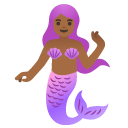
Appearance varies by platform and device. Google Noto, Twemoji, and OpenMoji are open-source.