👩🏽🦯➡️
The Emoji
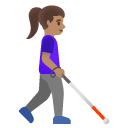
Woman With White Cane Facing Right: Medium Skin Tone
U+1F469 U+1F3FD U+200D U+1F9AF U+200D U+27A1 U+FE0F · :woman_with_white_cane_facing_right_medium_skin_tone:
Trend 22
Meaning layers
- interpretation
- Used to signal 'I can't see what's in front of me' metaphorically — often meaning willful ignorance, being lost, or navigating chaos blindly. Sometimes used humorously to say 'I'm going in blind' on a decision.
- tiktok usage
- Appears in POV videos about walking into awkward situations, decision-making without enough info, or relatable 'navigating life' content.
- irony level
- 5 / 10
Platform meanings
- meaning
- Metaphor for going forward without full information, navigating life blindly, or disability representation content.
- trend usage
- Used in 'going in blind' challenge videos, accessibility awareness trends, and POV-style storytelling.
- hashtags
- #BlindToIt#AccessibilityMatters#GoingInBlind#DisabilityVisibility#NavigatingLife
- virality score
- 28 / 100
Cultural meanings
🇺🇸
Western / Gen-Z
Used both literally for disability representation and ironically to mean 'going in completely blind' on a decision or situation. A common meme tool for self-deprecating humor about cluelessness.
🇵🇰
Pakistan & India
Primarily interpreted literally as representing a visually impaired woman; used in accessibility awareness campaigns. The medium skin tone resonates culturally as more representative.
🌍
Middle East
Seen as a symbol of disability representation; used in social welfare and charity-related content. Cultural emphasis on community support for disabled individuals adds emotional weight.
🌐
Global Neutral
Universally understood as representing a woman with visual impairment using a mobility cane moving forward. The rightward direction universally signals forward movement and independence.
🇧🇩
Bangladesh
Used in disability rights contexts and social media campaigns around inclusive education. Represents advocacy for the visually impaired community.
🇱🇰
Sri Lanka
Appears in content about disability support organizations and government accessibility programs. The medium skin tone is seen as more locally relatable.
🇨🇳
China
Used mainly in disability awareness posts and government accessibility initiative content. Less ironic usage compared to Western audiences; predominantly literal interpretation.
🇯🇵
Japan
Interpreted with cultural sensitivity around disability; used respectfully in accessibility discussions. Japan's strong cane culture and infrastructure for visually impaired citizens gives it practical resonance.
🇰🇷
South Korea
Used in disability representation and K-content about inclusive storytelling. Younger users may also adopt it for the 'navigating blindly' metaphor in pop culture commentary.
🇹🇼
Taiwan
Used in progressive disability rights discourse and social media representation campaigns. Taiwan's strong civil rights culture means this emoji carries advocacy weight.
🇭🇰
Hong Kong
Appears in social media posts about accessibility and disability rights. Mixed usage between literal representation and expressive metaphors about uncertainty.
🇵🇭
Philippines
Primarily literal in use — associated with disability awareness content and charitable organizations. Warmly received in community-centered care discussions.
🇮🇩
Indonesia
Used in disability advocacy posts and religious-themed content about supporting those with disabilities. Cultural emphasis on community care adds a compassionate tone.
🇹🇭
Thailand
Associated with disability support and Buddhist-influenced themes of empathy and care. Used in social campaigns highlighting the needs of visually impaired citizens.
🇻🇳
Vietnam
Primarily literal representation of disability; used in health and social welfare campaign content. Growing adoption in Gen Z ironic usage mirrors global trends.
🇲🇾
Malaysia
Appears in multicultural disability awareness content and accessibility advocacy posts. Medium skin tone is seen as inclusive and locally representative.
🇸🇦
Saudi Arabia
Used respectfully in disability awareness and charity content aligned with Vision 2030 accessibility goals. Culturally interpreted as a symbol of social responsibility.
🇦🇪
UAE
Found in inclusive society campaigns and accessibility-forward content from government and NGOs. Resonates in the context of the UAE's disability inclusion initiatives.
🇪🇬
Egypt
Used in disability rights discussions and social media content about independent living. Associated with empathy and community support in local cultural contexts.
🇹🇷
Turkey
Appears in disability awareness campaigns and social media posts about accessible infrastructure. Young Turkish users also adopt the ironic 'going in blind' usage.
🇮🇷
Iran
Used respectfully in disability support content and family-centered care discussions. The medium skin tone is seen as broadly representative in local contexts.
🇳🇬
Nigeria
Associated with disability rights campaigns and community support networks. Growing use among younger Nigerians as a metaphor for navigating uncertainty.
🇿🇦
South Africa
Used in disability inclusion content and rainbow nation representation posts. Appears in social justice discussions about accessible public spaces.
🇬🇧
UK & Ireland
Both literal disability representation and ironic metaphor popular in Gen Z British humor. Used in commentary about political obliviousness or personal confusion.
🇫🇷
France
Used in disability rights and 'accessibilité' campaign posts. French internet culture adopts it occasionally for self-deprecating humor about social navigation.
🇩🇪
Germany
Primarily used in accessibility policy discussions and disability representation contexts. German pragmatism keeps usage mostly literal and informational.
🇪🇸
Spain & Italy
Used in disability awareness content and warm, community-focused social media posts. Southern European cultures imbue it with familial empathy and solidarity.
🇧🇷
Brazil
Used in disability inclusion campaigns and social media humor about navigating life without direction. Brazilian internet culture embraces the metaphorical 'blind' usage enthusiastically.
🇲🇽
Mexico
Associated with disability support and community care narratives. Mexican Gen Z also uses it ironically in meme culture for humorous 'no idea what I'm doing' situations.
🌎
Latin America
Broadly used across Latin America in disability representation and social advocacy. The ironic metaphor for cluelessness is gaining popularity among younger audiences region-wide.
🇦🇺
Australia & NZ
Used in disability inclusion and accessibility advocacy posts. Australian internet humor embraces the ironic use for self-deprecating 'walking blindly into chaos' jokes.
How its meaning shifted
- 2010
This specific emoji sequence did not exist in 2010; white cane emojis and direction modifiers had not yet been introduced to Unicode.
- 2015
Still not available; the foundational white cane emoji was in early proposal stages and had not yet been added to the Unicode standard.
- 2020
Introduced as part of Unicode 13.0 accessibility-focused emoji expansion; primarily used in disability representation and inclusion discussions across platforms.
- 2026
Established in both literal disability representation and ironic metaphorical usage across Gen Z content. Integrated into mainstream accessibility advocacy and meme culture with increasing frequency.
See it on every platform
Adjacent emojis
- Often confused with
- person walkingwoman in motorized wheelchairwoman with probing cane
Share & embed
Frequently asked
01What does the 👩🏽🦯➡️ Woman With White Cane Facing Right: Medium Skin Tone emoji mean?
A woman with medium skin tone using a white cane, depicted facing right, indicating mobility aid use for visual impairment or blindness.
02What does 👩🏽🦯➡️ mean on TikTok?
Metaphor for going forward without full information, navigating life blindly, or disability representation content.
03What does 👩🏽🦯➡️ mean on WhatsApp?
Signals someone feeling lost, not seeing something obvious, or representing a visually impaired person.
04What does 👩🏽🦯➡️ mean in Gen-Z slang?
Used to signal 'I can't see what's in front of me' metaphorically — often meaning willful ignorance, being lost, or navigating chaos blindly. Sometimes used humorously to say 'I'm going in blind' on a decision.
05Is the 👩🏽🦯➡️ emoji safe to use?
Represents a visually impaired or blind woman navigating with a white cane, symbolizing independence, accessibility, and disability representation.
06What does 👩🏽🦯➡️ mean in texting?
Represents independence and determination in the face of limitation. Psychologically linked to notions of courage, adaptive coping, and forward momentum despite obstacles.
07What is the shortcode for 👩🏽🦯➡️?
The shortcode for Woman With White Cane Facing Right: Medium Skin Tone is :woman_with_white_cane_facing_right_medium_skin_tone:
08What does 👩🏽🦯➡️ mean in dating?
Rarely used in flirting; could humorously mean 'I'm blind to your red flags' or 'leading me somewhere new.'
Safety & usage
- Safe meaning
- Represents a visually impaired or blind woman navigating with a white cane, symbolizing independence, accessibility, and disability representation.
- Caution
- Could be used mockingly to call someone 'blind' to obvious truths in a condescending or ableist way if weaponized.
Users should be mindful of ableist implications when using this emoji sarcastically or to mock someone's perceived ignorance, as it may inadvertently demean people with visual impairments.
How it looks across platforms
Appearance varies by platform and device. Google Noto, Twemoji, and OpenMoji are open-source.